
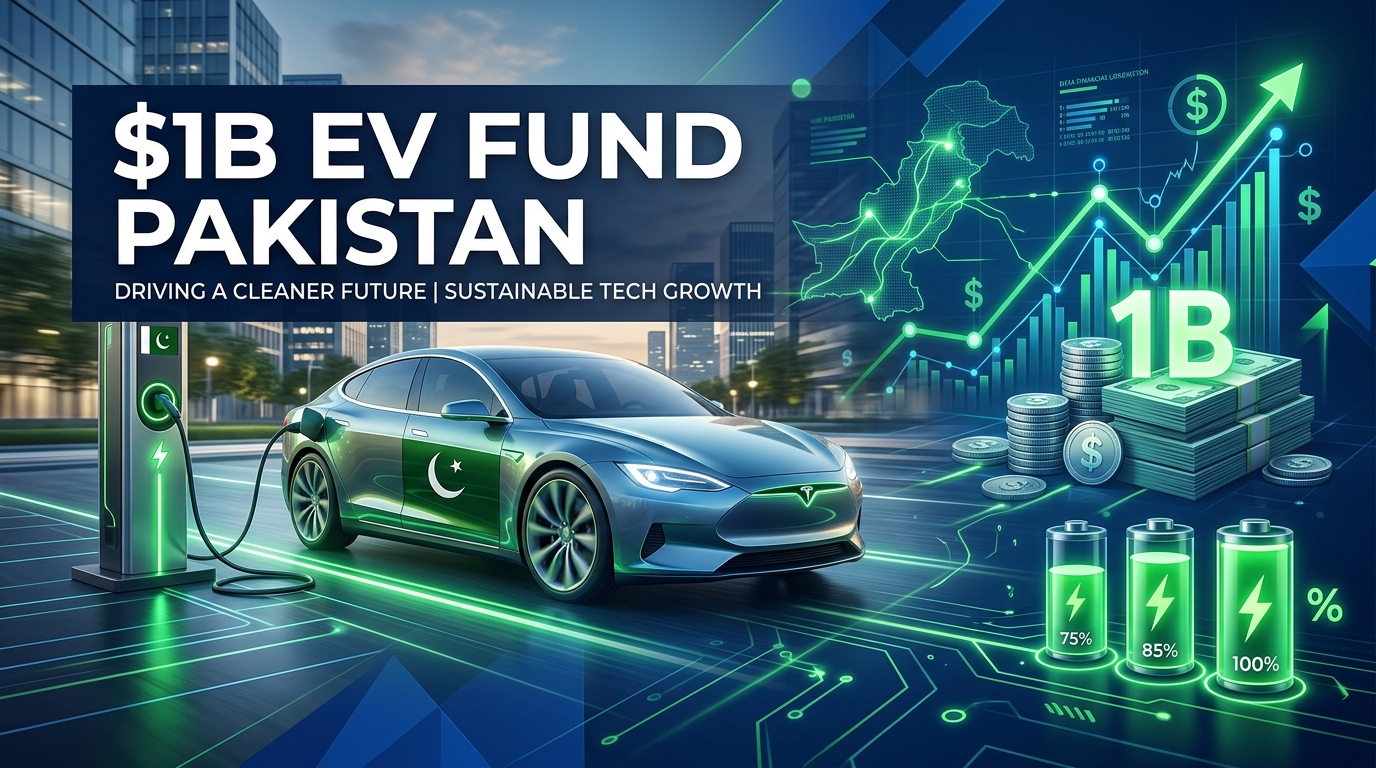
In a massive leap toward sustainable energy and economic independence, the Federal Cabinet of Pakistan has officially approved a $1 Billion Electric Vehicle (EV) Transition Fund. This historic initiative, backed jointly by the Ministry of Climate Change and the Ministry of Industries & Production, aims to rapidly phase out combustion engine vehicles over the next decade.
With the country spending billions annually on imported petroleum, this fund represents a strategic pivot toward utilizing localized, renewable energy sources to power the nation’s transportation sector.
How Will the $1 Billion Fund Be Allocated?
The EV Transition Fund is designed to tackle the three biggest hurdles to EV adoption in Pakistan: consumer cost, charging infrastructure, and local manufacturing capabilities.
1. Consumer Subsidies and Tax Breaks
To make electric vehicles affordable for the middle class, the government is introducing a direct subsidy program. Buyers of newly manufactured two-wheeler and three-wheeler electric vehicles (motorcycles and rickshaws) will receive up to a 20% point-of-sale rebate. Furthermore, import duties on EV-specific components for four-wheelers have been slashed to 1% for the next five years.
2. A Nationwide Fast-Charging Network
“Range anxiety” is the primary reason many Pakistanis hesitate to buy an EV. To solve this, a massive portion of the fund is dedicated to building out a robust charging infrastructure. The plan outlines the installation of over 5,000 Level-3 Fast Charging Stations across all major highways, motorways, and urban centers by 2028. These stations will be powered partially by localized solar grids.
3. Incentivizing Local Battery Manufacturing
Importing lithium-ion batteries is expensive. The fund offers zero-interest loans and massive tax holidays to local engineering firms willing to establish battery assembly plants. This directly builds upon the recent success of the Pakistan EV Battery Manufacturing Initiative, which aims to make the country self-sufficient in energy storage solutions.
The Intersection of EVs and Tech Infrastructure
The widespread adoption of electric vehicles isn’t just an automotive shift; it is a massive technology deployment. Modern EVs and their associated charging networks are essentially massive, rolling IoT (Internet of Things) devices.
Charging a vehicle requires real-time data handshakes between the car, the charging station, the national grid, and digital payment gateways. Managing this localized data requires hyper-efficient smart grids and AI-driven load balancing, similar to the foundational technology currently being deployed in the new Islamabad AI City Project.
For local software houses building the backend infrastructure for these charging networks—such as station locator apps, automated billing systems, and fleet management dashboards—relying on standard shared hosting is impossible. These mission-critical, real-time applications require absolute zero latency and military-grade security.
To ensure the localized EV network never goes offline, developers must deploy their platforms on high-performance infrastructure like our enterprise-grade Dedicated Servers. By utilizing localized dedicated hardware, EV startups can guarantee lightning-fast data processing and 100% uptime for millions of vehicles on the road.
