
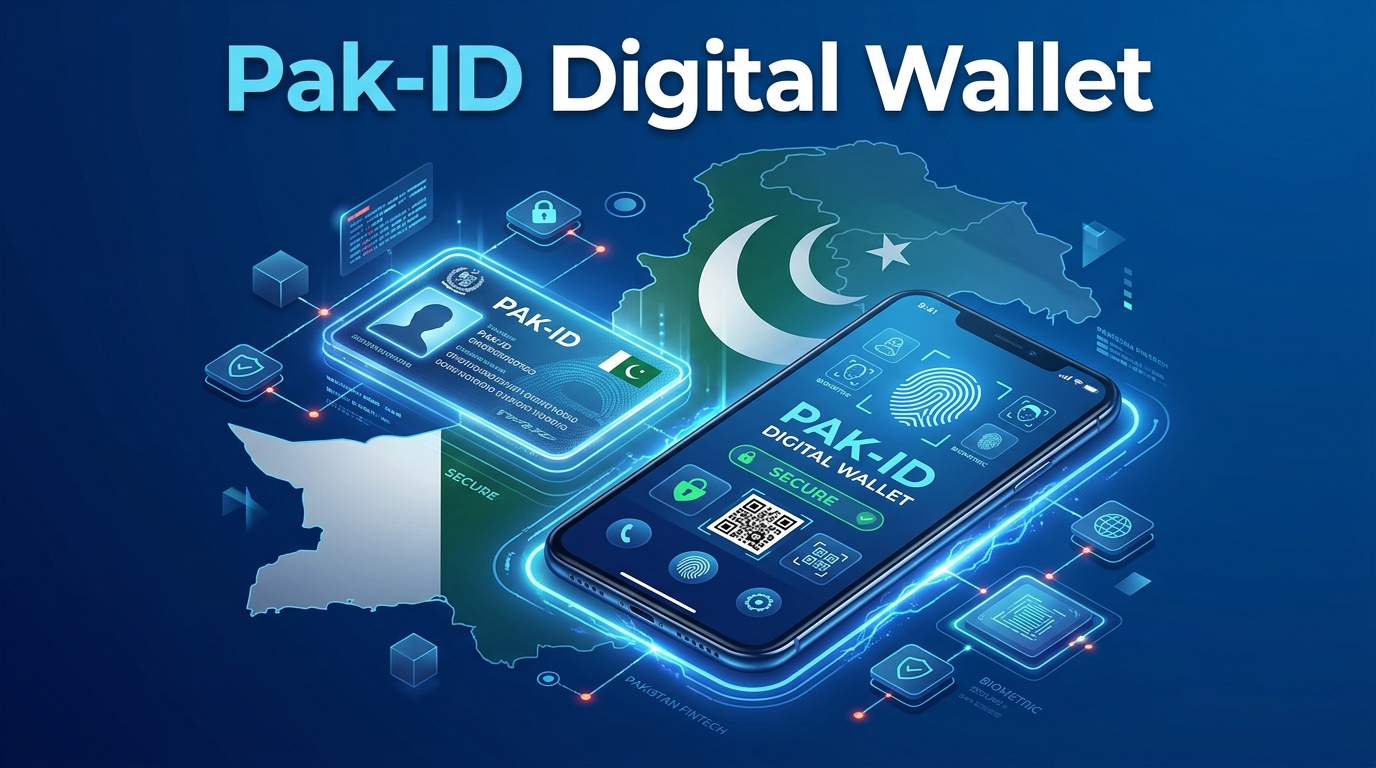
The National Database and Registration Authority (NADRA) has officially rolled out its most ambitious project of the decade: the Pak-ID Digital Identity Wallet.
This move marks a definitive shift away from physical plastic cards, transitioning Pakistan into a fully paperless, smartphone-first society. The Pak-ID app is now available nationwide, allowing citizens to securely store digitized, legally verified versions of their Computerized National Identity Cards (CNIC), driving licenses, and passports directly on their mobile devices.
How the Pak-ID Wallet Works
The Pak-ID wallet uses advanced cryptographic protocols and biometric authentication (leveraging the smartphone’s native facial recognition and fingerprint scanners) to ensure the digital documents cannot be forged or accessed by unauthorized users.
When a citizen needs to prove their identity—whether at an airport security checkpoint, a traffic police stop, or a bank branch—they simply open the app. The app generates a dynamic, time-sensitive QR code. The verifying authority scans the QR code, which instantly cross-references the live NADRA database to confirm the citizen’s identity in real-time.
Integration with the Financial Sector
The most disruptive aspect of the Pak-ID Wallet is its deep integration with the country’s financial ecosystem.
- Seamless KYC: By linking directly with the newly established SBP Open Banking Framework, the Pak-ID wallet effectively eliminates the need for physical paperwork when opening bank accounts, securing loans, or registering a business. “Know Your Customer” (KYC) compliance is achieved instantly with a single biometric tap.
- Secure Transactions: The wallet is also bridging the gap with the Raast Digital Payment System, allowing citizens to authorize large wire transfers using their national digital signature stored within the wallet.
The Infrastructure Demands of Digital Identity
While the public launch of the Pak-ID Wallet is a monumental achievement for citizen convenience, it places an enormous burden on the IT infrastructure of third-party enterprises.
Banks, fintech startups, ride-hailing services, and e-commerce platforms must now integrate with NADRA’s new APIs to accept digital IDs. Processing real-time biometric handshakes and encrypted QR codes requires significant computational power and zero-latency backend architecture. Relying on shared hosting to process sensitive national ID data is no longer viable and violates new compliance standards.
Enterprises must upgrade their backend systems to handle this highly encrypted traffic securely. To ensure 100% compliance with data privacy regulations and to guarantee lightning-fast API responses to the NADRA database, businesses should deploy their applications on isolated, enterprise-grade Dedicated Servers. Nextgen’s bare-metal infrastructure provides the hardware-level security and immense processing power required to seamlessly integrate with the new Pak-ID ecosystem.
For scalable API microservices and secure national authentication, browse high-speed VPS configurations.
