
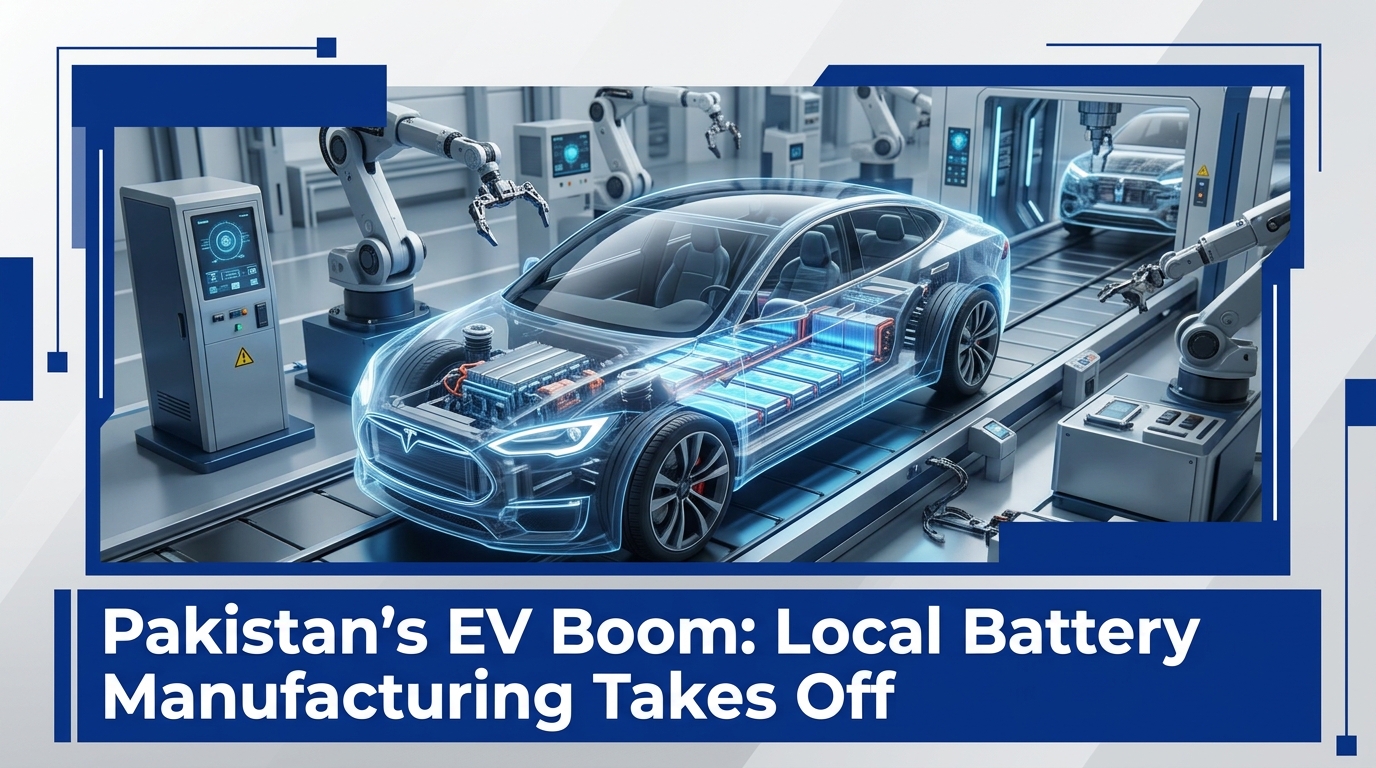
The electric vehicle (EV) sector in Pakistan has officially entered its most crucial phase to date. As of August 2026, the industry is aggressively transitioning from relying on expensive Complete Built-Up (CBU) imports to establishing a robust, localized manufacturing footprint.
With soaring fuel prices and the massive adoption of distributed solar energy across the country, the demand for high-capacity batteries and electric mobility has never been higher.
BYD and the Local Assembly Push
The biggest headline of the year is the entry of global EV titan BYD. Partnering with Mega Motor Company (a subsidiary of the Hub Power Company), BYD has rapidly constructed a state-of-the-art manufacturing plant near Karachi. The facility is expected to roll out its first locally assembled vehicles shortly, with a projected capacity of 25,000 units annually.
However, the conversation in 2026 has shifted from mere “assembly” to true localization. Local auto parts manufacturers are actively lobbying under the new Auto Policy 2026–2031 to ensure that foreign EV entrants transfer technology and utilize the local supply chain rather than simply assembling imported kits.
The Push for Indigenous Battery Manufacturing
The most significant technological leap is the government’s new policy framework targeting the indigenous manufacturing of Battery Energy Storage Systems (BESS).
Currently, many local ventures are engaged in “battery assembly”—importing raw electrochemical cells from China and packaging them locally. The new push aims to establish upstream cell manufacturing right here in Pakistan. Companies like Zilo Energy and EV Technologies are pioneering efforts to manufacture LFP (Lithium Iron Phosphate) and Lithium-ion battery systems specifically optimized for Pakistan’s climate and energy grid.
Smart Vehicles Require Smart Infrastructure
It is important to remember that modern electric vehicles are essentially supercomputers on wheels. Every EV constantly transmits gigabytes of telemetry data, battery health diagnostics, and GPS mapping information back to central servers via Battery Management Systems (BMS).
This massive influx of real-time data cannot be effectively managed on cheap offshore hosting.
Hosting the Mobility Revolution
For the EV startups, charging station networks, and smart-manufacturing plants springing up across Pakistan, enterprise IT infrastructure is critical.
Nextgen Hosting’s Dedicated Servers provide the raw compute power and localized edge-networking required to process real-time telemetry from thousands of vehicles simultaneously. By utilizing Nextgen’s KVM VPS infrastructure, local EV software developers can deploy scalable fleet management APIs and charging station locator apps with sub-millisecond latency. Ensuring this data is hosted locally not only improves performance but guarantees compliance with emerging data sovereignty laws.
The Road Ahead
The government’s long-term target remains ambitious: 30% of all new vehicle sales must be electric by 2030. While challenges remain in establishing a fully indigenous lithium supply chain, the massive investments currently pouring into local battery manufacturing plants suggest that Pakistan’s clean energy revolution is finally shifting into high gear.
To build an industrial or enterprise web portal, get a custom web development quote.
