
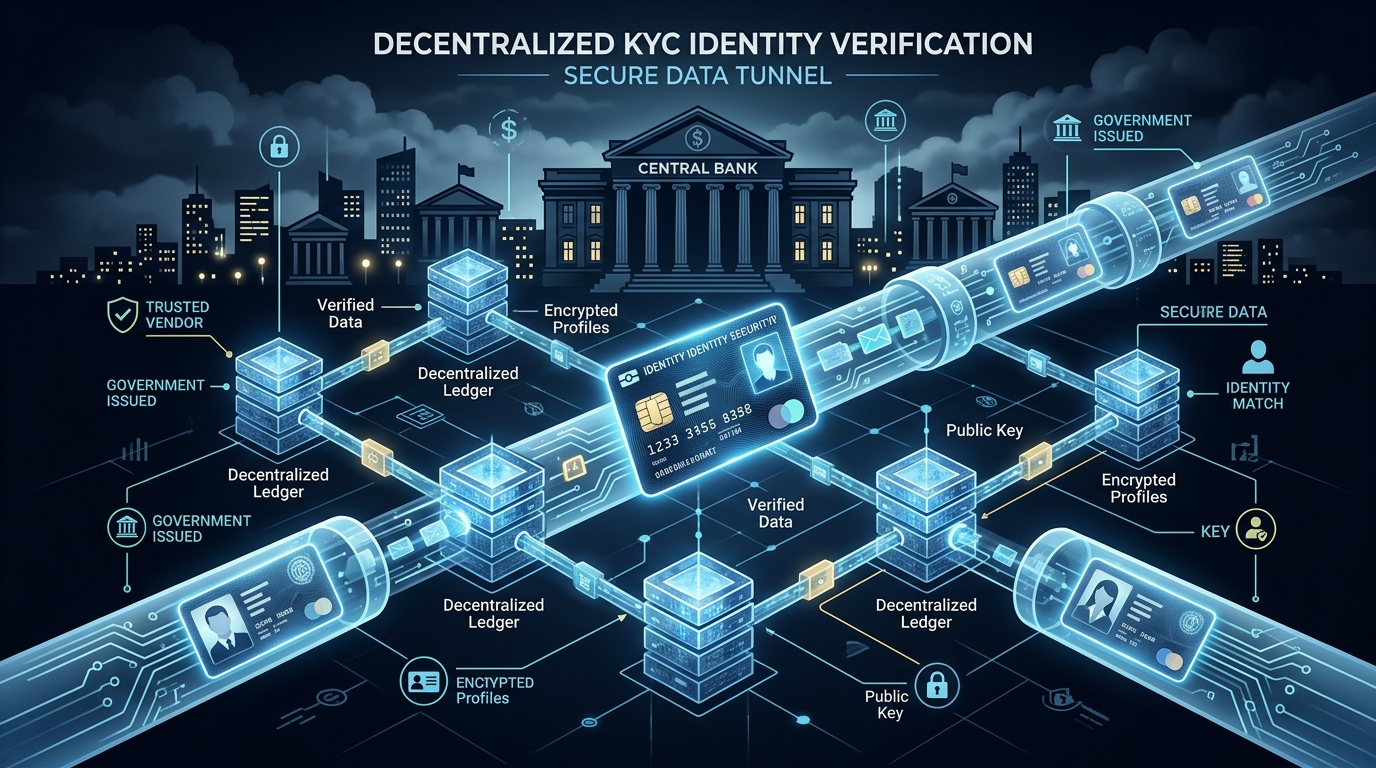
In a massive leap forward for Pakistan’s rapidly evolving financial technology sector, the State Bank of Pakistan (SBP) has officially unveiled the highly anticipated National Blockchain KYC Repository.
This decentralized infrastructure is set to dramatically reduce customer onboarding times for digital banks, EMI (Electronic Money Institution) license holders, and emerging fintech startups, while drastically cutting compliance costs.
Solving the KYC Bottleneck
Historically, customer onboarding has been the most expensive and time-consuming process for Pakistani fintechs. Startups were required to independently verify a user’s identity against the NADRA (National Database and Registration Authority) database, often taking hours or days for manual back-office approvals. Furthermore, a user signing up for three different digital banks had to undergo the exact same arduous KYC process three separate times.
With the new Blockchain KYC Repository, the SBP is introducing a “Verify Once, Share Anywhere” model.
When a user completes a rigorous KYC process with a Tier-1 commercial bank, that verification status is encrypted and hashed onto a permissioned blockchain network managed by the central bank. If that same user later attempts to open an account with a new fintech startup, the startup can query the blockchain ledger (with the user’s cryptographic consent) to instantly verify their identity.
Local Infrastructure and Data Residency
Because financial data is highly sensitive, the SBP has strictly mandated that all nodes operating this permissioned blockchain must be physically hosted within Pakistan.
This aligns perfectly with the recent SBP Mandate on Data Residency, preventing sensitive identity hashes from being stored on foreign cloud networks. Fintech startups participating in the network are heavily utilizing localized provision a cloud VPS instance instances and bare-metal servers to run their blockchain oracle nodes, ensuring absolute compliance with central bank regulations.
This local-first approach is also deeply intertwined with the government’s broader National Cybersecurity Framework, ensuring that the underlying infrastructure is resistant to external interference.
A Catalyst for Web3 and Crypto?
While the SBP explicitly designed this repository for traditional fiat-based fintechs and the Raast payment gateway, industry insiders are speculating about its future applications.
Given the recent launch of the SECP Regulated Crypto Exchange Sandbox, a state-backed decentralized KYC ledger could perfectly bridge the gap between traditional banking and regulated digital asset trading. If a centralized crypto exchange can seamlessly tap into this repository, the friction for onboarding retail cryptocurrency investors would drop to near zero.
Conclusion
The National Blockchain KYC Repository is a masterstroke in regulatory technology (RegTech). By eliminating redundant verification costs and accelerating user acquisition, the SBP is providing Pakistani fintech startups with the digital infrastructure needed to scale massively in 2026 and beyond.
