
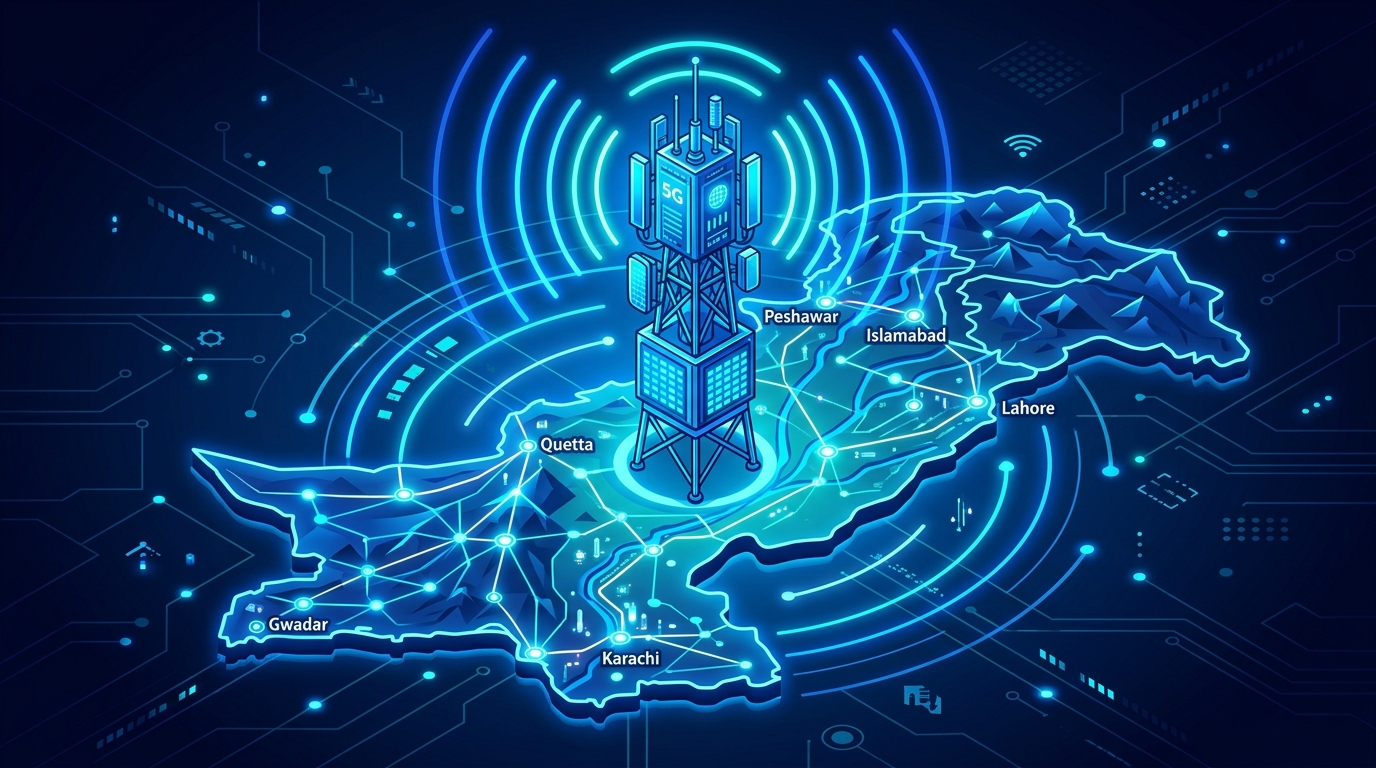
Following the highly anticipated framework for the 5G Auction in Q4 2026, the Pakistan Telecommunication Authority (PTA) has announced another critical infrastructure milestone: a dedicated low-band spectrum allocation designed exclusively for the Internet of Things (IoT).
This new regulatory framework, slated for full implementation by mid-2027, is the missing link required to activate the massive Smart City and IoT Integration initiatives currently under construction in Islamabad and Lahore.
The Need for Dedicated IoT Spectrum
While 4G and upcoming 5G networks provide high bandwidth for smartphones and heavy data applications, they are inefficient for IoT devices. Millions of environmental sensors, smart traffic lights, and automated utility meters require low power consumption and long-range connectivity (LPWAN).
By allocating dedicated sub-1GHz spectrum specifically for Narrowband IoT (NB-IoT) and LTE-M technologies, the PTA is ensuring that cellular networks will not be congested by automated machine-to-machine (M2M) communication.
Impact on the “AI City” Initiative
This telecom infrastructure upgrade is directly tied to the government’s ambitious Islamabad AI City Project. The AI City will rely on millions of data points streamed in real-time from traffic grids, autonomous drones, and public utility nodes.
Without a reliable, dedicated IoT spectrum, the massive datasets required to train the city’s central AI models would experience critical latency issues.
Opportunities for the Private Sector
The PTA’s announcement opens massive opportunities for local software houses and infrastructure providers. As municipalities begin deploying millions of sensors, the backend data processing requirements will be immense.
Companies looking to aggregate and analyze this civic data will require robust backend infrastructure. Utilizing Dedicated Cloud Servers located within Pakistani datacenters will be mandatory to comply with data sovereignty laws regarding municipal data.
“This is the foundation for the next decade of civic technology in Pakistan,” stated a PTA spokesperson during the press briefing. “We are providing the invisible highways that will allow our cities to “think” and optimize themselves in real-time.“
