
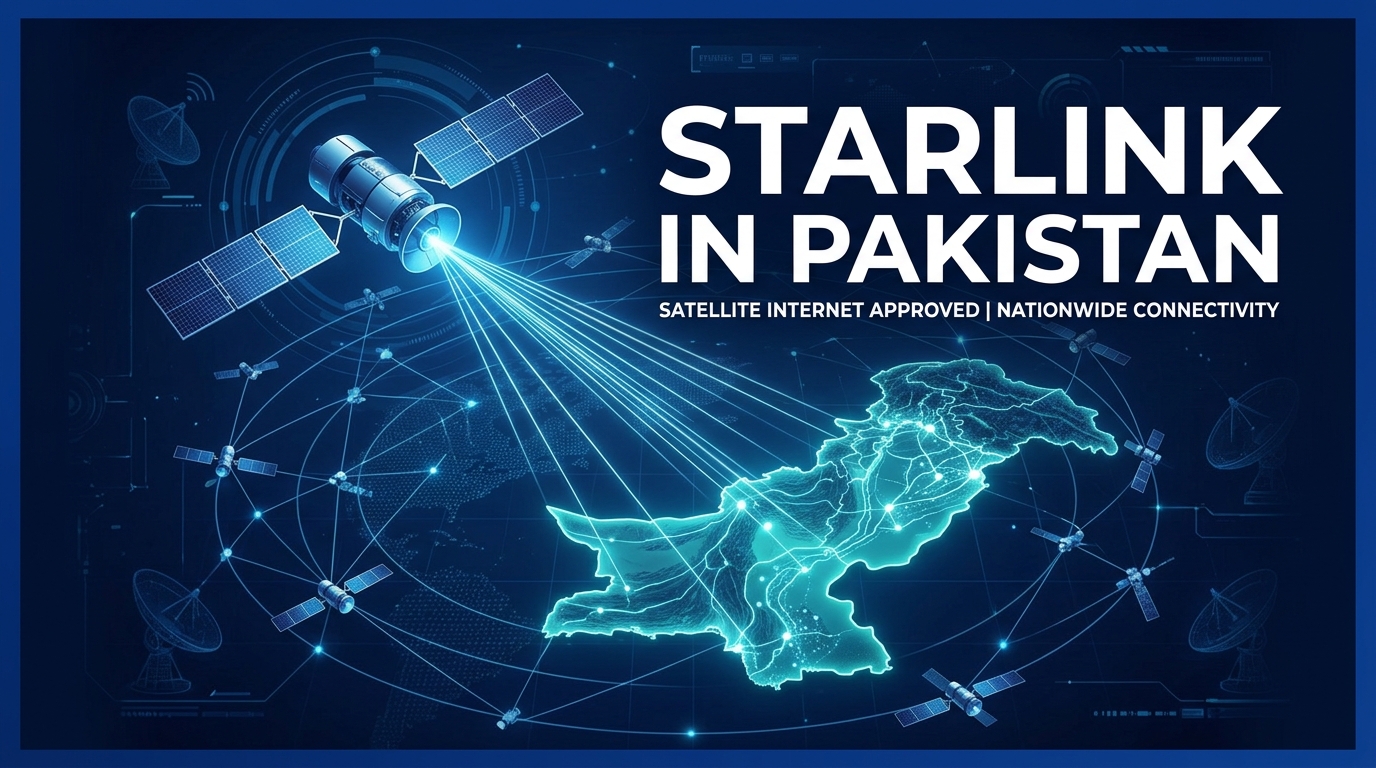
In a massive leap forward for digital connectivity, the Pakistan Telecommunication Authority (PTA) has officially granted a Long Distance International (LDI) and Local Loop (LL) commercial license to SpaceX’s Starlink. This long-awaited approval clears the final regulatory hurdle, allowing Starlink to beam its high-speed, low-latency satellite internet directly into Pakistani homes and businesses.
The introduction of Starlink is poised to completely transform the internet landscape of the country, particularly in rural and mountainous regions that have historically been excluded from the fiber-optic revolution.
Bridging the Digital Divide
While major urban centers like Karachi, Lahore, and Islamabad are currently preparing for the highly anticipated 2026 5G Spectrum Auction, a significant portion of Pakistan’s population in Balochistan, Gilgit-Baltistan, and interior Sindh still lacks access to reliable 3G, let alone broadband.
Laying thousands of kilometers of fiber-optic cable through rugged terrain is economically unviable for local telecom operators. Starlink bypasses this terrestrial infrastructure entirely. By utilizing a constellation of thousands of low Earth orbit (LEO) satellites, Starlink can deliver broadband-level speeds (100Mbps to 200Mbps) to a satellite dish placed anywhere in the country—whether on a rooftop in a remote village or a base camp in the Himalayas.
Key Impacts of Starlink in Pakistan
- Empowering Remote Freelancers: Pakistan boasts one of the largest freelance workforces in the world. Reliable internet in tier-3 cities and villages will unlock massive economic potential for rural youth.
- Disaster Resilience: During the devastating floods of 2022, entire districts were cut off from the rest of the world because terrestrial fiber cables were washed away. Satellite internet provides an indestructible communication lifeline for disaster management and rescue operations.
- Corporate Redundancy: Banks and large tech enterprises can now use Starlink as a fail-safe backup. If the underwater submarine cables face a fault, Starlink ensures business continuity without a second of downtime.
The National Space Race
While Starlink brings foreign competition, Pakistan is aggressively pushing its own sovereign capabilities in space. The recent successful launch of the PakSat MM1 Communication Satellite demonstrates the government’s commitment to building indigenous satellite communication infrastructure. The presence of both Starlink and PakSat MM1 will create a highly competitive environment, driving down internet costs for the average consumer.
Optimizing Infrastructure for Satellite Traffic
For software houses, VPN providers, and VoIP companies operating out of Pakistan, routing traffic through satellite networks introduces unique challenges regarding routing protocols and latency. Standard shared hosting is not equipped to handle the rapid handshakes required by LEO satellite traffic.
To ensure your applications run seamlessly over these new satellite networks, consider deploying your backend on Nextgen’s globally distributed GeoNode Servers. Our GeoNodes are specifically engineered for high-availability and intelligent traffic routing, ensuring that data packets traveling between terrestrial servers and Starlink dishes experience zero packet loss and minimal latency.
