
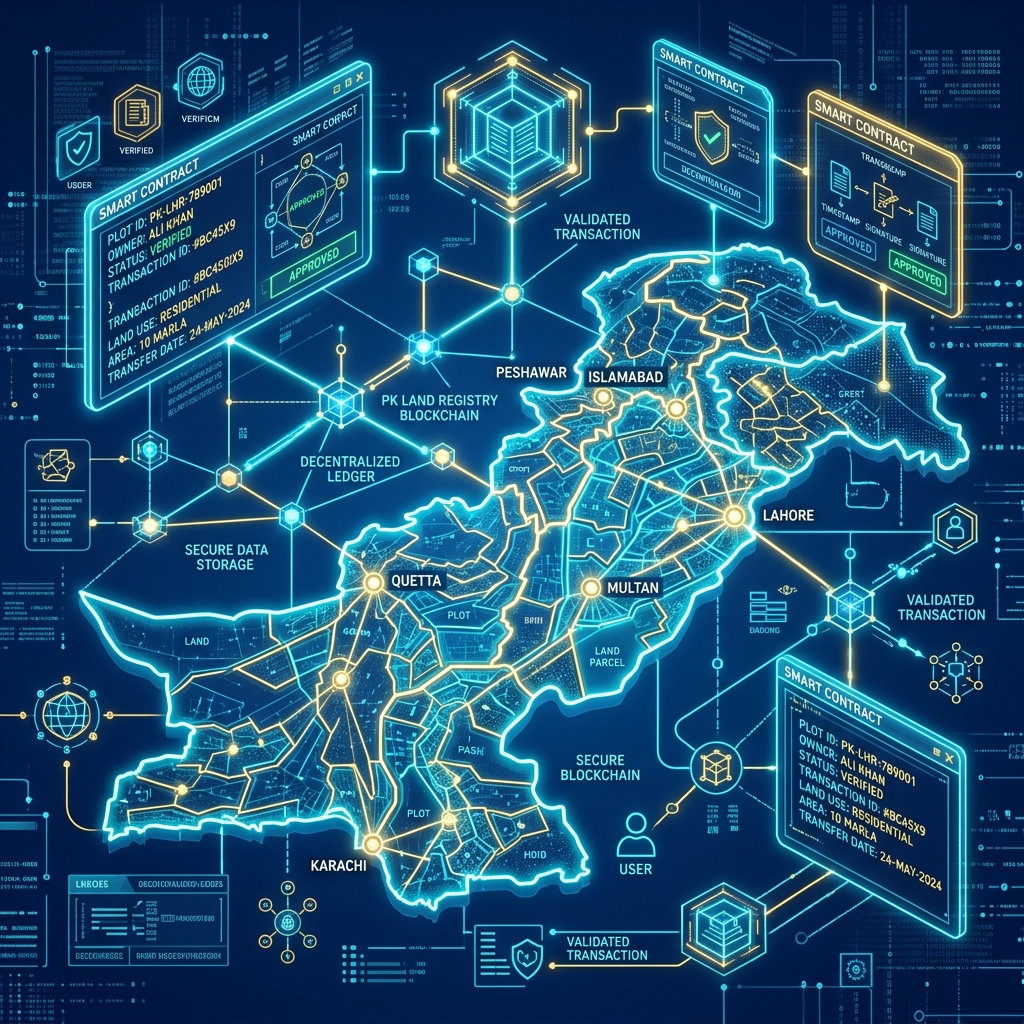
In a monumental leap towards transparent e-governance, the Government of Pakistan has officially announced the launch of a nationwide Blockchain Land Registry System, set to be fully operational by the end of 2026.
This ambitious initiative aims to completely dismantle the archaic, paper-based “Patwari” system, effectively wiping out decades of land manipulation, property fraud, and bureaucratic red tape in the country’s booming real estate sector.
The Problem with the Current System
For decades, purchasing property in Pakistan has involved significant risk. The reliance on paper documents and manual record-keeping by local land registrars has made the system highly susceptible to tampering. Forged property deeds, double-selling of identical plots, and “missing” registry files have plagued the justice system with millions of unresolved civil disputes.
The digitalization efforts over the past few years were a step in the right direction, but centralized digital databases can still be altered by corrupt administrators with high-level access. This is where Blockchain technology changes the paradigm completely.
Why Blockchain is the Ultimate Solution
A blockchain is an immutable (unchangeable) distributed ledger. Once a transaction is recorded on it, it is mathematically impossible to alter or delete it without alerting the entire network.
The new Pakistan Land Registry will operate on a permissioned enterprise blockchain network, hosted securely within the newly established National Blockchain Data Center.
How it Works:
- Immutable Chain of Title: Every plot of land will have a unique cryptographic hash. When land is bought or sold, the transaction is added as a new “block” to the chain. Anyone can instantly verify the complete, unalterable history of the property’s ownership from the day it was first registered.
- Smart Contracts: The purchasing process will be automated using Smart Contracts. Once a buyer deposits the exact funds into an escrow account and the digital biometric verification is completed by both parties via the Pak-ID Digital Wallet, the smart contract automatically executes the transfer of the title deed. No bribes, no delays, no human intervention.
- Eradication of Dead Capital: By securing property rights definitively, landowners can seamlessly use their property as collateral for bank loans, injecting massive amounts of previously “dead capital” back into the economy.
The Tech Ecosystem Supporting the Rollout
This project represents a massive convergence of Pakistan’s recent tech initiatives. The biometric verification relies heavily on NADRA’s existing infrastructure, while the data sovereignty is maintained by ensuring all blockchain nodes are physically located within Pakistan.
For developers and PropTech (Property Technology) startups, this opens a massive new industry. Companies will soon be able to build APIs that interact directly with the national blockchain to verify property titles instantly for their clients.
If you are a PropTech startup building applications that handle highly sensitive financial and real estate data, shared hosting will not cut it. You require enterprise-grade security and isolation. Nextgen’s custom dedicated server hardware provide bare-metal performance, hardware-level isolation, and advanced DDoS protection, ensuring your real estate portals and API endpoints remain online, lightning-fast, and impenetrably secure.
