
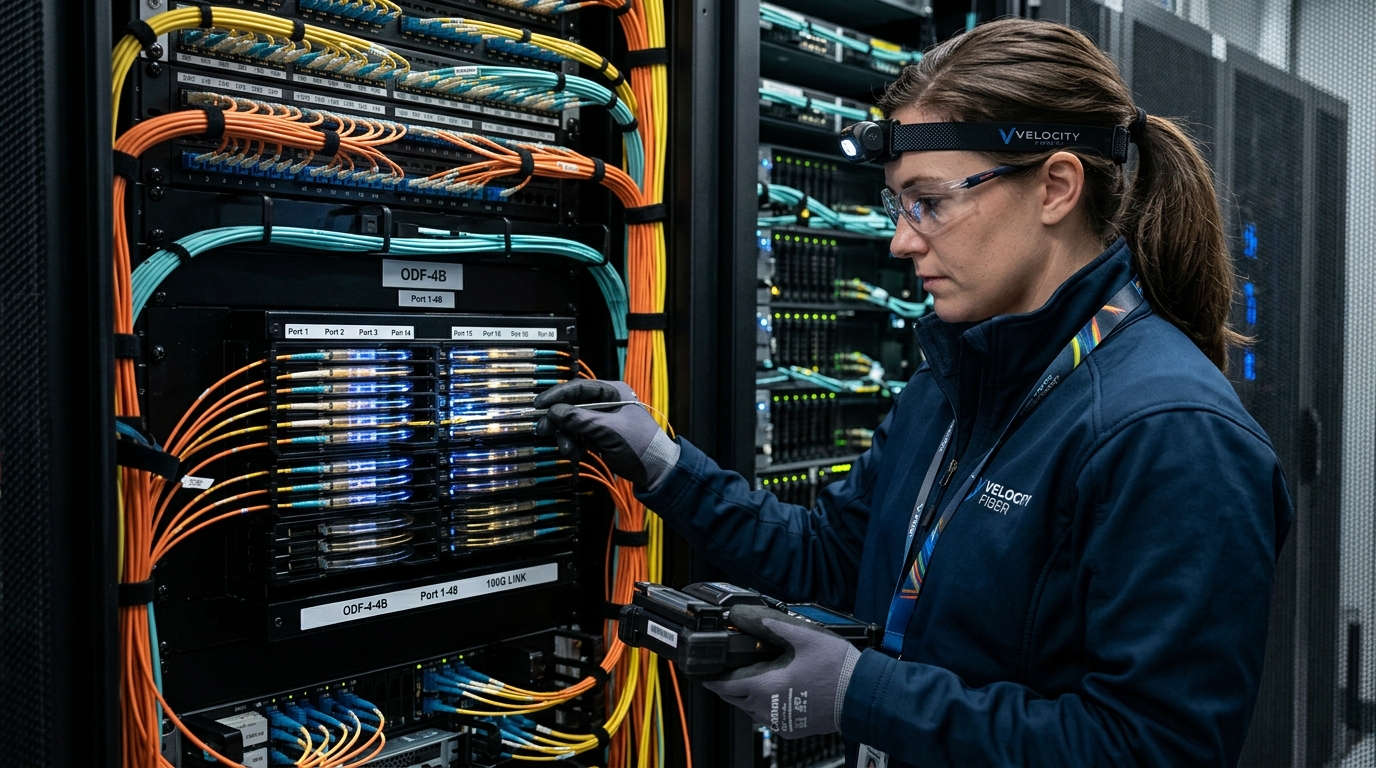
In what telecom executives are hailing as the most consequential infrastructure milestone of the decade, the Universal Service Fund (USF) Policy Committee has officially sanctioned an all-time record annual budget of PKR 32.90 billion for the 2026–27 fiscal year. Chaired by the Federal Minister for Information Technology and Telecommunication, Shaza Fatima Khawaja, the decision coincides with the formal rollout of the National Fiberization Policy—an aggressive regulatory framework aimed at dismantling the chronic connectivity bottlenecks holding back Pakistan’s digital economy.
The unprecedented capital injection is designed to solve Pakistan’s foundational telecom paradox: while mobile tele-density and 4G data consumption have exploded across more than 195 million subscribers, the country’s physical backhaul infrastructure has remained tethered to legacy microwave links and copper trunks.
With commercial 5G spectrum auctions concluding and edge data centers coming online across Islamabad, Lahore, and Karachi, the government is making its highest-stakes bet yet to build an optical backbone capable of sustaining sovereign cloud, artificial intelligence workloads, and ultra-high-speed broadband.
Breakdown of the PKR 32.90 Billion Allocation
The USF budget reflects an acute shift toward immediate capital deployment and strict project milestones. Unlike past budgetary allocations delayed by bureaucratic red tape, the committee approved an immediate initial tranche of PKR 5.57 billion for instant Q1 execution.
Total USF FY 2026-27 Budget: PKR 32.90 Billion
├── Ongoing Project Commitments: PKR 24.89 Billion (75.6%)
│   ├── 17 Next-Generation Broadband Service Delivery (NG-BSD) Projects
│   └── 11 Next-Generation Optical Fiber Network Services (NG-OFNS) Projects
├── New Strategic Initiatives: PKR 6.56 Billion (19.9%)
│   ├── 9 Brand-New NG-BSD Rural Mobile Expansions
│   └── 4 Brand-New NG-OFNS Long-Haul Metro Optical Routes
└── Immediate Q1 Drawdown Authorization: PKR 5.57 Billion
This funding model directly expands the active implementation footprint from 28 existing mega-contracts to 41 nationwide deployments. The primary beneficiary regions include historically underserved and terrain-difficult districts across Balochistan, southern Khyber Pakhtunkhwa, the merged tribal districts (NMDs), rural interior Sindh, and the Makran coastal corridor.
Escaping the “Microwave Trap”: Why Tower Fiberization Matters
To appreciate why this policy shift is so urgent, one must understand the hidden vulnerability of Pakistan’s telecom grid.
Historically, fewer than 16% of Pakistan’s 45,000+ cellular towers were connected via optical fiber cable (OFC). The overwhelming majority (more than 84%) relied on point-to-point wireless microwave backhaul.
While microwave backhaul sufficed for 2G voice calls and basic 3G/4G web browsing, it collapses under modern data densities:
- Throughput Caps: Standard line-of-sight microwave hops typically cap out between 300 Mbps and 1 Gbps per tower sector. In dense urban nodes or surging rural hubs, multiple towers daisy-chained together share this constrained pipe, leading to catastrophic evening throttling and packet loss.
- Atmospheric Degradation: Monsoon cloudbursts, severe smog across the Indus Plains, and dust storms in Balochistan cause extreme rain fade and latency spikes on microwave links.
- The 5G Impasse: A single 5G NR (New Radio) gNodeB base station utilizing 100 MHz of mid-band (3.5 GHz) spectrum requires between 5 Gbps to 10 Gbps of dedicated, low-jitter backhaul to deliver peak subscriber speeds. Attempting to deploy 5G over wireless microwave backhaul is akin to feeding an Olympic swimming pool through a garden hose.
Under the new National Fiberization Policy, spearheaded under the World Bank-backed Digital Economy Enhancement Project (DEEP), the Ministry of IT and PTA have mandated escalating milestones:
| Metric | 2024 Baseline | 2026 Target | 2029 National Mandate |
|---|---|---|---|
| National Tower Fiberization Ratio | 16.2% | 35.0% | 80.0% |
| Fiber-to-the-Home (FTTH) Passes | ~2.2 Million | 4.5 Million | 10.0 Million |
| Minimum Guaranteed Fixed Speed | 10 Mbps – 20 Mbps | 50 Mbps | 100 Mbps per user |
| Long-Haul Metro OFC Route Length | ~145,000 km | 195,000 km | 320,000+ km |
| Average Fixed Broadband Latency (Intra-Pak) | 35ms – 55ms | 20ms – 25ms | < 10ms (Fiber Direct) |
The One-Window Right-of-Way (RoW) Breakthrough
For decades, the single largest barrier preventing telecom operators (Jazz, PTCL, Zong, Telenor/PTCL Group) and infrastructure providers (Nayatel, Cybernet, Wateen, Transworld) from trenching fiber was not equipment cost—it was Right-of-Way (RoW) extortion and administrative fragmentation.
Laying a 20-kilometer fiber line across a Pakistani metropolitan corridor routinely required separate permissions, environmental impact clearances, and exorbitant road-cutting fees from dozens of competing jurisdictions:
- Cantonment Boards (Military Lands & Cantonments)
- National Highway Authority (NHA)
- Provincial Highway Departments (C&W)
- Municipal Corporations (KMC, LDA, CDA, RDA)
- Pakistan Railways and Irrigation Departments
In many instances, municipal authorities treated fiber trenching permits as discretionary revenue generators, levying arbitrary fees exceeding PKR 3,000 to PKR 5,000 per running meter.
The Single-Window Digital RoW Portal
To eliminate this extortionate barrier, the Federal Government, through the Council of Common Interests (CCI) and MoITT, has instituted a statutory One-Window Digital RoW Portal:
- Uniform Fee Schedules: Capped, standardized nominal charges across federal, provincial, and municipal right-of-ways.
- Deemed Approval Timelines: Municipal entities must process, approve, or provide formal engineering objections to trenching applications within 15 business days. If an agency fails to respond within that statutory window, the permit is legally deemed approved.
- Dig-Once Mandate: Mandates that all upcoming civil works—including federal highways, metro bus tracks, gas pipeline corridors, and railway dualization projects—must incorporate pre-laid multi-duct optical fiber conduits (SDR ducts) that telecom operators can lease without re-excavating public roadways.
Backbone Infrastructure: Fueling Enterprise Compute & Sovereign Cloud
The rapid expansion of high-count optical transport networks (OTN) and DWDM (Dense Wavelength Division Multiplexing) backbones does more than just accelerate smartphone video streaming; it fundamentally transforms enterprise hosting economics in Pakistan.
Historically, organizations hosting mission-critical applications were often hesitant to house production workloads inside domestic data centers due to fragile inter-city transit links between Karachi (the landing station hub for international submarine cables) and the industrial and administrative centers of Lahore, Faisalabad, and Islamabad.
As dark fiber networks blanket the country, local network peering through the Pakistan Internet Exchange (PKIX) has slashed intra-country round-trip times (RTT) to under 12 milliseconds.
┌──────────────────────────────────────────────────────────┐
│             PAKISTAN HIGH-SPEED OPTICAL GRID             │
└──────────────────────────────────────────────────────────┘
                             │
       ┌─────────────────────┼─────────────────────┐
       ▼                     ▼                     ▼
┌──────────────┐      ┌──────────────┐      ┌──────────────┐
│  Tier-3/4    │      │ 5G gNodeB    │      │  Enterprise  │
│ Data Centers │◄────►│ Tower Hubs   │◄────►│ Edge Clouds  │
│ (Rawalpindi/ │      │ (80% OFC     │      │ & Sovereign  │
│  Islamabad)  │      │  Mandate)    │      │ Compute Pods │
└──────────────┘      └──────────────┘      └──────────────┘
       ▲                                           ▲
       │        Low-Latency Coherent DWDM          │
       └───────────────────────────────────────────┘
For enterprises running latency-sensitive databases, high-frequency trading platforms, and AI fine-tuning pipelines, running dedicated bare-metal infrastructure locally has suddenly become exponentially faster than routing overseas traffic through Singapore, Frankfurt, or Dubai.
Organizations can now architect their core applications with enterprise-grade Dedicated Servers, enjoying deterministic throughput, dedicated hardware isolation, and unmetered gigabit switching fabrics. For domestic enterprises subject to SBP and SECP data localization mandates, deploying bare-metal nodes through specialized Dedicated Servers in Pakistan ensures that sensitive corporate telemetry, payroll records, and financial ledger data remain securely enclosed within national borders while maintaining sub-millisecond local network responses.
Developers requiring agile scalability can simultaneously deploy containerized clusters on High-Performance Pakistan VPS Solutions, bridging local compute nodes directly into the new USF-funded optical transport rings.
Impact on IT Exports, Freelancers, and Remote Work Hubs
Pakistan’s tech export sector, currently hovering near $3.2 billion and targeting $5 billion over the next two fiscal years, relies heavily on more than 1.5 million active freelancers and distributed software engineering agencies.
Historically, freelancers outside the primary urban cores of Karachi, Lahore, and Rawalpindi/Islamabad suffered from chronic broadband instability. Power outages would cut cellular microwave links, and home broadband copper lines would experience crippling packet loss during peak US and European business hours.
The combination of USF’s PKR 32.90 billion investment and the National Fiberization Policy delivers tangible socio-economic dividends:
- Tier-2 & Tier-3 City Tech Hubs: Secondary cities such as Abbottabad, Gujranwala, Sukkur, Mirpur, Sialkot, and Quetta are receiving direct 100G/400G metro optical drops, allowing local software houses to compete directly with tier-1 urban agencies.
- Reverse Brain Drain to Rural Districts: High-speed FTTH availability outside metropolitan hubs enables software engineers to relocate back to their hometowns, lowering living and operating overheads while earning foreign exchange.
- Resilience Against Subsea Outages: By interconnecting domestic fiber meshes across multiple terrestrial redundant rings (connecting Gwadar, Karachi, and the northern border terrestrial links to Central Asia and China), the national grid can dynamically reroute traffic during unexpected subsea cable cuts.
Strategic Roadmap: Key Implementation Milestones
To ensure accountability, the USF Policy Committee and PTA have established quarterly execution audits:
- Q1 FY 2026-27 (October 2026): Disbursement of the approved PKR 5.57 billion initial tranche; competitive bidding opened for 4 new NG-OFNS long-haul optical routes covering 2,800 kilometers of high-count fiber.
- Q2 FY 2026-27 (January 2027): Operational launch of the unified Federal-Provincial One-Window Digital RoW Portal; integration of all 4 provinces and Cantonment Boards.
- Q4 FY 2026-27 (June 2027): Completion of 11 ongoing NG-OFNS routes; operationalization of 9 newly awarded NG-BSD mobile sites across Balochistan and KP; crossing the 35% national tower fiberization threshold.
- Vision 2029 Target: 80% of all national telecom towers fiberized; 10 million verified FTTH home passes; commercial 5G coverage established across all cities with populations exceeding 100,000.
Conclusion: Building Pakistan’s Unbreakable Digital Core
Pakistan’s digital trajectory has long suffered from an infrastructure asymmetry: world-class software talent operating on top of a fragile, underfunded physical network layer.
The USF Policy Committee’s decisive approval of PKR 32.90 billion, coupled with the statutory teeth of the National Fiberization Policy, marks the start of a new chapter. By replacing fragile microwave links with high-count optical fiber and cutting away decades of municipal red tape, Pakistan is constructing an unbreakable digital foundation.
Whether powering 5G base stations, connecting remote schoolhouses, or delivering low-latency throughput for enterprise cloud platforms, the optical fiber revolution is here—and it will define the next quarter-century of Pakistan’s economic growth.
Deploy High-Throughput Bare-Metal on Pakistan's Optical Grid
Capitalize on Pakistan's nationwide fiberization and 100G/400G optical transport backbones. Nextgen Hosting delivers enterprise bare-metal infrastructure directly connected to the country's premier carrier-neutral exchange points and Tier-3 facilities.
Related Articles & Infrastructure Analysis
- PTA 5G Spectrum Auction Framework & Commercial Rollout Timeline
- Pakistan AI Hyperscale Data Center Boom: Sky47 Karakoram One & Sovereign Cloud
- PTA Subsea Cable Resilience: 200Tbps Redundancy for Gwadar and Karachi
- PTA Mandates Comprehensive Telecom Tower Backup Power Audits
- Enterprise Bare-Metal Dedicated Hosting in Pakistan
- High-Performance Pakistan VPS Cloud Infrastructure
