
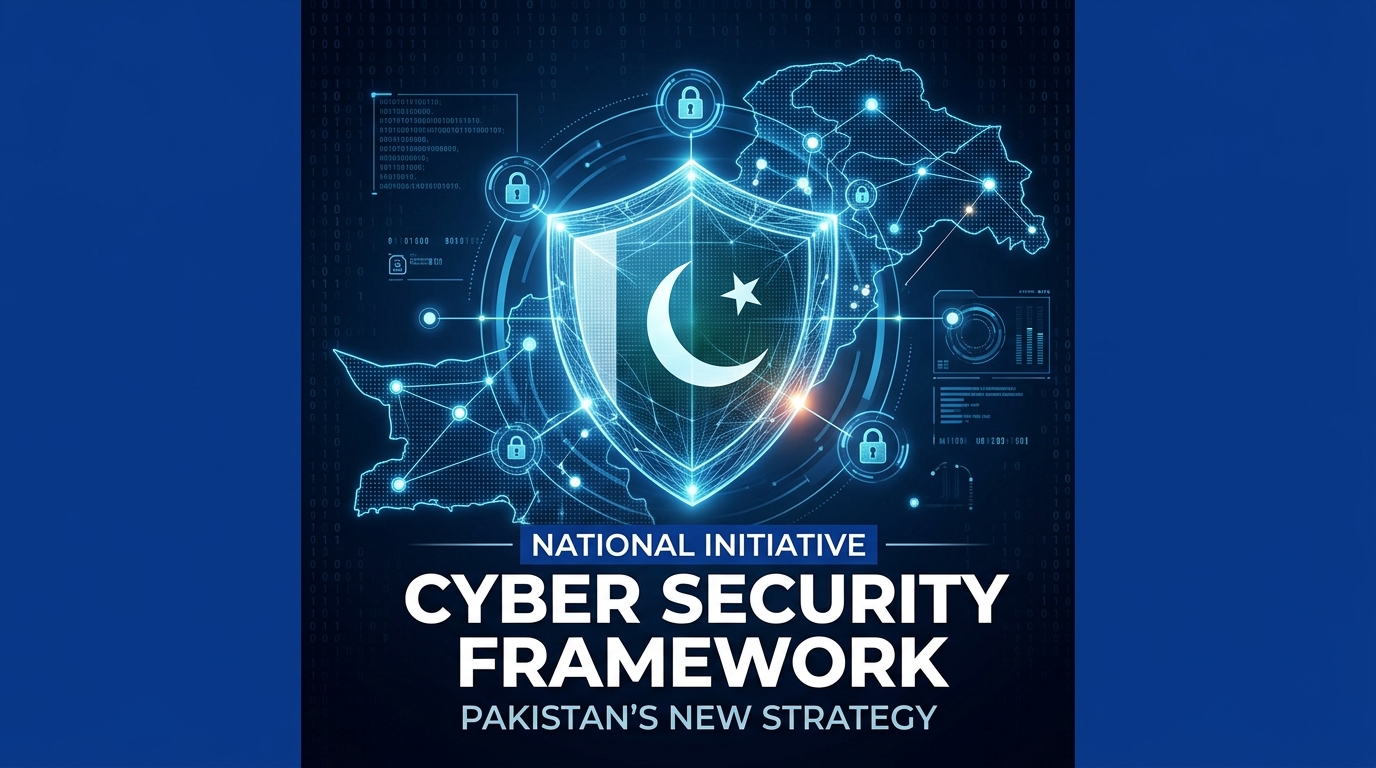
In response to the escalating threat of sophisticated cyber attacks targeting critical national infrastructure and the financial sector, the Ministry of Information Technology and Telecommunication (MoITT) has officially rolled out the National Cyber Security Framework (NCSF) 2026.
This landmark framework is not merely a set of guidelines; it introduces strict compliance mandates, heavy penalties for negligence, and a complete overhaul of how citizen and corporate data is managed across the country.
Core Pillars of the NCSF 2026
The framework establishes a comprehensive defensive posture for both public sector organizations and private enterprises operating within Pakistan’s borders. It revolves around three primary directives:
1. Strict Data Localization Laws
Perhaps the most significant and disruptive element of the NCSF 2026 is the immediate enforcement of Data Localization.
Any enterprise that processes the Personally Identifiable Information (PII) or financial data of Pakistani citizens—including banks, fintech startups, healthcare providers, and major e-commerce platforms—is now legally barred from storing that data on offshore servers (such as AWS US-East or generic European data centers). All sensitive citizen data must physically reside on servers located within the geographical borders of Pakistan.
This move directly complements the recent rollout of the SBP Open Banking Framework, ensuring that the massive new flow of financial API data is geographically secured against foreign espionage and extra-jurisdictional seizures.
2. Mandatory End-to-End Encryption
The framework outlaws the transmission of unencrypted citizen data over public networks. Enterprises are now mandated to implement AES-256 encryption at rest and minimum TLS 1.3 for data in transit.
3. State-Mandated Penetration Testing
“Security through obscurity” is no longer an acceptable defense. Tier-1 organizations are now required to undergo biannual penetration testing and vulnerability assessments conducted only by National Cyber Security Agency (NCSA) certified auditing firms.
The Economic Ripple Effect
While foreign cloud providers may see a dip in revenue from Pakistani clients, the NCSF 2026 is a massive catalyst for the local IT infrastructure and data center industry.
To accommodate the massive influx of data being repatriated to local soil, Tier-3 and Tier-4 data centers are expanding rapidly. The recently completed Islamabad IT Park is already seeing a surge in demand from enterprise companies looking to house their newly localized infrastructure in secure, state-of-the-art facilities.
Compliance Through Nextgen Infrastructure
For CTOs and business owners, the deadline for compliance is rapidly approaching. Failure to localize your data before the Q4 2026 deadline could result in severe operational restrictions.
Nextgen Hosting is fully prepared to assist enterprises in their localization efforts. Our enterprise-grade Dedicated Cloud Servers and managed infrastructure are housed entirely within sovereign Pakistani borders, ensuring 100% compliance with the NCSF 2026 data localization laws. Equipped with DDoS mitigation and hardware-level firewalls, we provide the secure foundation required by the new national framework.
Securing Your Infrastructure for NCSF Compliance?
Don't let data localization deadlines compromise your network speed. Nextgen's Islamabad-hosted enterprise cloud servers provide full compliance with local regulations at single-digit latencies.
Configure Your Pakistan VPS