
EBANX Enters Pakistan: A Landmark Shift in Cross-Border Digital Payments
In a move that is sending shockwaves through Pakistan’s fintech ecosystem, EBANX — the global payments infrastructure company best known for unlocking emerging market consumers for giants like Amazon, Spotify, and Shopify — has officially announced its expansion into Pakistan. The company revealed the news at its annual Payments Summit in September 2026, making Pakistan one of its most strategically significant new markets yet.
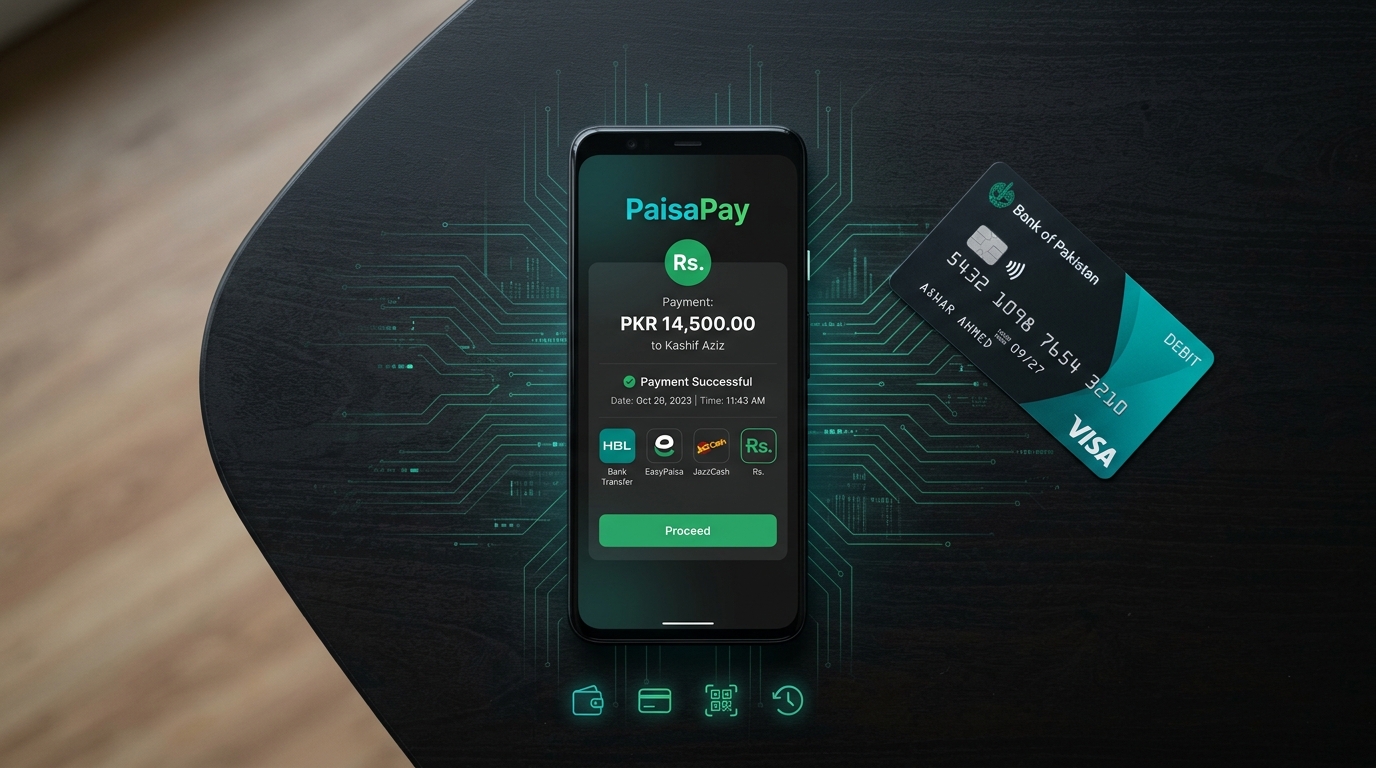
With a planned launch in the first half of 2027, EBANX is preparing to integrate Pakistan’s three most dominant payment rails: JazzCash, Easypaisa, and the State Bank of Pakistan’s national instant-payment system, Raast. For Pakistan’s 240 million citizens — the vast majority of whom have a smartphone but no international payment card — this signals a fundamental change in how they can access global digital services and e-commerce platforms.
Why Pakistan, Why Now?
Pakistan has long been a paradox in the global payments landscape: massive consumer demand, a digitally active population, but a near-total absence of the payment infrastructure international merchants require. Card penetration in Pakistan hovers around a mere 3–4% of the adult population, yet mobile wallet adoption has exploded. JazzCash and Easypaisa each boast over 50 million registered users, and Raast — the State Bank’s real-time interbank transfer rail — has processed trillions of rupees in transactions since its phased rollout.
EBANX has explicitly cited “significant merchant demand” and the “complexity of Pakistan’s local payment landscape” as the primary triggers for this expansion. The company’s global strategy is to act as a bridge: letting international businesses accept payments in forms that local consumers actually use, without the merchant needing to build local banking relationships from scratch.
The timing aligns with a broader wave of investment confidence in Pakistan’s digital economy. Pakistan’s startup ecosystem has surpassed 1,100 companies with a combined enterprise value exceeding $4 billion as of late 2026, and IT exports have been climbing steadily despite macroeconomic headwinds. The country’s young, tech-savvy demographic (median age: 22) makes it one of the most compelling untapped consumer markets in South Asia.
What EBANX’s Pakistan Integration Actually Means
Phase 1: JazzCash & Easypaisa
At launch, EBANX will plug into JazzCash and Easypaisa — the two dominant mobile money networks in Pakistan. When a Pakistani consumer visits an international merchant using EBANX’s checkout layer, they will see their familiar wallet as a payment option, rather than being forced to use a Visa/Mastercard they likely don’t own.
For businesses, this is transformative. Instead of losing Pakistani customers at the checkout page (a phenomenon known as “cart abandonment at payment”), they can now actually convert them. Sectors most immediately impacted include:
- SaaS and subscription platforms (streaming, software, cloud tools)
- Global e-commerce marketplaces
- Gaming and digital content companies
- Online education platforms
Phase 2: Raast Integration
Following the wallet integrations, EBANX plans to add Raast — Pakistan’s instant-payment rail — as a supported method. Raast operates similarly to India’s UPI or Brazil’s Pix, allowing real-time bank-to-bank transfers using phone numbers or CNIC as identifiers. Its transaction volumes have been growing at a compounding rate month-over-month throughout 2026, and the State Bank has been actively pushing merchants and fintech platforms to adopt it.
Raast’s inclusion in EBANX’s stack is particularly significant because it removes the intermediary wallet layer altogether, connecting consumers’ bank accounts directly to the checkout experience. This drives down transaction costs and opens up segments of the population that have formal bank accounts but don’t use third-party wallets.
The Infrastructure Behind the Curtain
What makes EBANX’s entry technically complex — and impressive — is the behind-the-scenes plumbing required. International merchants typically operate in USD, EUR, or GBP. Pakistani consumers pay in PKR. Regulatory compliance, currency conversion, AML (Anti-Money Laundering) checks, and settlement windows all need to be harmonized across jurisdictions.
EBANX’s existing technology stack, battle-tested across Latin America, Southeast Asia, and Turkey, manages exactly this. The company processes billions of dollars annually in markets like Brazil (via Pix and Boleto), Mexico, Colombia, and increasingly across MENA. Pakistan represents its first foray into South Asia.
For Pakistan’s broader digital infrastructure to handle the eventual volume that global merchant integrations can generate, reliable and high-performance server infrastructure becomes critical. Businesses running local payment orchestration layers, fraud detection engines, and API middleware for fintech integrations require enterprise-grade hosting. This is why many of Pakistan’s fastest-growing fintech companies already rely on Dedicated Servers in Pakistan to ensure the low-latency, high-availability environments their payment systems demand. Similarly, for companies scaling globally while maintaining Pakistan-rooted operations, Dedicated Servers with international data center access provide the performance backbone necessary for cross-border payment processing at scale.
Implications for Pakistani Freelancers, Startups & Merchants
This development is not just relevant to large enterprises. Consider its impact across segments:
Freelancers & Digital Services Exporters
Pakistan’s massive freelancer economy — with over 4 million registered freelancers — has historically struggled with receiving payments from international clients, often relying on cumbersome workarounds. While EBANX’s model is merchant-side (B2B), its integration into platforms commonly used by freelancers (like productivity tools, digital storefronts, and portfolio platforms) could indirectly improve payment flow.
E-commerce Merchants
Local e-commerce entrepreneurs selling on international platforms like Etsy, Gumroad, or Paddle face enormous friction at the payment acceptance layer. EBANX’s presence could enable more platforms to go “Pakistan-ready” and formally list PKR-denominated pricing.
Startups & SaaS Builders
Pakistani SaaS companies targeting global customers could leverage EBANX as a payment gateway to accept international payments using global card rails, while also offering their local Pakistani customers a wallet-native checkout experience through the same integration.
EBANX vs. The Existing Landscape
Pakistan already has several players attempting to bridge the local-global payments gap, including Safepay, Finja, and Nayapay. But EBANX operates at a different tier: it doesn’t compete with local fintechs so much as it enables global merchants to integrate local payment methods at scale. The direct comparison would be Stripe’s localization efforts — but for emerging markets where Stripe doesn’t yet operate.
This also puts EBANX’s Pakistan entry on a collision course — or rather, a collaboration path — with the State Bank of Pakistan’s ongoing open banking and Raast expansion initiatives. Both are working toward the same goal: making Pakistan’s payment infrastructure globally interoperable.
What Comes Next
EBANX’s official timeline targets the first half of 2027 for go-live in Pakistan. In the intervening period, the company will be navigating:
- Regulatory approvals from the State Bank of Pakistan (SBP)
- Technical integration with JazzCash (Jazz/Veon), Easypaisa (Telenor Microfinance Bank), and Raast
- Merchant onboarding pipeline for global companies wanting early Pakistan access
- Compliance framework setup including KYC/AML procedures aligned with Pakistan’s FATF-related commitments
Industry observers are closely watching whether SBP’s approval timeline — historically a bottleneck for international fintech entrants — will allow the H1 2027 target to hold.
Conclusion: A New Chapter for Pakistan’s Digital Economy
EBANX’s entry into Pakistan is more than just another company launching in a new market. It represents a validation of Pakistan’s digital payment infrastructure maturity — and a bet that the country’s mobile-first consumer base is ready to participate in the global digital economy on its own terms.
For Pakistani consumers, it means more global services accessible via the apps they already use. For international businesses, it means finally being able to convert Pakistani visitors into paying customers. And for the country’s wider fintech ecosystem, it means the next layer of infrastructure is being laid — one that could catalyze an entirely new class of digital commerce.
The race to serve Pakistan’s 240 million is officially on. And the global payments giants are finally showing up.
Published: September 24, 2026 | Category: Tech News | Tags: Fintech, Payments, EBANX, Pakistan Digital Economy
