
The landscape of hardware manufacturing in Pakistan has fundamentally shifted. Having successfully saturated the domestic market—where over 95% of all smartphones sold locally are now assembled within its borders—the country is setting its sights on a much more ambitious goal: global exports.
As of August 2026, the federal government officially rolled out the highly anticipated Mobile and Electronic Devices Manufacturing Policy 2026–33, a seven-year roadmap designed to transform Pakistan from a mere assembly destination into a high-value manufacturing and export hub.
Shifting from Assembly to True Manufacturing
For the past few years, the industry operated primarily on a Semi-Knocked Down (SKD) model. Companies imported fully fabricated parts from China and simply assembled them locally to save on import duties.
The new 2026-33 policy forcefully pushes the industry up the value chain. By the year 2033, the government expects manufacturers to achieve a 50% localization target. This means that critical components—such as lithium batteries, chargers, and LCD screens—must be fabricated from raw materials right here in Pakistan.
The Export Ambition
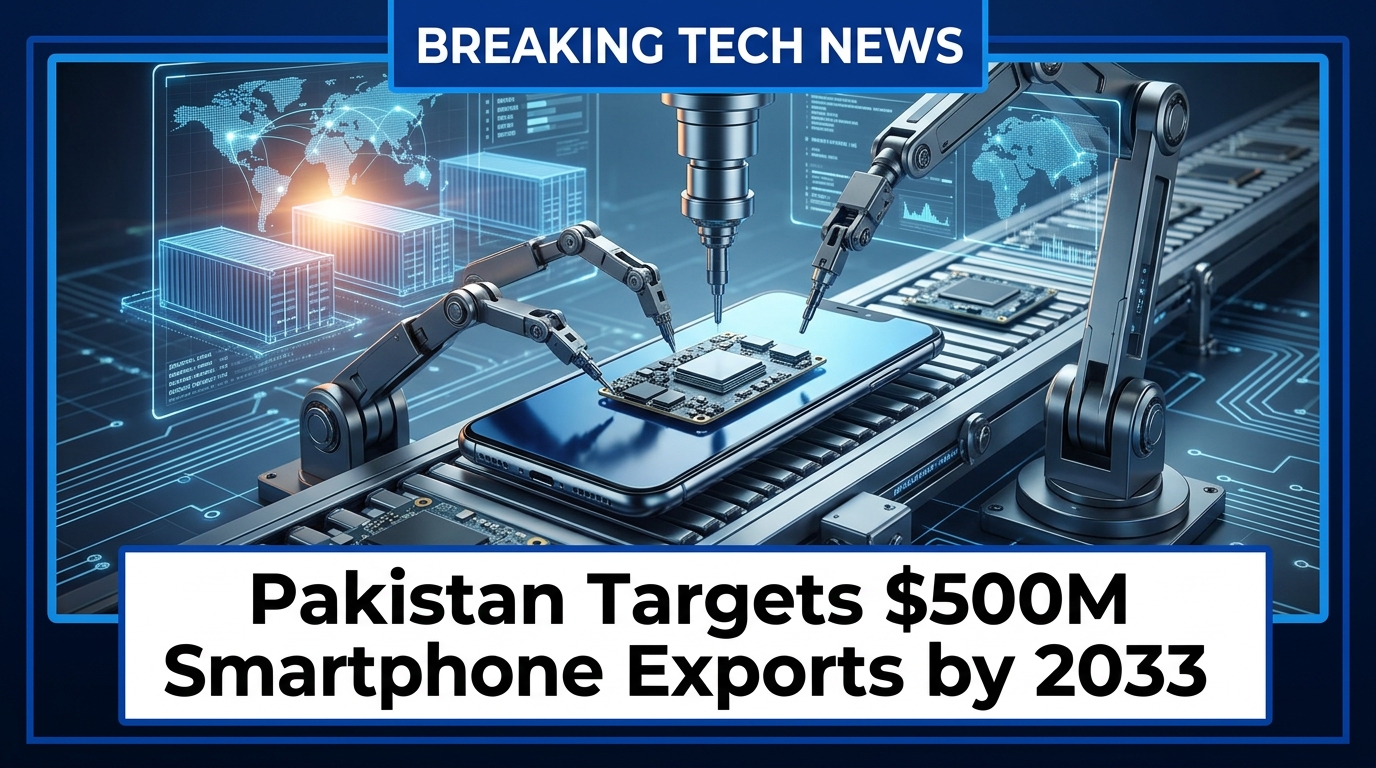
The ultimate target of this policy is hard currency. The government has set an ambitious target of exceeding $500 million in annual smartphone exports by 2033. To incentivize this, a Technology Innovation Fund (TIF) has been established to offer an 8% cash rebate to companies that ship “Made in Pakistan” devices to emerging markets, particularly in Africa and the Middle East.
Global Supply Chains Require Bulletproof IT
Transitioning from domestic assembly to global exporting introduces immense operational complexity. Multi-national corporations like Samsung and local giants like Infinix must coordinate highly complex, globally distributed supply chains.
Every single component tracked, every shipment container logged, and every international B2B transaction requires massive, real-time databases and Enterprise Resource Planning (ERP) systems to function without a single second of downtime.
Why Corporate IT Relies on Local Hosting
When dealing with international exports, logistics software cannot afford the latency or vulnerability associated with cheap, shared hosting.
For the massive ERP systems managing these newly automated assembly lines, Nextgen Hosting’s Dedicated Servers provide the unyielding compute power necessary for real-time tracking. Furthermore, by utilizing localized KVM VPS architecture, manufacturers ensure that their proprietary supply chain data remains legally compliant with domestic data sovereignty laws while remaining highly accessible to global partners.
The Refurbished Market: A Hidden Opportunity
Interestingly, the new policy isn’t just about brand-new phones. A significant portion of the strategy involves formalizing the mobile phone refurbishment ecosystem. By establishing certified, manufacturer-backed refurbishment plants, the government aims to export high-quality, warrantied used phones to lower-income markets, generating further export revenue while tackling domestic e-waste.
Conclusion
The Mobile Manufacturing Policy 2026-33 is a bold statement of intent. By mandating local component fabrication and heavily incentivizing exports, Pakistan is positioning itself to become a formidable hardware exporter by the end of the decade. The shift from assembly lines to global supply chains has officially begun.
