
In a decisive move to protect Pakistan’s critical energy infrastructure against sophisticated cyber warfare and ransomware, the National Electric Power Regulatory Authority (NEPRA), in joint coordination with the National Cyber Emergency Response Team (Pak-CERT) and the Ministry of Energy (Power Division), has officially notified the National Power Sector Operational Technology (OT) and Industrial Control Systems (ICS) Cybersecurity Regulations 2026.
The legally binding regulatory framework establishes sweeping national cybersecurity baselines across every electrical generation facility, transmission dispatch hub, and regional distribution utility operating within Pakistan. Under the directive, all power licensees must dismantle unauthorized Internet connections to control networks, enforce the ISA/IEC 62443 industrial security standard, deploy hardware-enforced optical data diodes, and stream cryptographically anonymized threat telemetry to the newly established National Power Sector Security Operations Center (Power-SOC) in Islamabad.
For critical infrastructure analytics platforms, telemetry aggregators, and enterprise software engineering teams tasked with monitoring distributed power assets, mission-critical processing pipelines must be deployed exclusively on sovereign domestic infrastructure, leveraging Dedicated Servers and low-latency Dedicated Servers in Pakistan.
1. The Critical Infrastructure Threat Landscape
Electrical grids worldwide have evolved into primary targets for state-sponsored Advanced Persistent Threat (APT) groups, state-aligned cyber espionage syndicates, and disruptive ransomware gangs. In modern grid topologies, attacks no longer seek merely to exfiltrate corporate data; adversaries aim to manipulate physical equipment, trigger transformer phase trips, burn turbine bearings, and cause cascading blackouts across national populations.
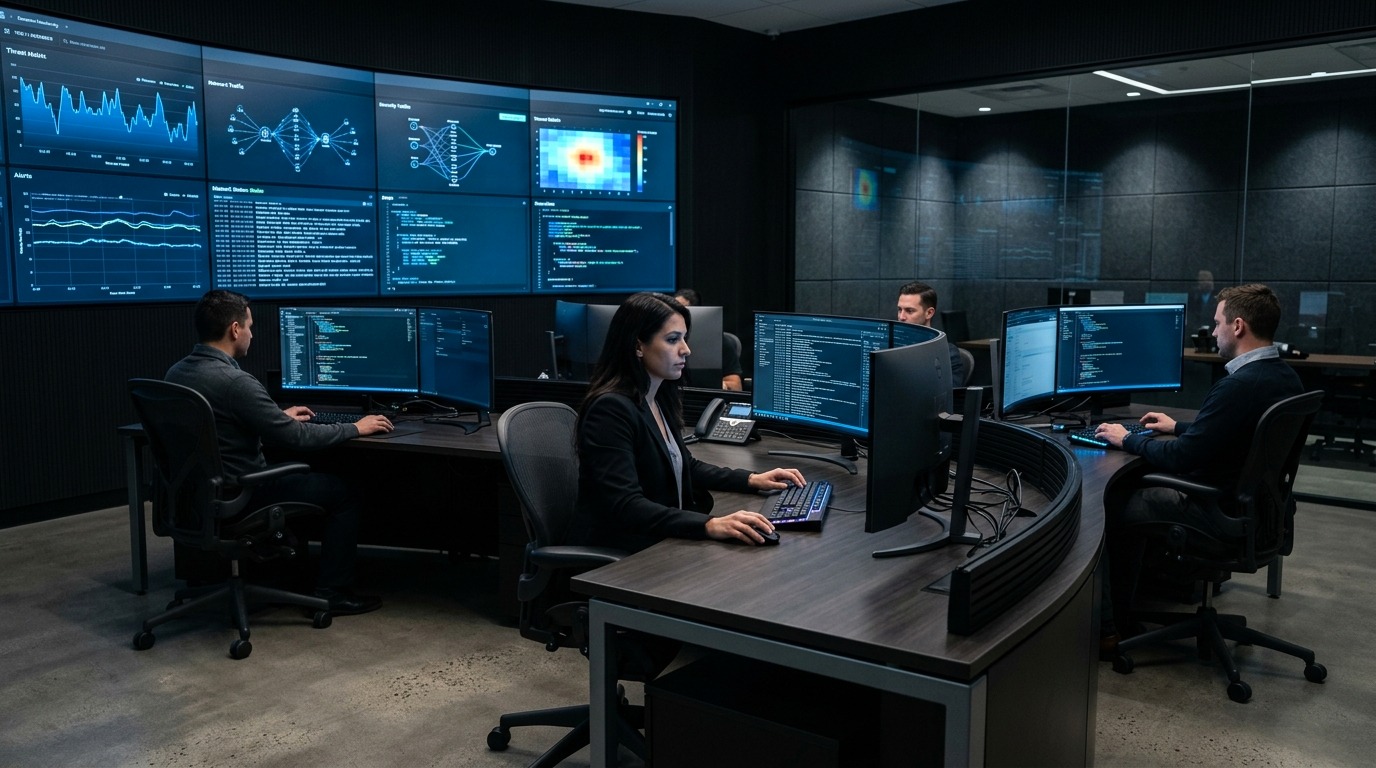
The historical weaponization of specialized industrial malware—such as Industroyer/CrashOverride (which opened substation transmission breakers in Ukraine), Triton/HatMan (which targeted industrial safety instrumented systems to disable plant trip protections), and Industroyer2 (designed for rapid IEC 60870-104 protocol abuse)—demonstrates the catastrophic risks facing electrical control systems.
Within Pakistan, the proliferation of digitized substations, smart grids, and remote telemetry units has exponentially expanded the national attack surface across three high-value generation and transmission domains:
- Strategic Hydroelectric Dams: Megawatt facilities including Tarbela Dam (4,888 MW), Mangla Dam (1,150 MW), and Neelum-Jhelum (969 MW) utilize distributed supervisory control networks to orchestrate penstock intake valves, hydraulic governor actuators, and spillway release mechanisms. Malicious modification of governor logic could induce catastrophic mechanical resonant frequencies or hydraulic water hammer shocks.
- Thermal & Nuclear Power Generation Complexes: Independent Power Producers (IPPs) such as Hubco, Port Qasim Coal, Sahiwal, and Thar Coal, alongside nuclear power generation stations (CHASNUPP Units 1–4 and KANUPP Units 2–3 operated by the Pakistan Atomic Energy Commission), rely on sensitive Distributed Control Systems (DCS) and Safety Instrumented Systems (SIS). Any compromise to cooling water valves or turbine steam controls risks rapid plant shutdowns and physical rotor destruction.
- National Transmission Interconnects: The National Transmission & Despatch Company (NTDC) operates thousands of circuit kilometers of 500 kV and 220 kV extra-high-voltage (EHV) transmission lines coordinated by the National Power Control Center (NPCC) in Islamabad. Cyber intrusions at primary intertie substations could induce wide-area voltage collapses and frequency oscillations, severing North-South power transfer corridors.
Historically, industrial control systems relied on “security through obscurity.” Today, unpatched engineering workstations (EWS), legacy Windows operating systems, dual-homed maintenance laptops, and default manufacturer credentials on Programmable Logic Controllers (PLCs) represent critical vulnerabilities that the new regulations eliminate.
2. Purdue Architecture Enforcement & IEC 62443 Standards
The centerpiece of the NEPRA–Pak-CERT 2026 regulation is the mandatory implementation of the Purdue Enterprise Reference Architecture (PERA) and strict adherence to the multi-part ISA/IEC 62443 international standard suite.
Structural Segmentation of the Purdue Model
Under the directive, every power utility must formally classify and physically segment its network architecture into rigorous hierarchical zones:
| Industrial Zone | Operational Function | Hardware & Systems Encompassed | Security Mandate |
|---|---|---|---|
| Level 0: Process | Physical Actuation & Sensing | Turbine bearings, generator windings, current transformers (CTs), potential transformers (PTs), switchgear | Hardwired physical isolation, shielded cabling |
| Level 1: Basic Control | Local Loop Automation & Protection | Programmable Logic Controllers (PLCs), Remote Terminal Units (RTUs), Intelligent Electronic Devices (IEDs) | Closed serial/Ethernet loops, disabled telnet/HTTP, signed firmware |
| Level 2: Supervisory | Real-Time Area Supervision | Human-Machine Interfaces (HMIs), supervisory SCADA servers, engineering consoles | Air-gapped VLANs, strict role-based access control (RBAC), disabled USB ports |
| Level 3: Site Operations | Operational Management & Historians | Plant historians, asset management software, patch servers, domain controllers | Local jump hosts, hardened Linux kernel deployments, multi-factor authentication |
| Level 3.5: Industrial DMZ (IDMZ) | Secure IT/OT Intermediary | Reverse proxies, jump servers, read-only replicated historians, optical data diodes | Zero direct traffic pass-through, hardware unidirectional data diodes |
| Level 4/5: Enterprise & Cloud | Corporate IT & Business Planning | Enterprise Resource Planning (ERP), billing engines, corporate email, public portals | Standard enterprise IT controls, fully segmented from OT backbones |
[ Level 4 / 5: Corporate IT & Enterprise ERP ]
                      │
                      ▼ (Strictly Blocked for Direct Control Traffic)
══════════════════════════════════════════════════════════════════════════════
[ Level 3.5: Industrial DMZ (IDMZ) ]
    ├─ Multi-Factor Authenticated Jump Bastions
    ├─ Replicated Read-Only Historian Databases
    └─ Unidirectional Optical Data Diode (Tx Only -> Rx Only)
══════════════════════════════════════════════════════════════════════════════
                      │
                      ▼ (Hardware Diode Isolation)
[ Level 3: SCADA Operations & Engineering Workstations ]
    ├─ SCADA Master Engine & Plant Historian
    └─ Active Directory & Local Patch Management
                      │
[ Level 2: Supervisory Control ] ────► HMIs & Substation Touchscreens
                      │
[ Level 1: Basic Control ] ──────────► PLCs, RTUs, Protection Relays (IEDs)
                      │
[ Level 0: Physical Field ] ─────────► Switchgear, Turbines, High-Voltage Breakers
Unidirectional Optical Data Diodes & Internet Prohibition
The regulations strictly forbid any direct physical or logical connection between Level 2/3 supervisory control networks and Level 4 corporate networks or the public Internet.
Where telemetry must leave the power plant—such as dispatch generation figures sent to CPPA-G or line loading data sent to the NPCC—utilities are mandated to deploy hardware-enforced unidirectional optical data diodes. These physical appliances contain a light-emitting transmitter (Tx) on the OT side and a photo-detector (Rx) on the corporate IT side, linked by a single-strand fiber optic cable. Because physical photon transfer cannot flow in reverse, no cyber threat, malicious command packet, or lateral exploit can physically travel back into the plant’s operational core.
Furthermore, remote vendor maintenance access directly into SCADA networks is formally outlawed. All third-party diagnostics must terminate within the Level 3.5 IDMZ using ephemeral session keys, time-bound session recordings, and dual-custody authorization.
3. Sovereign Telemetry & Real-Time National SOC Interconnect
A core breakthrough of the 2026 framework is the creation of Pakistan’s first Sovereign Operational Technology Security Operations Center (Power-SOC), supervised jointly by Pak-CERT and NEPRA’s cyber audit wing.
Passive Deep Packet Inspection of Industrial Protocols
Because industrial controllers (PLCs and RTUs) operate with real-time microsecond determinism, conventional IT security vulnerability scanners (such as active Nmap port sweeps or vulnerability probes) can crash legacy embedded chips or trigger spurious breaker trips.
To resolve this, the regulation mandates 100% passive network monitoring sensors deployed across mirrored Switched Port Analyzer (SPAN) ports and non-intrusive optical network TAPs:
- Modbus TCP (Port 502): Deep-packet inspection monitors function codes (e.g., detecting unauthorized
Write Multiple Registerscommand 0x10 directed toward turbine valve registers). - DNP3 (Distributed Network Protocol 3, Port 20000): Real-time tracking of master-outstation polling, flagging out-of-sequence controls, unexpected select-before-operate commands, or unauthorized warm-restart payloads.
- IEC 60870-5-104 (Port 2404): Substation telecontrol packet decoding, isolating malicious Application Service Data Units (ASDUs) attempting remote tripping or telecommand parameter modifications.
- IEC 61850 Substation Automation: Packet validation for Generic Object Oriented Substation Events (GOOSE) and Sampled Values (SV) multicast streams running across digital substation fiber process buses.
+-------------------------------------------------------------------------------+
|                    SUBSTATION / POWER PLANT OT NETWORK                        |
|                                                                               |
|  [ Protection Relay ]        [ SCADA HMI ]          [ RTU Controller ]        |
|          │                         │                        │                 |
|          └─────────────────────────┼────────────────────────┘                 |
|                                    │                                          |
|                          [ Substation Switch ]                                |
|                                    │ (Passive SPAN / Optical TAP Mirror)      |
+------------------------------------┼------------------------------------------+
                                     │ (Raw Packet Sniffing: Zero Interruption)
                                     ▼
                   [ Passive Industrial Network Probe ]
                   ├─ Protocol Anomaly Parser (DNP3, Modbus, 104)
                   ├─ Baseline Behavioral Model Engine
                   └─ Cryptographic Anonymization & Hashing Module
                                     │
                                     ▼ (Encrypted Syslog / STIX-TAXII via IPsec)
         [ National Power Sector Security Operations Center (Power-SOC) ]
                                     │
                                     ▼ (Real-Time Threat Exchange)
                     [ Pak-CERT National Threat Core ]
Automated Threat Exchange Integration
Edge anomaly sensors aggregate protocol anomalies, unexpected engineering mode activations, and unauthorized IP communications. The sensor strips sensitive plant operational identities, cryptographically hashes internal payload specifics, and transmits structured STIX/TAXII threat intelligence feeds over dedicated encrypted government transport lines to Pak-CERT’s National Threat Exchange.
When an anomaly is flagged at a hydel station in Khyber Pakhtunkhwa—such as an automated credential spray attempting to brute-force a protection relay—Pak-CERT’s core correlation engine generates mitigation rules and pushes detection hashes to every generation and distribution facility across Pakistan within seconds.
For an in-depth review of Pakistan’s sovereign cybersecurity defenses and national monitoring facilities, review our report on the MOITT National Cyber Defense Range & Pak-CERT Threat Exchange.
4. Transmission & Distribution Enforcement Timelines
NEPRA has instituted a tiered enforcement mechanism, imposing stringent milestones accompanied by substantial regulatory penalties for non-compliance. Under Section 28 of the NEPRA Act, failure to adhere to the OT/ICS cybersecurity directives risks tariff suspension, revocation of generation licenses, or statutory administrative penalties exceeding PKR 100 million.
The implementation roadmap divides all national electricity participants into two critical compliance tranches:
Tier-1 Entities (Generation & Bulk Transmission) — Deadline: March 31, 2027
- National Transmission & Despatch Company (NTDC): Full segmentation of the National Power Control Center (NPCC) in Islamabad and regional control centers in Jamshoro; deployment of optical data diodes at all 500 kV and 220 kV grid stations.
- Water & Power Development Authority (WAPDA): Complete PERA architectural overhaul across Tarbela, Mangla, Warsak, and Ghazi-Barotha hydel generation facilities.
- Central Power Purchasing Agency (CPPA-G): Hardening of wholesale commercial settlement engines and integration with the competitive bilateral energy market (CTBCM) gateway.
- Major Independent Power Producers (IPPs) & K-Electric: Mandatory compliance for Port Qasim, Hubco, Engro Powergen Thar, K-Electric Generation (BQPS-I/II/III), and nuclear power plants under PAEC oversight.
Tier-2 Entities (Distribution Companies - DISCOs) — Deadline: September 30, 2027
- Regional DISCOs: Islamabad Electric Supply Company (IESCO), Lahore Electric Supply Company (LESCO), Faisalabad (FESCO), Multan (MEPCO), Gujranwala (GEPCO), Peshawar (PESCO), Hyderabad (HESCO), Sukkur (SEPCO), and Quetta (QESCO).
- Distribution Substation SCADA & Smart Grid Infrastructure: Isolation of Advanced Metering Infrastructure (AMI) Head-End Systems (HES) and Meter Data Management Systems (MDMS) from internal distribution automation backbones. For more details on the country’s distribution smart grid infrastructure, explore our analysis on IESCO & LESCO Phase-1 AMI Smart Meter Deployment.
All entities are mandated to undergo comprehensive third-party penetration testing, architecture reviews, and red-teaming every six months. Crucially, these audits may only be executed by domestic cybersecurity firms formally accredited by Pak-CERT, prohibiting foreign entities from possessing or handling national grid structural layouts.
5. Sovereign Infrastructure Imperative for Power Sector Telemetry
A foundational clause within the NEPRA–Pak-CERT framework strictly prohibits power sector entities, SCADA aggregators, and grid intelligence software providers from storing, indexing, or processing electrical grid Single-Line Diagrams (SLDs), substation GIS coordinates, or real-time OT telemetry logs on offshore public cloud platforms.
Routing critical national infrastructure telemetry through foreign cloud servers introduces severe operational vulnerabilities:
- Foreign Sovereign Extraterritoriality: Data hosted on foreign infrastructure remains subject to legal inspection, subpoena, or technological sanctions by overseas governments, leaving critical energy data vulnerable to unilateral foreign embargoes.
- Subsea Cable Dependency & BGP Hijacking: Relying on overseas nodes means telemetry must transit international submarine cables. If subsea fiber experiences outages or BGP routes are intercepted, national control visibility could be blind during an international crisis.
- High-Frequency Ingestion Latency: Substation telemetry generates thousands of events per second. Transiting overseas networks introduces tens of milliseconds of latency, whereas real-time frequency stabilization requires single-digit millisecond response times.
+--------------------------------------------------------------------------------+
|                        SOVEREIGN COMPLIANCE ARCHITECTURE                       |
|                                                                                |
|    [ Distribution Utilities ]                 [ Bulk Transmission (NTDC) ]     |
|    (IESCO, LESCO, K-Electric)                 (500kV & 220kV Grid Substations) |
|                 │                                             │                |
|                 └──────────────────────┬──────────────────────┘                |
|                                        │                                       |
|                                        ▼                                       |
|            [ Domestic High-Security Bare-Metal Ingestion Layer ]               |
|            ├─ Dedicated Servers in Islamabad & Karachi                         |
|            ├─ Carrier-Neutral Tier-3 / Tier-4 Facilities                       |
|            ├─ Physical Hardware Isolation (Zero Multi-Tenant Hypervisors)      |
|            └─ EMP Shielding & Domestic Dark Fiber Cross-Connects               |
|                                        │                                       |
|                                        ▼                                       |
|            [ Real-Time Sovereign Security Analytics Engine ]                   |
|            ├─ High-Throughput ClickHouse / TimescaleDB Event Storage           |
|            ├─ AI-Driven Behavioral Industrial Anomaly Detectors                |
|            └─ Encrypted Secure Interconnect to Pak-CERT National Threat Hub    |
+--------------------------------------------------------------------------------+
To meet these sovereign compliance criteria, power engineering firms, telemetry aggregators, and cybersecurity platforms must host their data collection clusters, behavioral analytics engines, and SIEM platforms on dedicated physical hardware located inside accredited Pakistani datacenters.
Utilizing Dedicated Servers provides true physical tenant isolation, eliminating the side-channel attack vectors and noisy-neighbor latency fluctuations inherent in shared public clouds. By deploying on Dedicated Servers in Pakistan, utility operators and industrial IoT systems maintain direct local fiber cross-connects with the Pakistan Internet Exchange (PKIX), achieving sub-5ms packet transport times, round-the-clock hardware uptime, and uncompromised compliance with national data sovereignty regulations.
For emerging commercial participants trading electricity under open access, see how clean energy wheeling integrates with national datacenters in our overview of NEPRA CTBCM Green Energy Wheeling for Datacenters.
6. Technical Checklist for Power Sector OT Compliance
Every chief information security officer (CISO), plant automation engineer, and SCADA administrator must audit their facilities against the following regulatory compliance matrix:
| Architectural Domain | Mandated Technical Measure | Verification Standard |
|---|---|---|
| Network Perimeter | Complete elimination of public IP addresses on all HMIs, PLCs, and RTUs; zero split-tunnel VPNs on engineering machines | Hardware packet capture audit |
| Network Isolation | Deployment of unidirectional optical hardware diodes between Level 3 operations and Level 4 IT | Physical inspection & optical continuity test |
| Access Control | Hardware-token multi-factor authentication (FIDO2/WebAuthn) for all IDMZ jump-host access; zero permanent local admin rights | Active Directory & PAM log analysis |
| Protocol Security | Transition to secure industrial protocols (IEC 62351 cryptographic extensions, DNP3 Secure Authentication) where supported | Protocol analyzer verification |
| Passive Monitoring | SPAN/TAP passive anomaly sensors inspecting Modbus, DNP3, and IEC 104 traffic; zero active scanning in OT subnets | Passive packet baseline review |
| Host Hardening | Absolute USB port disabling via firmware/BIOS; application whitelisting on all SCADA consoles; removal of unneeded services | Automated host baseline audit |
| Threat Interconnect | Streaming cryptographically hashed threat telemetry to the National Power-SOC and Pak-CERT Threat Exchange | STIX/TAXII connectivity validation |
| Infrastructure Hosting | Siting of external telemetry aggregators, historians, and monitoring servers on domestic bare-metal systems | Datacenter physical audit & residency verification |
Deploy Sovereign Bare-Metal Infrastructure with Nextgen
Protect mission-critical industrial telemetry, time-series databases, and enterprise monitoring platforms on dedicated bare-metal servers hosted in accredited Tier-3 Pakistani datacenters with domestic fiber isolation and ultra-low latency.