
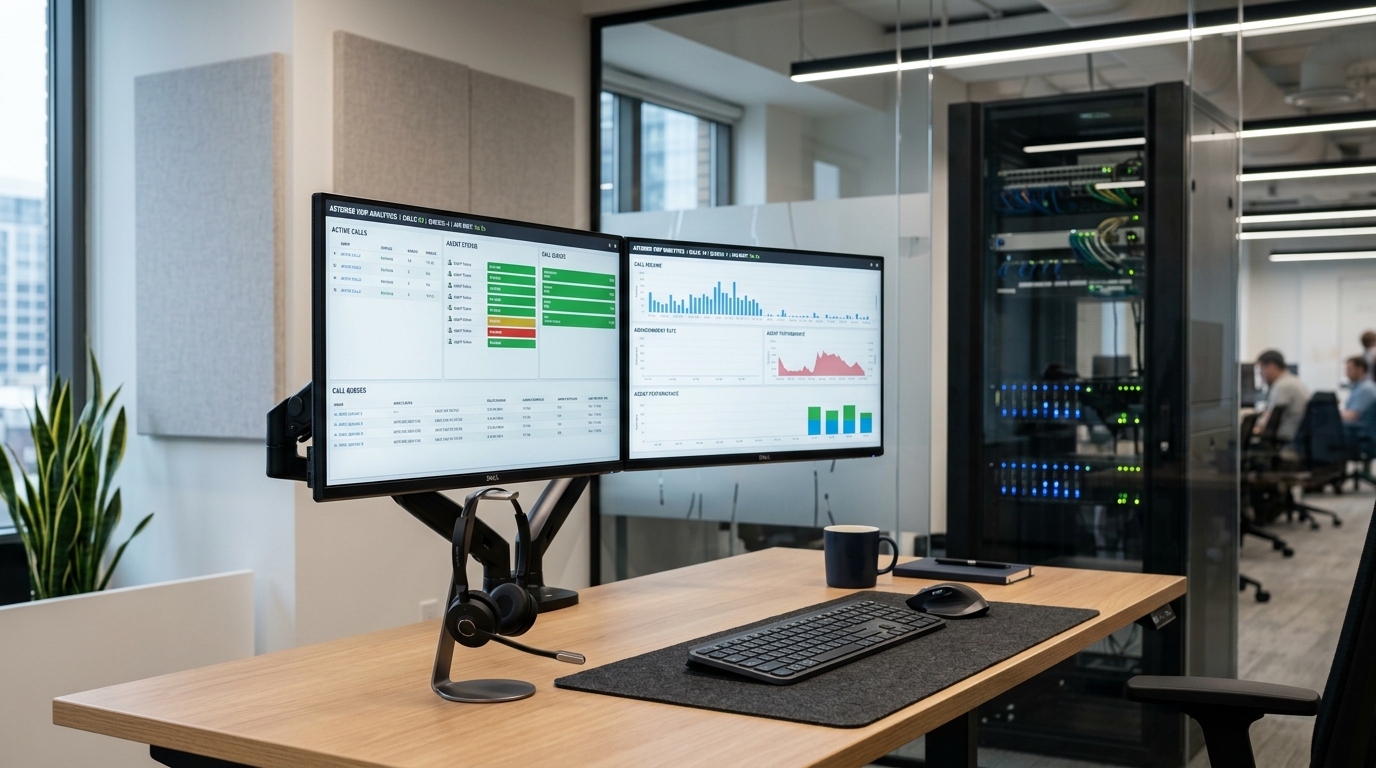
The Business Process Outsourcing (BPO) and telemarketing industry in Pakistan is one of the most vibrant engines of the country’s digital services economy. Spanning major metropolitan hubs like Karachi, Lahore, Islamabad, Rawalpindi, Faisalabad, and Multan, hundreds of technology-driven contact centers operate round-the-clock. These firms provide high-value outbound sales, inbound customer care, tech support, medical billing, solar appointment setting, real estate wholesaling, and freight dispatching across North American (US and Canada), British (UK), and Australian markets.
However, behind every successful 50-seat or 200-seat campaign lies an unforgiving technical reality: real-time voice communication over IP (VoIP) tolerates zero infrastructure fragility. Unlike asynchronous HTTP web requests or streaming video that can buffer content over seconds, voice RTP packets must be delivered within tight temporal boundaries—typically under 150 milliseconds one-way latency, less than 20 milliseconds of jitter, and zero packet loss.
When Pakistani BPO operators attempt to deploy high-concurrency predictive dialers like VICIdial or private branch exchanges like FreePBX on underpowered, unoptimized local desktop machines or shared web hosting, disasters multiply rapidly:
- High jitter and choppy, robotic audio that drops Mean Opinion Scores (MOS) below 3.0.
- One-way audio and ghost calls caused by NAT traversal failures and ISP-level SIP ALG packet mangling.
- High database lock contention on MariaDB under aggressive 3:1 or 4:1 predictive dialing ratios.
- Transatlantic latency spikes through subsea fiber paths (SMW4, AAE-1, IMEWE) resulting in noticeable conversational pauses and instant call abandonment by prospects.
- Carrier-level flagging under STIR/SHAKEN protocols due to unauthenticated SIP trunks and dirty IP reputation.
This comprehensive architectural guide provides an enterprise-grade engineering framework for Pakistani call center owners, systems administrators, and DevOps teams. We break down the exact deployment patterns, kernel optimizations, Asterisk telephony tuning, and infrastructure choices—from cost-effective Pakistan Cloud VPS instances for boutique teams to bare-metal Dedicated Servers for enterprise-scale dialer clusters.
1. The Anatomy of Pakistan’s Transatlantic VoIP Bottlenecks
To engineer an audio pipeline with pristine clarity, you must first understand the physical and networking paths voice traffic traverses between an agent sitting in Lahore or Karachi and a customer answering a mobile phone in Dallas or London.
┌─────────────────────────────────────────────────────────────────────────────────┐
│                    PHYSICAL & LOGICAL PACKET TRAVERSAL PATH                      │
└─────────────────────────────────────────────────────────────────────────────────┘
 [Pakistani Agent Headset]
         │ (Analog Audio via USB/3.5mm)
         ▼
 [Browser WebRTC / SIP Softphone] (Opus / G.711u Encoders)
         │
         ▼ (Local LAN / Wi-Fi Bottlenecks: Bufferbloat, Packet Drop)
 [Pakistani ISP Gateway] (PTCL / Nayatel / StormFiber / Cybernet)
         │
         ▼ (SIP ALG Corruption / ISP Deep Packet Inspection / Routing Variance)
 [International Subsea Cable Gateways] (SMW4, SMW5, AAE-1 via Karachi/Gwadar)
         │  ~120ms - 170ms Physical RTT to Europe/North America
         ▼
 [Cloud VPS / Bare-Metal Dedicated Dialer Core] (Asterisk / VICIdial / Kamailio)
         │  Sub-10ms Direct Peering / Cross-Connect
         ▼
 [Tier-1 SIP Wholesale Carrier] (Telnyx / Twilio / Bandwidth / VoIP.ms)
         │ (STIR/SHAKEN Attestation & SS7/PSTN Interconnect)
         ▼
 [Consumer Carrier & Handset] (Verizon / AT&T / T-Mobile / Vodafone)
The Three Critical Latency Pitfalls:
- The Transatlantic Transit Penalty: Light in fiber optics travels at roughly 200,000 km/s. The physical transit between Pakistan and North American datacenters (Ashburn, VA; Chicago, IL; New York, NY) is physically constrained to a baseline Round Trip Time (RTT) of 140ms to 180ms. If your dialer server is hosted locally in Pakistan with transatlantic SIP trunks, every single call leg doubles this path: Pakistan ISP -> Local Server -> Transatlantic Subsea Cable -> US Carrier -> US Consumer. If the dialer server is hosted near the US carrier, only the single agent-to-server WebRTC stream traverses the transatlantic path.
- SIP ALG (Application Layer Gateway) Mutilation: Consumer and commercial modems deployed by Pakistani telecom providers often have SIP ALG enabled by default. SIP ALG intercepts UDP port 5060 packets and attempts to rewrite the SDP (Session Description Protocol) headers to accommodate NAT. In reality, it corrupts SIP headers, modifies packet checksums, and causes one-way audio or dropped signaling handshakes.
- Bufferbloat & Jitter Spikes: VoIP packets are small (typically 20ms of audio, roughly 160 to 200 bytes). When an office network experiences bursty bandwidth usage (e.g., an agent downloading a CRM attachment or streaming video), non-QoS routers queue these tiny UDP packets behind bulk TCP traffic. This creates unpredictable delay variations (jitter), forcing the Asterisk jitter buffer to either drop packets or artificially delay audio playback.
2. Platform Selection: VICIdial vs. FreePBX
Understanding your operational workflow dictates your software architecture and hardware provisioning.
| Architectural Feature | VICIdial (ViciBox) | FreePBX (PBX GUI / Asterisk) |
|---|---|---|
| Primary Workload | High-volume outbound predictive, ratio, and broadcast dialing. | Inbound call routing, IVRs, ring groups, internal office extensions. |
| Dialing Method | Automated predictive engine dynamically dialing up to 5 lines per live agent. | Manual click-to-call, preview dialing, or inbound queue distribution. |
| Concurrency Load | Extremely High. 20 agents on 3:1 ratio = 60 to 80 active audio channels simultaneously. | Moderate. 20 agents = 20 concurrent active audio channels. |
| Database Architecture | Heavy read/write queries to MariaDB every 100ms via Perl background daemons. | Standard relational storage for CDR (Call Detail Records) and config tables. |
| Ideal Hosting Infrastructure | Multi-server bare-metal Dedicated Servers or high-compute NVMe VPS. | Standalone high-performance Pakistan Cloud VPS. |
| Agent Interface | WebRTC browser-based ViciPhone with real-time agent screen pops and lead scripts. | WebRTC UCP (User Control Panel) or standard SIP desktop softphones (Zoiper/MicroSIP). |
3. Deployment Topology: Single VPS vs. Clustered Dedicated Servers
One of the most frequent mistakes made by growing Pakistani BPOs is scaling past 25 agents on a single virtualized server. VICIdial and Asterisk behave very differently than web servers:
Tier 1: Single-Instance Cloud VPS (1 to 20 Concurrent Agents)
For boutique lead-generation agencies, inbound customer support teams, or freight dispatch offices, a high-performance Cloud VPS is sufficient:
- Specs: 8 vCPU (high frequency), 16GB RAM, 160GB NVMe SSD, 1 Gbps unmetered uplink.
- Roles: Runs the Asterisk telephony engine, Apache/Nginx web server, and MariaDB database on a single virtualized operating system.
- Constraint: Maximum dialing ratio should be kept at 2:1 or 2.5:1. Once agent count exceeds 25, Asterisk audio mixing (MeetMe or ConfBridge) and MySQL table locks on
vicidial_live_agentsdegrade performance.
Tier 2: Multi-Server Clustered Dedicated Infrastructure (50 to 250+ Agents)
When running enterprise campaigns with 50, 100, or 250 seats on aggressive 3:1 or 4:1 predictive dialing, you must decouple the system into a distributed cluster:
- Dedicated Database Server: Runs MariaDB tuned with large memory caches and dedicated NVMe arrays to handle millions of lead dispositions and thousands of queries per second without locking.
- Dedicated Telephony Nodes (Asterisk): Multiple dedicated telephony servers handling SIP signaling, RTP media streams, ConfBridge mixing, and call recordings.
- Dedicated Web Server: Runs Apache/PHP to serve agent screens, supervisor dashboards, and real-time campaign monitors without competing with Asterisk for CPU cycles.
                               ┌──────────────────────────────┐
                               │  Primary Database Server     │
                               │  Bare-Metal Dedicated Server │
                               │  (32-Core, 128GB RAM, NVMe)  │
                               │  MariaDB 10.11 Enterprise    │
                               └──────────────┬───────────────┘
                                              │ Fast Private LAN
                 ┌────────────────────────────┴────────────────────────────┐
                 ▼                                                         ▼
  ┌──────────────────────────────┐                          ┌──────────────────────────────┐
  │  Telephony Node 1 (Asterisk) │                          │  Telephony Node 2 (Asterisk) │
  │  [Dedicated Servers]         │                          │  [Dedicated Servers]         │
  │  SIP Trunks & WebRTC Media   │                          │  SIP Trunks & WebRTC Media   │
  │  100 Agents / 300 Channels   │                          │  100 Agents / 300 Channels   │
  └──────────────┬───────────────┘                          └──────────────┬───────────────┘
                 │                                                         │
                 └────────────────────────────┬────────────────────────────┘
                                              ▼
                               ┌──────────────────────────────┐
                               │  Dedicated Web Frontend      │
                               │  Agent UI & Reports Server   │
                               │  Cloud VPS or Dedicated Node │
                               └──────────────────────────────┘
For high-density BPO clusters where telephony nodes process millions of voice packets every minute, deploying on enterprise-grade Dedicated Servers provides dedicated CPU scheduling without virtualization hypervisor jitter. Furthermore, when dealing with Pakistani domestic financial institutions, government projects, or telecom-regulated workloads requiring in-country data residency, deploying on bare-metal Dedicated Servers in Pakistan guarantees absolute sovereignty and sub-10ms local ping across all national transit networks.
4. Operating System & Linux Kernel Tuning for VoIP
Voice packets are sensitive to CPU context-switching delays and UDP socket buffer exhaustion. Standard Linux distributions (Ubuntu, AlmaLinux, Rocky Linux, or OpenSUSE Leap used by ViciBox) are configured out of the box for generic web serving, not high-throughput UDP packet streaming.
Execute the following kernel tuning on your Asterisk/VICIdial host.
Tuning /etc/sysctl.d/99-voip-telephony.conf:
# ====================================================================
# VoIP & Telephony UDP Buffer & Network Kernel Optimizations
# ====================================================================

# Increase maximum and default socket receive buffers for high-density RTP
net.core.rmem_max = 33554432
net.core.wmem_max = 33554432
net.core.rmem_default = 1048576
net.core.wmem_default = 1048576

# UDP memory limits: min, default, max in pages (4KB per page)
net.ipv4.udp_rmem_min = 16384
net.ipv4.udp_wmem_min = 16384
net.ipv4.udp_mem = 262144 524288 1048576

# Prevent queue overflow during sudden predictive burst dial out
net.core.netdev_max_backlog = 100000
net.core.somaxconn = 65535

# Optimize TCP parameters for WebRTC signaling (WSS) and DB replication
net.ipv4.tcp_rmem = 4096 87380 33554432
net.ipv4.tcp_wmem = 4096 65536 33554432
net.ipv4.tcp_tw_reuse = 1
net.ipv4.tcp_fin_timeout = 15

# Disable ICMP redirect acceptance to prevent routing attacks
net.ipv4.conf.all.accept_redirects = 0
net.ipv4.conf.all.send_redirects = 0

# Enable file descriptor limits
fs.file-max = 2097152
Apply the configuration immediately:
sudo sysctl --systemFile Descriptor and Process Limits:
Ensure Asterisk is never starved of file descriptors for audio channels and recordings in /etc/security/limits.d/99-asterisk.conf:
asterisk soft nofile 1048576
asterisk hard nofile 1048576
asterisk soft nproc  65535
asterisk hard nproc  65535
root     soft nofile 1048576
root     hard nofile 1048576
5. Asterisk & PJSIP Telephony Engine Optimization
5.1 NAT Traversal and Clean Signaling
One of the most persistent issues Pakistani call centers face is “one-way audio”—where the agent can hear the customer, but the customer cannot hear the agent. This is almost exclusively caused by Asterisk advertising its internal private IP address in SDP payload headers rather than its public interface IP.
In /etc/asterisk/pjsip.conf (or via FreePBX Advanced Settings):
[global]
type=global
user_agent=Nextgen Telecom SIP Core

[transport-udp]
type=transport
protocol=udp
bind=0.0.0.0:5060
local_net=10.0.0.0/8
local_net=172.16.0.0/12
local_net=192.168.0.0/16
external_media_address=YOUR_SERVER_PUBLIC_IP
external_signaling_address=YOUR_SERVER_PUBLIC_IP
symmetric_transport=yes

[transport-wss]
type=transport
protocol=wss
bind=0.0.0.0:8089
5.2 Adaptive Jitter Buffer Configuration
To compensate for variable packet arrival over public Pakistani broadband links without introducing sluggish conversational delay, configure Asterisk’s adaptive jitter buffer in /etc/asterisk/pjsip.conf or channel configurations:
[endpoint_template](!)
type=endpoint
context=default
disallow=all
# Allow modern low-bandwidth adaptive codec alongside standard telecom G711
allow=opus
allow=ulaw
allow=alaw
direct_media=no
force_rport=yes
rewrite_contact=yes
rtp_symmetric=yes
ice_support=yes

# Jitter Buffer directives
jbenable=yes
jbforce=no
jbmaxsize=200
jbimpl=adaptive
jbtargetextra=40jbmaxsize=200: Restricts the jitter buffer from growing past 200ms, preventing severe conversational lag.jbtargetextra=40: Maintains an extra safety margin of 40ms to catch unexpected burst packets caused by local ISP packet grouping.direct_media=no: Forces RTP audio to always bridge through the server, ensuring audio recording, coaching, and transfer capabilities remain unbroken.
5.3 Codec Strategy: Opus vs. G.711u (PCMU)
- Agent Leg (WebRTC): Use Opus. Opus is an adaptive, dynamic codec capable of changing bitrates in real-time from 6 kbps to 64 kbps based on packet loss and available bandwidth. It is natively supported by modern browsers (Chrome/Firefox/Edge) and handles fluctuating Pakistani broadband connections with remarkable grace.
- Carrier Leg (SIP Trunk): Use G.711u (PCMU). US and UK wholesale telephony providers operate natively on G.711 (64 kbps uncompressed PCM).
- Transcoding CPU Overhead Note: Transcoding Opus to G.711u on 100 simultaneous channels requires significant CPU compute. This is why having modern dedicated high-clock cores (such as AMD EPYC or Intel Xeon scalable instances available on Dedicated Servers) is crucial when running WebRTC dialer fleets.
6. MariaDB High-Performance Database Tuning for VICIdial
In VICIdial, the database is the primary bottleneck. Under a 3:1 predictive ratio with 50 agents, the system initiates 150 simultaneous outbound calls. Every second, Asterisk query scripts (AST_VDauto_dial.pl, AST_VDremote_agents.pl) hammer the database with rapid updates to status flags.
Add these directives to /etc/my.cnf.d/server.cnf or /etc/mysql/mariadb.conf.d/50-server.cnf:
[mysqld]
# Storage Engine & Memory Optimization
default_storage_engine = InnoDB
innodb_file_per_table = 1
innodb_buffer_pool_size = 12G       # Allocate 60-70% of total system RAM on dedicated DB
innodb_buffer_pool_instances = 8
innodb_log_file_size = 1G
innodb_log_buffer_size = 64M

# High-Concurrency Transaction Flush Tuning
# Value 2 flushes log to OS cache every transaction, syncing to disk once per second.
# Dramatically accelerates VICIdial performance while surviving MariaDB crashes.
innodb_flush_log_at_trx_commit = 2
innodb_flush_method = O_DIRECT
innodb_io_capacity = 2000
innodb_io_capacity_max = 4000

# Connection & Threading Optimization
max_connections = 1200
table_open_cache = 8000
table_definition_cache = 4000
open_files_limit = 65535
thread_cache_size = 100

# Query Cache (Disable on MariaDB 10.4+ to prevent global mutex locking)
query_cache_type = 0
query_cache_size = 0

# Temporary Tables in Memory
tmp_table_size = 128M
max_heap_table_size = 128M
Restart MariaDB and monitor with mytop or htop during peak dialing hours. Disk I/O should remain consistently flat thanks to pure NVMe caching and buffered log commits.
7. Security Hardening & Carrier Compliance
A compromised VoIP PBX is an immediate financial catastrophe. Malicious automated scanners search the web 24/7 for exposed port 5060 installations to inject fraudulent premium-rate international calls, which can rack up thousands of dollars in carrier invoices within minutes.
7.1 Restricting SIP Port 5060 with nftables / iptables
Never leave port 5060 open to the public internet. Restrict SIP signaling traffic strictly to your known wholesale carrier IP subnets:
# Allow established connections
sudo iptables -A INPUT -m conntrack --ctstate ESTABLISHED,RELATED -j ACCEPT

# Allow SIP signaling strictly from your wholesale carrier (e.g., Telnyx IP ranges)
sudo iptables -A INPUT -p udp --dport 5060 -s 192.76.120.0/24 -j ACCEPT
sudo iptables -A INPUT -p udp --dport 5060 -s 64.16.224.0/24 -j ACCEPT

# Allow WebRTC Secure WebSockets for your agents
sudo iptables -A INPUT -p tcp --dport 8089 -j ACCEPT

# Allow standard RTP media port range (Voice audio packets)
sudo iptables -A INPUT -p udp --dport 10000:20000 -j ACCEPT

# Drop all unauthorized SIP scanning
sudo iptables -A INPUT -p udp --dport 5060 -j DROP
7.2 Fail2Ban Integration for WebRTC & SIP Endpoints
Deploy Fail2Ban with a tailored filter for Asterisk PJSIP authentication failures to automatically jail brute-forcing IP addresses before they consume system entropy or CPU cycles.
7.3 STIR/SHAKEN and Caller ID Hygiene
Under Federal Communications Commission (FCC) regulations in the United States, all outbound calls terminated to US telephone networks must comply with STIR/SHAKEN cryptographic call verification. If your calls lack proper identity headers, mobile carriers will immediately flag your outbound numbers as “Scam Likely” or “Fraud Risk”, causing contact rates to plummet from 18% down to less than 2%.
- Purchase Clean DIDs (Direct Inward Dialing numbers) directly from Tier-1 carriers with A-Level Attestation.
- Rotate outbound caller ID pools systematically using VICIdial Area Code CID mapping.
- Maintain strict TCPA compliance lists and scrub against the national Do Not Call (DNC) registry automatically inside your CRM or dialer lists before importing.
8. Agent Workstation & Local Office Network Optimization in Pakistan
Server infrastructure is only as effective as the local office environment delivering the audio to your agents’ headsets.
┌────────────────────────────────────────────────────────────────────────┐
│               PAKISTAN BPO LOCAL OFFICE ROUTER OPTIMIZATION            │
├────────────────────────────────────────────────────────────────────────┤
│  1. Disable SIP ALG permanently on core fiber router.                  │
│  2. Implement FQ_CoDel or CAKE Smart Queue Management (SQM) QoS.       │
│  3. Tag voice packets with DSCP Expedited Forwarding (EF / Value 46).   │
│  4. Enforce 100% wired Cat6 Gigabit Ethernet; eliminate office Wi-Fi.  │
│  5. Deploy dual-WAN failover: Fiber Primary (PTCL/Nayatel/StormFiber)  │
│     + Low-latency 4G/5G Enterprise Backup (Jazz/Zong).                 │
└────────────────────────────────────────────────────────────────────────┘
For distributed work-from-home agents, managing local software environments can introduce severe security risks and data leakage vulnerabilities. Many enterprise BPOs deploy remote agents inside managed Windows Dedicated RDP workstations. This keeps sensitive CRM customer records, credit card info, and lead lists contained entirely within an encrypted, audit-logged enterprise perimeter.
9. Comprehensive Infrastructure Checklist for Production Deployment
Before putting your first live marketing campaign or support team into production, review this pre-flight verification matrix:
- Physical Architecture: Compute instances configured with dedicated CPU cores (avoid shared CPU vCPUs that suffer from thread starvation).
- Transatlantic Alignment: Telephony server located in US-East or UK datacenters close to carrier interconnects for US/UK campaigns.
- Kernel Buffers:
net.core.rmem_maxandnet.core.wmem_maxscaled to 32MB+. - NAT Configuration:
external_media_addressandexternal_signaling_addresscorrectly configured with the server’s public IPv4. - Codec Prioritization: Opus enabled for browser WebRTC agent channels; G.711u configured for wholesale carrier trunks.
- Adaptive Jitter Buffer:
jbenable=yesandjbimpl=adaptiveconfigured to mitigate subsea fiber jitter. - MariaDB Storage Engine: Table engines optimized with
innodb_flush_log_at_trx_commit = 2and NVMe direct I/O enabled. - Firewall Isolation: SIP port 5060 restricted exclusively to carrier signaling subnets.
- Local Network: SIP ALG completely disabled on all office modems, with strict DSCP/QoS packet prioritization.
10. Conclusion: Scaling Your BPO Fleet with Enterprise Reliability
High-performance telecommunications infrastructure is the lifeblood of Pakistan’s expanding outsourcing economy. By architecting your VICIdial and FreePBX clusters on enterprise-grade Cloud VPS and bare-metal dedicated servers, tuning the Linux kernel for UDP streaming, and implementing modern WebRTC protocols, your contact center can deliver audio quality that rivals local US telecom standards.
Whether you are launching a specialized 15-seat freight dispatch operation or architecting a multi-tenant 500-seat BPO facility, Nextgen Hosting delivers the high-availability infrastructure your business demands.
Deploy Your High-Concurrency Call Center Server
Eliminate jitter, call drops, and database bottlenecks. Deploy enterprise-grade Vicidial, FreePBX, and Asterisk clusters on Nextgen Hosting’s high-frequency Cloud VPS and high-core bare-metal dedicated servers with unmetered 1 Gbps uplinks and round-the-clock technical support.
