
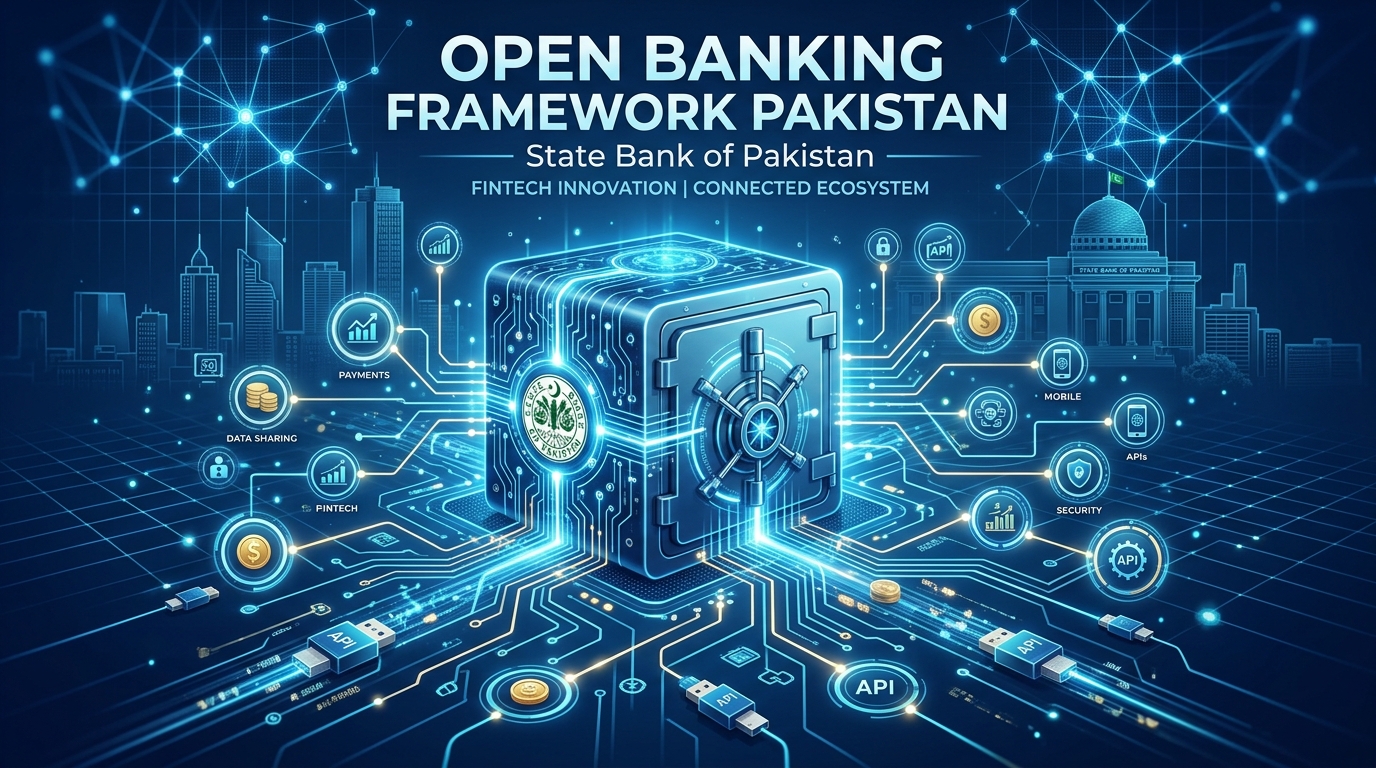
In a watershed moment for Pakistan’s financial technology sector, the State Bank of Pakistan (SBP) has officially rolled out the much-anticipated Open Banking Framework. This landmark regulatory shift mandates commercial banks to open up their financial data to authorized third-party providers (TPPs) through secure Application Programming Interfaces (APIs).
The move is widely seen as the final piece of the puzzle in Pakistan’s digital payment ecosystem, perfectly complementing the already highly successful Raast instant payment system.
What Does Open Banking Mean for Pakistan?
Historically, banks have operated as closed data silos. If you had an account with HBL and another with Meezan Bank, the only way to view your consolidated financial standing was to manually log into both apps. Furthermore, financial startups (Fintechs) struggled to offer innovative credit scoring, lending, or budgeting tools because they couldn’t access a user’s verified banking history.
The new Open Banking Framework changes everything. Under this system:
1. Account Information Service Providers (AISPs)
Fintech startups can now build “Super Apps” that aggregate data from all your different bank accounts into one single, unified dashboard. Users will finally be able to track their spending, manage budgets, and analyze their financial health across multiple institutions in real-time.
2. Payment Initiation Service Providers (PISPs)
Instead of relying on clunky credit card gateways or manual IBFT transfers for online shopping, e-commerce platforms can now integrate directly with banks. A user can authorize a payment directly from their bank account to a merchant without ever leaving the merchant’s app, drastically reducing transaction fees and cart abandonment rates.
3. Democratized Lending and Credit Scoring
By analyzing a user’s unified cash flow through Open Banking APIs, startups can offer micro-loans and “Buy Now Pay Later” (BNPL) services to millions of unbanked or underbanked Pakistanis who don’t have traditional credit histories.
Related Technical Architecture Guides
- FinTech Cloud Security & SBP Compliance: Architecting Secure Financial Platforms in Pakistan – Enterprise implementation details and deployment guide.
- Fintech Cybersecurity & SBP Cloud Framework Compliance for Pakistani Platforms (2026) – Enterprise implementation details and deployment guide.
Strict Security and Data Privacy Guidelines
With great data comes great responsibility. The SBP has made it unequivocally clear that user consent is the absolute bedrock of the Open Banking Framework.
- Banks will only share data if the customer provides explicit, cryptographic consent via a secure OAuth 2.0 token system.
- Users can revoke access to any third-party app instantly from their primary banking portal.
- All participating Fintechs must undergo rigorous cybersecurity audits and comply with stringent data localization laws.
Infrastructure Demands for the Fintech Sector
The influx of millions of API calls per minute will place an unprecedented load on the IT infrastructure of both banks and participating startups. High availability, zero downtime, and localized data processing are no longer optional—they are strict regulatory requirements.
For software houses and Fintech startups looking to capitalize on this revolution, deploying applications on robust, locally hosted infrastructure is critical. Utilizing local Dedicated Servers or scalable Virtual Private Servers (VPS) ensures compliance with the SBP’s data localization policies while providing the ultra-low latency required for real-time financial API transactions.
As banks begin rolling out their developer portals over the next 6 months, 2026 is shaping up to be the most explosive year for the Pakistani Fintech industry to date.
