
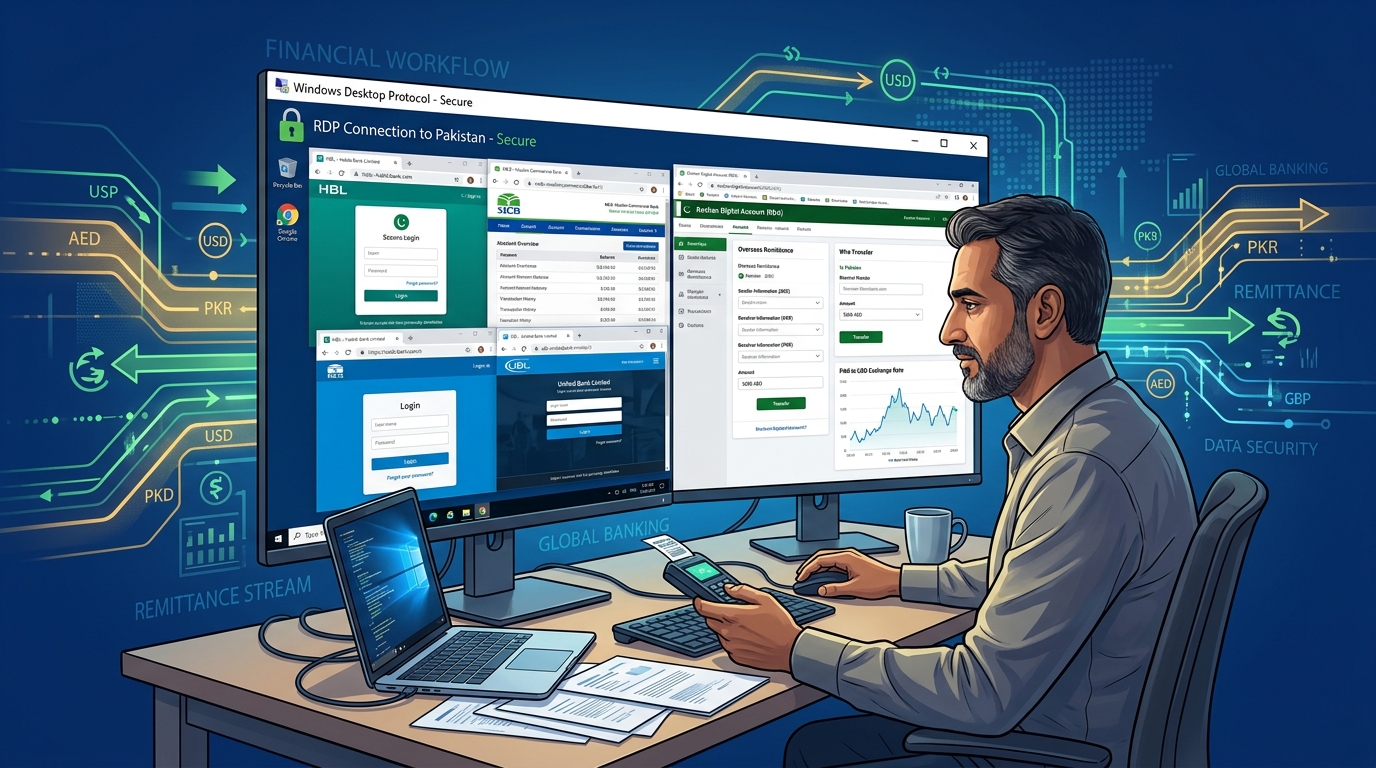
Millions of overseas Pakistanis living across the Gulf (UAE, Saudi Arabia, Qatar), the United Kingdom, Europe, and North America maintain complex, cross-border financial lives. They operate bank accounts in their host countries, manage corporate payrolls, invest through Roshan Digital Accounts (RDA), and send billions of dollars in remittances back home.
However, when expats travel back to Pakistan for family visits, business trips, or extended stays, accessing their foreign banking dashboards often turns into a security nightmare.
Modern retail and commercial banks (such as Barclays, Chase, Emirates NBD, Al Rajhi, Wise, and PayPal) employ automated fraud prevention engines. When you log into your US or UAE banking portal from a dynamic IP address provided by a local Pakistani telecom operator, the bank’s security system flags the transaction as an unauthorized overseas session.
Within seconds, online banking access is restricted, credit cards are frozen, and you are prompted to visit a local overseas branch in person—an impossible task while you are physically in Pakistan!
To maintain uninterrupted access to your financial accounts, the secure standard is a Dedicated Windows RDP Server or private Cloud VPS physically hosted in your country of banking residence.
Why Foreign Banks Freeze Logins from Overseas Travel
Banking anti-fraud platforms (including LexisNexis ThreatMetrix and BioCatch) calculate risk scores on every connection attempt using multiple heuristics:
Expat Accessing Bank Portal
             │
             ▼
[Bank Threat & Heuristic Assessment]
             │
             ├── Geolocation Anomaly: User logged into Dubai 8 hours ago; now logging into Lahore
             ├── ASN Mismatch: Connection originates from a non-residential, developing-market ISP
             ├── Leaked DNS: Browser resolves queries through local Pakistani ISP nameservers
             ├── Browser Telemetry: Timezone mismatch between system clock and declared location
             │
             ▼
Risk Score > Alert Threshold? ──► [ACTION: Account Locked / Debit Card Suspended]
Why Consumer VPNs Make the Problem Worse:
Many travelers try to circumvent this by turning on a commercial VPN. However, banks actively maintain blacklists of known commercial VPN exit nodes. Logging into your bank through a known VPN IP often raises a bigger red flag than logging in directly from Pakistan, as automated credential-stuffing bots routinely use VPNs!
The Solution: Dedicated Residential / Business RDP
A Dedicated RDP Server provides a clean, private computing environment running inside a tier-3 datacenter located in the exact jurisdiction where your bank operates (e.g., London, Frankfurt, Dubai, or New York).
Expat in Pakistan (Laptop / Smartphone)
             │
             ▼ (Encrypted RDP Connection)
  [NextGen Dedicated RDP / Cloud VPS]
  (Static IP in UK, US, or UAE — 100% Dedicated to You)
             │
             ▼ (Clean, Trusted Domestic IP)
 [Barclays / Chase / Emirates NBD / Wise / PayPal]
Why Dedicated RDP Guarantees Safe Banking:
- Permanent Static IP Address: Your banking dashboard always sees the exact same IPv4 address, establishing a consistent, trusted device history.
- Local Domestic DNS & ASN: All DNS queries are resolved locally within the target country, leaving zero forensic trace of overseas routing.
- Hardware Profile Consistency: The browser fingerprint, canvas signature, and operating system attributes remain identical whether you are connecting from Karachi or Islamabad.
Step-by-Step Setup: Hardening an Overseas Banking RDP
When configuring a remote server for financial management, follow these security practices:
1. Implement Two-Factor Authentication for RDP Access
Protect your remote server access using multi-factor authentication (MFA):
- Enable Network Level Authentication (NLA) on Windows Server.
- Use tools like Duo Security or Microsoft Authenticator to require push-notification approval before an RDP session can open.
2. Restrict Browser Usage Exclusively to Banking
Inside the remote RDP desktop:
- Use a dedicated browser (e.g., hardened Firefox or Brave) strictly for financial and banking portals.
- Avoid installing unnecessary browser extensions or plugins.
- Clear temporary session caches upon logout, but retain trusted device cookies.
3. Match Local Timezone and Regional Formats
Ensure your Windows Server timezone matches the physical location of the server:
# Example: For a UK-based banking server, set GMT Standard Time
Set-TimeZone -Id "GMT Standard Time"
Selecting Infrastructure for Expat Banking & Remittances
- Individual Expats & Remote Professionals: A lightweight Cloud VPS running Windows Server 2022 provides a responsive, private desktop environment with a dedicated IP.
- International Business Owners & Family Offices: A dedicated bare-metal Dedicated Server allows multiple family members or finance officers to manage corporate treasury, trade finance, and remittance operations with full hardware isolation.
Don’t risk locked bank accounts or blocked wire transfers during your travels. A dedicated remote banking workstation provides the security, stability, and peace of mind you need.
Manage Your Global Bank Accounts Safely from Pakistan
Never face frozen bank accounts or geoblocking again. NextGen Dedicated RDP servers provide clean, static IP addresses in the UK, US, and Europe with lightning-fast speeds and bank-grade security.
