
The Payment Systems Department (PSD) of the State Bank of Pakistan (SBP) has officially issued a landmark regulatory circular notifying the commercial operationalization of Raast Direct Debit and the Auto-Debit Mandate API. This development marks the culmination of the central bank’s multi-phase National Payment Systems Strategy, introducing standardized recurring account-to-account (A2A) pulls across Pakistan’s banking sector.
For the first time, domestic software developers, SaaS providers, digital media platforms, utility distribution companies, and microfinance institutions can collect recurring payments directly from customer bank accounts through an interoperable, real-time settlement architecture.
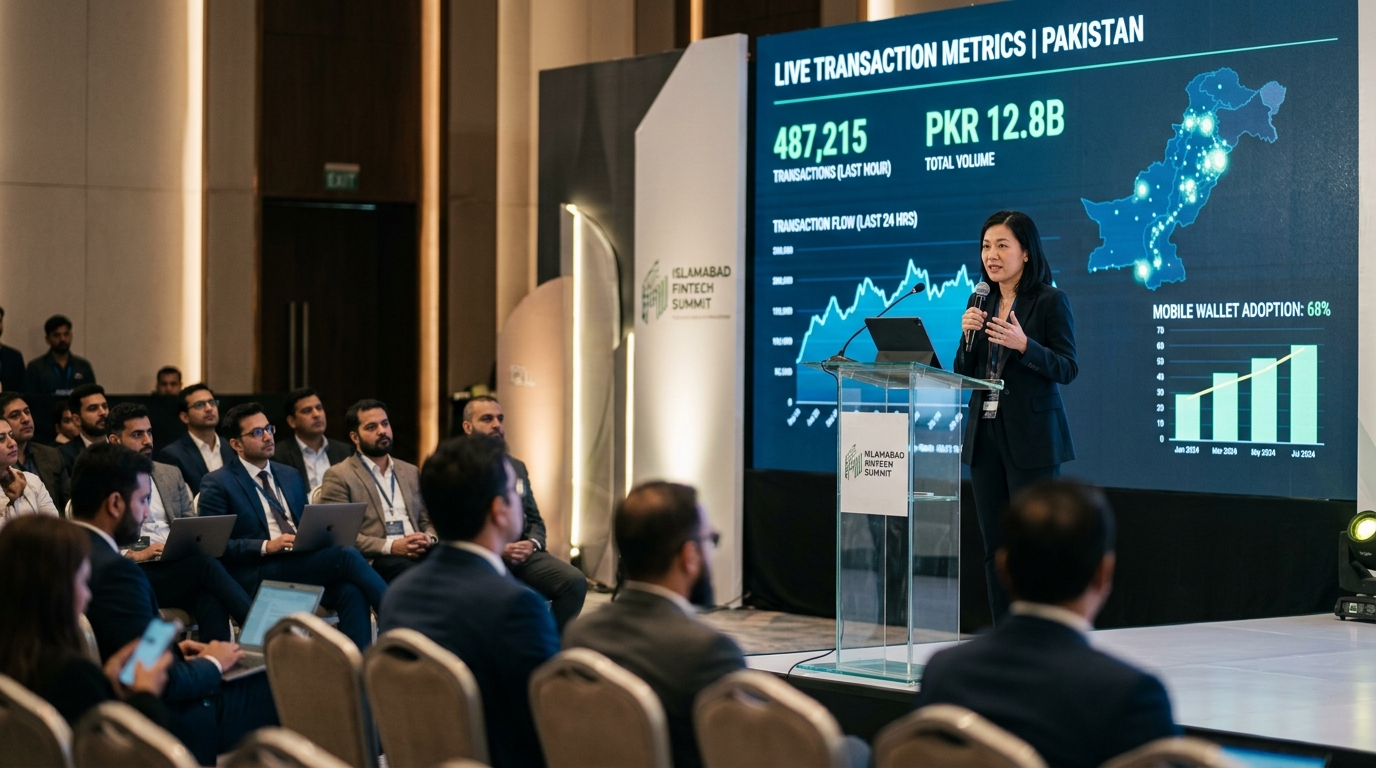
The transition directly resolves the structural friction that has constrained Pakistan’s subscription economy for over a decade: the absence of an open, friction-free recurring payment instrument. For payment processors, banks, and enterprise SaaS platforms handling high-frequency auto-debit triggers and instant webhook callbacks, mission-critical processing pipelines require the performance and data isolation of Dedicated Servers and ultra-low-latency Dedicated Servers in Pakistan.
1. Dismantling the 3DS OTP Hurdle in Recurring Billing
Historically, digital businesses operating in Pakistan faced an existential friction point when monetizing recurring services. Unlike mature digital markets where card-on-file tokenization allows frictionless background billing, the Pakistani ecosystem has operated under strict two-factor authentication (2FA) mandates.
Every digital transaction on debit or credit card rails—whether powered by Visa, Mastercard, or PayPak—has required a dynamic 3D Secure (3DS) One-Time Password (OTP) dispatched via SMS or email. While crucial for preventing card-present and unauthorized ecommerce fraud, this requirement made automated background subscription billing practically impossible:
- Catastrophic Churn Rates: Software companies reported renewal failure rates ranging between 40% and 65% every month. Users ignored SMS OTPs, failed to enter verification codes while away from their devices, or faced SMS routing delays from telecom aggregators.
- Cardholder Hesitation: Domestic debit card holders have historically hesitated to store sensitive primary account numbers (PAN) on merchant websites due to perceived security risks.
- PayPak Limitations: The domestic payment scheme, PayPak, which accounts for tens of millions of financial inclusion cards across public and commercial banks, lacked an automated recurring billing framework.
- Manual Invoicing Overhead: Service providers, including cloud hosting vendors, telcos, and schools, were forced to generate manual monthly PDF invoices, requiring customers to initiate individual IBFT (Inter-Bank Funds Transfer) transactions via mobile banking apps.
Raast Direct Debit bypasses card rails entirely by creating an authenticated, cryptographically signed standing authorization directly between the merchant and the consumer’s bank account or digital wallet.
2. Technical Architecture: ISO 20022 and the E-Mandate Workflow
Under the technical specifications formulated by SBP and 1LINK, Raast Direct Debit operates entirely on the global ISO 20022 messaging standard, specifically leveraging pain.009 (Mandate Initiation Request), pain.010 (Mandate Amendment), pain.011 (Mandate Cancellation), and pain.008 (Direct Debit Transaction Execution).
The lifecycle of an automated auto-debit mandate follows a strict electronic authorization (e-mandate) pipeline designed to balance user convenience with bank-grade security:
Step 1: Mandate Creation Request
When an end-user subscribes to a software subscription or recurring bill on an integrated merchant application, the merchant’s payment gateway generates a mandate creation payload sent to the Raast core switch via an authorized Payment Service Provider (PSP) or Payment Switch. This payload defines:
- Mandate Type: Fixed Amount (e.g., fixed software subscription) or Variable with Cap (e.g., utility bills, usage-based cloud billing).
- Maximum Cap (Debit Ceiling): The maximum permissible PKR amount that can be charged in any single cycle.
- Debit Frequency: Daily, weekly, monthly, quarterly, or bi-annual.
- Mandate Validity Window: Start date and optional expiry date.
Step 2: One-Time Customer Authentication
Rather than storing card credentials, the user is redirected via a standardized deep-link or push notification to their registered mobile banking app (such as Meezan, HBL, Bank Alfalah, Nayapay, Sadapay, Easypaisa, or JazzCash). The customer reviews the transparent terms of the mandate and signs it using strong customer authentication (Biometric Touch ID / Face ID or Banking PIN).
Step 3: Mandate Tokenization
Upon successful approval, the consumer’s bank issues a unique, immutable Raast Mandate Reference Number (UMRN). This cryptographic token is registered on the centralized Raast directory. Sensitive account details, account numbers, and IBANs are never exposed to the merchant.
Step 4: Asynchronous Recurring Execution
When the billing cycle matures, the merchant system invokes the Raast Direct Debit execution endpoint passing the UMRN. The funds are cleared and settled instantaneously via Raast real-time gross settlement (RTGS) rails, with settlement confirmations broadcasted to both payer and payee in under two seconds.
3. Comparative Analysis: Raast Direct Debit vs. International & Legacy Rails
The architectural differences between Raast Direct Debit, international card-based billing, regional instant frameworks like India’s UPI AutoPay, and legacy bank standing orders highlight significant cost, settlement, and reliability advantages:
| Feature / Metric | Raast Direct Debit (Pakistan) | UPI AutoPay (India) | Stripe / Card-on-File (Global) | Legacy Standing Orders (ACH) |
|---|---|---|---|---|
| Underlying Rail | Account-to-Account (ISO 20022) | UPI Account-to-Account | Card Networks (Visa/Mastercard) | Batch Inter-Bank Clearing |
| Initial Authentication | 1-Click Biometric in Banking App | UPI PIN in Auth App | 3DS OTP or CVV Entry | Physical Form / Manual Branch Visit |
| Recurring Execution | Fully Automated (Zero OTP) | Automated up to Cap | Background Pull (No OTP) | Batch Clearing (T+1 to T+3) |
| Settlement Speed | Instantaneous (< 2 seconds) | Instantaneous (< 2 seconds) | T+2 to T+7 Business Days | 24 to 72 Hours |
| Processing Fees | Negligible (SBP subsidized cap) | Negligible (< 0.5%) | 2.9% + Fixed Transaction Fee | High Fixed Bank Charges |
| Card Expiry Failures | Zero (Tied to active IBAN) | Zero (Tied to VPA/IBAN) | High (Cards expire every 3 yrs) | Low (Tied to account) |
| Cancellation Control | Instant via Mobile Banking App | Instant via UPI App | Requires Merchant Portal | Requires Manual Bank Request |
Unlike legacy standing orders, which took days to clear and incurred substantial administrative overhead, Raast Direct Debit settles in real time with immediate ledger confirmation. Compared to credit card billing, merchants eliminate card expiration declines, fraud chargebacks, and steep interchange costs.
4. Webhook Architecture, High-Frequency Idempotency, and Infrastructure Requirements
While Raast Direct Debit abstracts payment complexity for the end consumer, it places unprecedented technical demands on merchant payment gateways and backend infrastructure.
When a merchant initiates an automated batch debit for hundreds of thousands of active recurring subscriptions on the 1st of every month, thousands of asynchronous webhook payloads are transmitted back to the merchant’s application tier within narrow execution windows.
+------------------+         +---------------------+         +----------------------+
|  Merchant Billing|         | Payment Gateway /   |         |   Raast Core Switch  |
|  Engine (SaaS)   |         | PSP Middleware      |         |   (State Bank Rail)  |
+--------+---------+         +----------+----------+         +----------+-----------+
         |                              |                               |
         | 1. Trigger Direct Debit      |                               |
         |    with Mandate UMRN         |                               |
         +----------------------------->| 2. pain.008 Batch Execution   |
         |                              +------------------------------>|
         |                              |                               |
         |                              | 3. Instant Ledger Settlement  |
         |                              |<------------------------------+
         | 4. High-Frequency Webhook    |                               |
         |    (Idempotent Callback)     |                               |
         |<-----------------------------+                               |
         |                              |                               |
         | 5. 200 OK (<50ms ACK)        |                               |
         +----------------------------->|                               |
The Double-Charging Hazard and Idempotency Keys
In financial processing, network timeouts, transient packet loss, and retry mechanisms can trigger duplicate execution requests. If a webhook acknowledgment is delayed beyond standard gateway timeouts (typically 2,000 milliseconds), the originating switch will retry the webhook delivery.
To prevent double-charging or duplicate fulfillment of recurring subscriptions, merchant microservices must implement rigorous idempotency mechanisms:
- Deterministic Idempotency Keys: Every debit call contains a unique hash composed of the Mandate UMRN, billing cycle sequence, and timestamp.
- Sub-50ms Distributed Locking: Using low-latency in-memory data structures (such as Redis cluster locks) to acquire an atomic lease on the transaction ID before processing account state updates.
- Guaranteed Local Compute Isolation: Running financial transaction brokers on noisy, multi-tenant public cloud instances can result in CPU scheduling jitter, leading to missed webhook timeouts and out-of-order execution.
Deploying high-frequency billing orchestrators, database clusters, and webhook listeners on bare-metal Dedicated Servers eliminates hypervisor overhead and ensures continuous determinism. Furthermore, keeping payment data workloads inside Pakistan on Dedicated Servers in Pakistan minimizes transit latency to local bank gateways, maintains sub-10ms ping times to 1LINK and domestic PSP endpoints, and fully satisfies SBP data residency requirements.
5. Economic Transformation Across Local Industry Verticals
The introduction of Raast Direct Debit is poised to fundamentally alter business models across Pakistan’s formal and digital economy:
B2B SaaS and Software Exports
Domestic software vendors selling enterprise tools, CRM platforms, human resource suites, and accounting systems can now collect recurring monthly and annual software licensing fees automatically. This eliminates manual invoice reconciliation, reduces accounts receivable aging from weeks to zero, and allows Pakistani software firms to build authentic SaaS models with predictable Monthly Recurring Revenue (MRR).
Web Hosting and Cloud Infrastructure
Hosting providers and infrastructure operators frequently suffer service interruptions when clients forget to manually pay renewal invoices before domains and virtual private servers expire. With automated e-mandates, hosting platforms can maintain uninterrupted services for client databases, SSL certificates, and server clusters without human intervention.
Digital Media, OTT, and EdTech
Streaming services, news publications, and educational platforms have historically struggled to build subscription-based models in Pakistan without relying on mobile airtime billing (which deducted up to 40% in carrier aggregation cuts) or international app store channels. Raast Direct Debit enables direct, low-cost subscriptions with direct profit retention for content creators.
Municipal Utilities and Telecommunications
Utility distribution companies (such as K-Electric, SNGPL, SSGC, IESCO, and LESCO) alongside nationwide fiber internet providers (PTCL, Nayatel, StormFiber) can transition millions of postpaid consumers to auto-debit billing. This reduces billing operational expenses and accelerates utility cash flow cycles.
6. SBP Consumer Protection and Regulatory Safeguards
To prevent consumer abuse and unauthorized debiting, the State Bank of Pakistan has embedded stringent consumer rights safeguards within the Payment Systems Department regulation:
- Pre-Debit Notifications: Under PSD rules, the payer’s bank is mandated to dispatch an SMS and push notification to the customer at least 24 to 48 hours prior to any scheduled debit execution, detailing the merchant name, scheduled execution date, and the exact debit amount.
- One-Tap Mandate Revocation: Consumers retain unilateral authority to pause, modify, or permanently cancel any active mandate directly from their mobile banking interface without requiring permission from the merchant.
- Dispute Resolution & Chargeback Mechanics: In the event of an erroneous or unauthorized debit (such as a charge exceeding the authorized cap), banks are required to reverse the transaction within a strict 48-hour regulatory window pending investigation.
- Mandate Lifecycle Auditing: All mandate registrations, amendments, and revocations are stamped with cryptographic non-repudiation logs, creating an auditable trail verifiable by both SBP auditors and judicial authorities.
7. Strategic Outlook: Building Pakistan’s Next-Generation Fintech Stack
The operationalization of Raast Direct Debit completes the foundational triumvirate of Pakistan’s digital payment revolution: Raast P2P (Person-to-Person instant transfers), Raast P2M (Merchant dynamic QR and Request-to-Pay), and Raast Direct Debit (Automated recurring mandates).
As financial institutions and payment gateways roll out production SDKs over the coming quarters, software companies that architect resilient, low-latency transaction processing pipelines will capture a dominant share of the burgeoning subscription market.
Explore related technology and infrastructure developments:
- Digital Pakistan Stack Open API Gateway for E-Governance
- FBR Mandates Penetration Testing for Fintech Startups
- How to Configure WAF on Local Pakistan VPS for NCSF Compliance
To architect resilient, low-latency financial microservices and ensure absolute data sovereignty for your recurring billing backends, explore our bare-metal solutions on Dedicated Servers in Pakistan.
Power High-Concurrency Financial Systems with Nextgen
Deploy high-performance payment gateways, webhook ingestion queues, and enterprise billing microservices on low-latency dedicated hardware hosted in Tier-3 Pakistani datacenters.
