
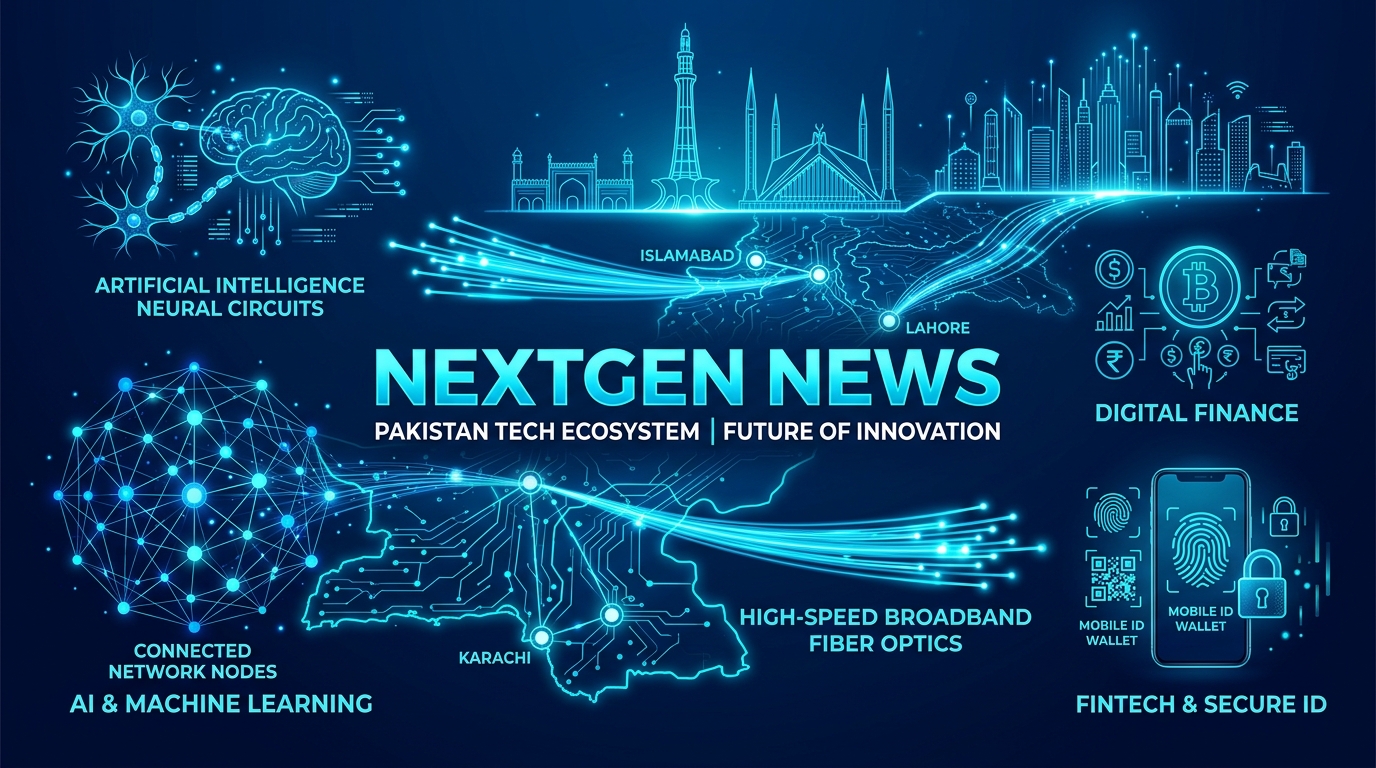
The Ministry of Information Technology and Telecommunication (MoITT) has officially launched the Digital Pakistan Stack, a groundbreaking Open API Gateway aimed at transforming the country’s e-governance framework. This ambitious initiative is set to act as the backbone for a secure, scalable, and fully integrated Digital Public Infrastructure (DPI), bridging the gap between public service delivery and citizen-centric applications.
What is the Digital Pakistan Stack?
Inspired by globally successful digital identity and data-sharing frameworks, the Digital Pakistan Stack provides a unified platform where government databases, private sector innovations, and financial networks can seamlessly communicate. By providing secure, standardized Open APIs, the government aims to enable startups, fintechs, and established enterprises to build applications that plug directly into public registries, identity verification systems, and payment gateways.
Key Components of the Open API Gateway
- Unified Identity Verification: Streamlined integration with NADRA and other civil registries to allow instant KYC (Know Your Customer) processes.
- Secure Payments: Direct hooks into the state’s central payment infrastructure to facilitate instant micro-transactions and cross-border IT remittances.
- Data Privacy & Consent Framework: A robust architecture ensuring that citizen data is accessed only with explicit consent, utilizing advanced encryption standards.
Infrastructure Demands: Why High-Performance Hosting Matters
Deploying an architecture as complex as an Open API Gateway requires immense computational power, low latency, and uncompromising security. Hosting government-level transactions and massive data throughput isn’t suitable for shared environments or basic virtual servers.
To ensure 99.99% uptime and strict data localization compliance, enterprise applications integrating with the Digital Pakistan Stack require robust infrastructure. Organizations looking to run high-frequency API nodes or process heavy data workloads rely heavily on Dedicated Servers in Pakistan to ensure data sovereignty and minimal latency. Furthermore, companies with a global footprint scaling these e-governance applications internationally can benefit from enterprise-grade Dedicated Servers tailored for intense computational demands and advanced security protocols.
Empowering the Local Tech Ecosystem
The launch of the Digital Pakistan Stack is more than an infrastructure upgrade; it’s a catalyst for the local IT ecosystem. By opening up secure APIs, the government is essentially inviting developers to innovate on top of state infrastructure. This move is expected to drastically reduce the time-to-market for digital services, ranging from health-tech platforms to digital taxation portals.
As the gateway scales, the IT Ministry projects a massive surge in local software development, fostering an environment where tech innovation meets public service. For developers, cloud engineers, and IT enterprises, the transition towards this Open API architecture signifies a golden era of digital transformation in Pakistan.
