
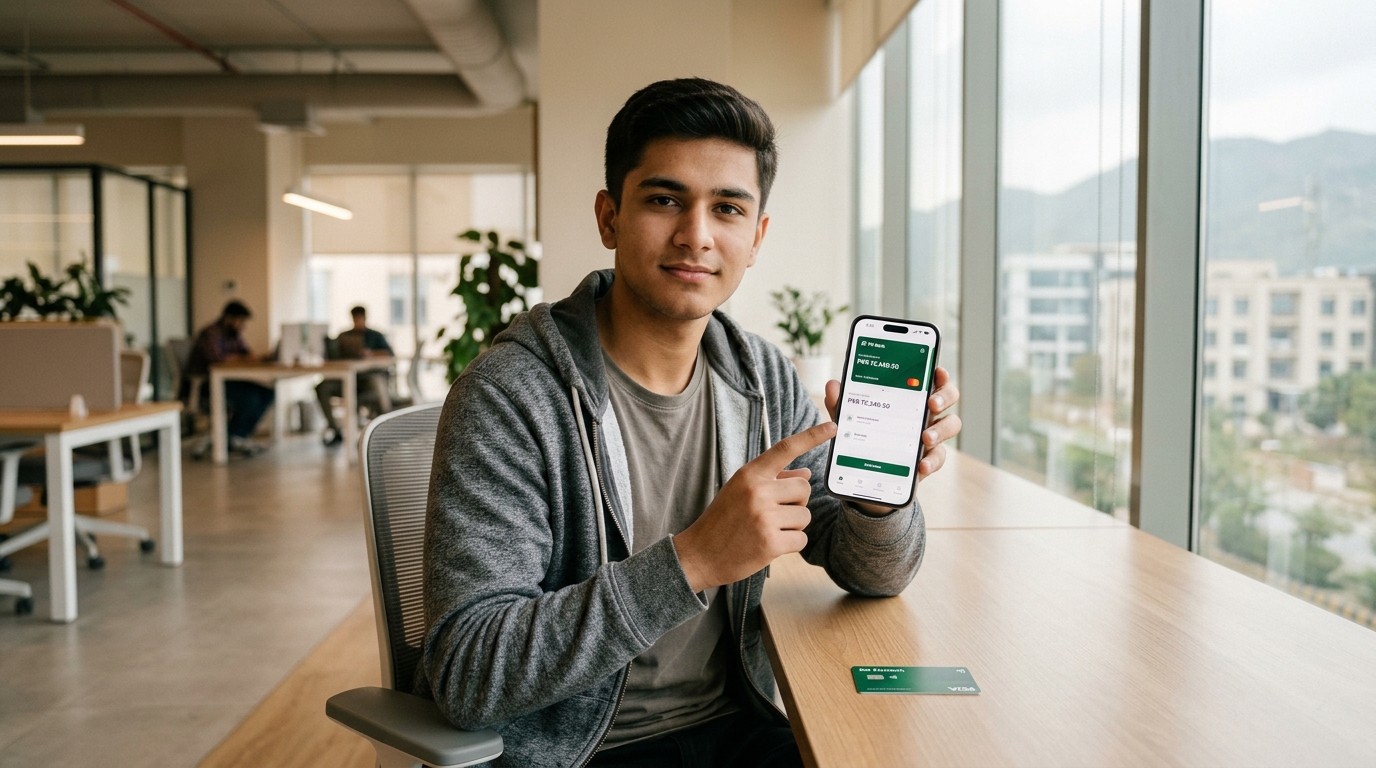
The State Bank of Pakistan (SBP) has formally notified BPRD Circular No. 01 of 2026, introducing the landmark Regulatory Framework for Teenager Account / Wallet across Pakistan’s banking and digital financial ecosystem.[1][2] Issued by the Banking Policy & Regulations Department (BPRD), the circular establishes comprehensive regulatory ground rules that allow resident Pakistani adolescents aged 13 to 18 years to independently open, own, and operate bank accounts and digital wallets in their own names.[1][3]
Prior to this circular, underage citizens in Pakistan were largely restricted to minor accounts operated strictly under the control of parents or court-appointed guardians, or excluded entirely from modern digital payment networks.[2][4] With Pakistan’s youth demographic representing approximately 26 million adolescents, the central bank’s framework bridges a foundational financial inclusion divide, empowering adolescents with hands-on, digital saving and transaction experiences under prudent parental safeguards.[1][4]
Scope and Applicability Across Regulated Financial Institutions
BPRD Circular No. 01 of 2026 applies uniformly to all licensed deposit-taking and payment institutions operating within Pakistan:[1]
| Regulated Financial Institution | Institutional Coverage | Target Operational Delivery Under BPRD 01/2026 |
|---|---|---|
| Commercial Banks | Conventional, Islamic, and Foreign Commercial Banks | Branch-based and internet banking teen savings accounts, physical PayPak/Visa/Mastercard debit cards.[1][2] |
| Digital Retail Banks (DRBs) | Licensed Digital Retail and Full Digital Commercial Banks | Fully digital in-app e-KYC onboarding, biometric verification via NADRA, gamified pocket-money budgeting tools.[1][3] |
| Microfinance Banks (MFBs) | Nationwide and Provincial Microfinance Banking Entities | Low-barrier grassroots teen savings programs, localized financial literacy workshops.[1] |
| Electronic Money Institutions (EMIs) | Licensed Digital Wallet and Payment Service Operators | Instant mobile wallet creation, virtual debit card issuance, QR-code merchant checkouts, Raast P2P payments.[1][4] |
Architectural Core: Account Structure, Operations, and Remittances
The central bank’s framework details distinct operational parameters governing how teenager accounts function:[1][2]
+--------------------------------------------------------------------------+
|                  State Bank of Pakistan - BPRD Circular 01/2026           |
|                  Teenager Account & Digital Wallet Lifecycle              |
+--------------------------------------------------------------------------+
       |                                      |                     |
       v                                      v                     v
+-----------------------+          +--------------------+  +--------------+
| Onboarding & KYC      |          | Active Operations  |  | Age-18 Exit  |
| - NADRA Smart/CRC     |          | - Savings (PKR)    |  | Transition   |
| - Biometric / Face    |          | - Raast & Top-ups  |  | - Upgraded   |
| - Parental Indemnity  |          | - Inbound Remit    |  |   to Standard|
| - Max 2-Day TAT       |          | - NO Cheques/Debt  |  |   Adult Acct |
+-----------------------+          +--------------------+  +--------------+
1. Independent Ownership and Default Savings Structure
Accounts and wallets are registered directly in the teenager’s name, either individually or jointly.[1] To cultivate disciplined savings habits early in life, all teenager accounts are designated by default as savings accounts, earning profit rates in accordance with SBP’s prevailing minimum deposit rate directives, unless explicitly requested as a non-remunerative current account by the applicant.[1][3]
2. Local Currency and Foreign Remittance Reception
Teenager accounts must be denominated in Pakistani Rupees (PKR).[1] Crucially, the framework permits teenager accounts to receive the equivalent PKR proceeds of inward foreign remittances sent through official banking channels.[1][2] This provision offers immediate legal utility to Pakistan’s burgeoning community of adolescent software developers, graphic designers, competitive coders, and academic scholarship recipients who earn legitimate foreign revenues.[1][4]
3. Mandatory Risk Controls and Prohibitions
To insulate young account holders from debt traps and operational fraud, the central bank imposes strict negative covenants:[1]
- No Cheque Books: Financial institutions are strictly prohibited from issuing physical cheque books or negotiable paper instruments on teenager accounts.[1]
- No Credit or Overdraft Facilities: Accounts cannot be extended credit cards, running finance, buy-now-pay-later (BNPL) loans, or overdraft lines.[1][2]
- Debit Only: Transactions are strictly limited to pre-funded balances via physical or virtual debit cards and mobile banking app rails.[1]
Onboarding, Due Diligence, and Parental Safeguards
The framework establishes clear Know-Your-Customer (KYC) and Customer Due Diligence (CDD) procedures designed to balance friction-free onboarding with anti-money laundering (AML) compliance:[1][3]
| Verification Dimension | SBP Regulatory Requirement | Operational Implementation |
|---|---|---|
| Applicant Identity | NADRA Smart National Identity Card (Smart NIC) or Child Registration Certificate (CRC / Form-B).[1] | Online digital validation through NADRA’s Verisys or biometric API integration.[1][3] |
| Biometric Verification | Mandatory where biometric records exist with NADRA.[1] | Smartphone camera contactless fingerprint scanning or in-branch biometric verification.[1] |
| Parent / Guardian Consent | Formal Customer Due Diligence (CDD) of parent or legal guardian.[1] | Submission of parent/guardian CNIC, declaration of source of funds, and legal indemnity.[1][2] |
| Turnaround Time (TAT) | Rapid onboarding mandate.[1] | Real-time digital activation upon verification, or a maximum of 2 working days with automated tracking IDs.[1] |
| Transition at Majority | Automatic status conversion upon turning 18 years old.[1] | Seamless upgrade to standard adult banking account subject to formal CNIC submission and standard CDD refresh.[1][3] |
Implications for Pakistan’s Digital Banking and Fintech Ecosystem
The issuance of BPRD Circular No. 01 of 2026 creates an unprecedented commercial opportunity for Pakistan’s emerging digital banking sector.[2][4] Licensed Digital Retail Banks—including HugoBank, KT Bank, Mashreq, and Telenor Microfinance Bank / Easypaisa—alongside prominent Electronic Money Institutions (such as NayaPay and SadaPay) are actively deploying dedicated youth user interfaces.[4]
Key innovations enabled under the framework include:
- Interactive Budgeting and Micro-Savings: Mobile apps enabling teenagers to set target savings pots (e.g., for laptops, books, or sports equipment) with automated round-ups and visual analytics.[4]
- Parental Companion Interfaces: Dual-screen mobile interfaces where parents can instantly disburse pocket money via Raast P2P, monitor merchant spending categories, and set temporary debit spending caps.[1][4]
- School and College Fee Integrations: Direct in-app tuition disbursements and canteen contactless card taps, accelerating Pakistan’s transition away from cash-heavy campus ecosystems.[2]
Backend Infrastructure Demands: Powering High-Frequency Youth FinTech
The introduction of millions of digitally native teenagers to Pakistan’s financial grid will drive exponential surges in mobile API calls, real-time Raast P2P settlements, and contactless card transaction events.[1][4]
Unlike traditional retail banking customers who check balances weekly, adolescent users interact with mobile banking applications multiple times daily—checking balances after small merchant purchases, receiving pocket money, or executing micro-transactions.[4]
To ensure zero-downtime availability, compliance with SBP Technology Risk Management Framework regulations, and ultra-low latency transaction processing, fintech engineering teams must host their core microservices on high-performance infrastructure.[1] Organizations deploy high-throughput dedicated servers and localized dedicated servers in Pakistan to maintain dedicated compute power, hardware-isolated NVMe database arrays, and direct peering with domestic internet exchange points (IXPs) and national payment switches.[1]
Sources & Official References
- State Bank of Pakistan (SBP). (2026). BPRD Circular No. 01 of 2026: Regulatory Framework for Teenager Account / Wallet. Banking Policy & Regulations Department. Retrieved from https://www.sbp.org.pk/bprd/2026/C1.htm
- Dawn News. (2026). SBP Introduces Regulatory Framework for Teenager Accounts and Digital Wallets. Dawn Media Group. Retrieved from https://www.dawn.com/news/1825206
- Mettis Global. (2026). SBP Issues Regulatory Framework for Teenager Account / Wallet to Boost Financial Inclusion. Retrieved from https://mettisglobal.news/sbp-issues-regulatory-framework-for-teenager-account-wallet/
- Arab News Pakistan. (2026). Pakistan's Central Bank Allows Teenagers to Independently Own Bank Accounts, Digital Wallets. Retrieved from https://www.arabnews.pk/node/2486451/pakistan
Scale Next-Generation Fintech and Banking Backends with Nextgen
Deliver ultra-fast mobile banking experiences, real-time transaction processing, and compliant payment gateways with Nextgen's enterprise bare-metal platforms. Benefit from hardware isolation, high-speed NVMe storage, and localized low-latency network connectivity across Pakistan.
Disclaimer: This post is for informational and educational purposes only, accurate to the best of our knowledge at publication. It does not constitute advice. We do not guarantee accuracy or completeness and accept no liability for any decisions or losses resulting from reliance on this content.
