
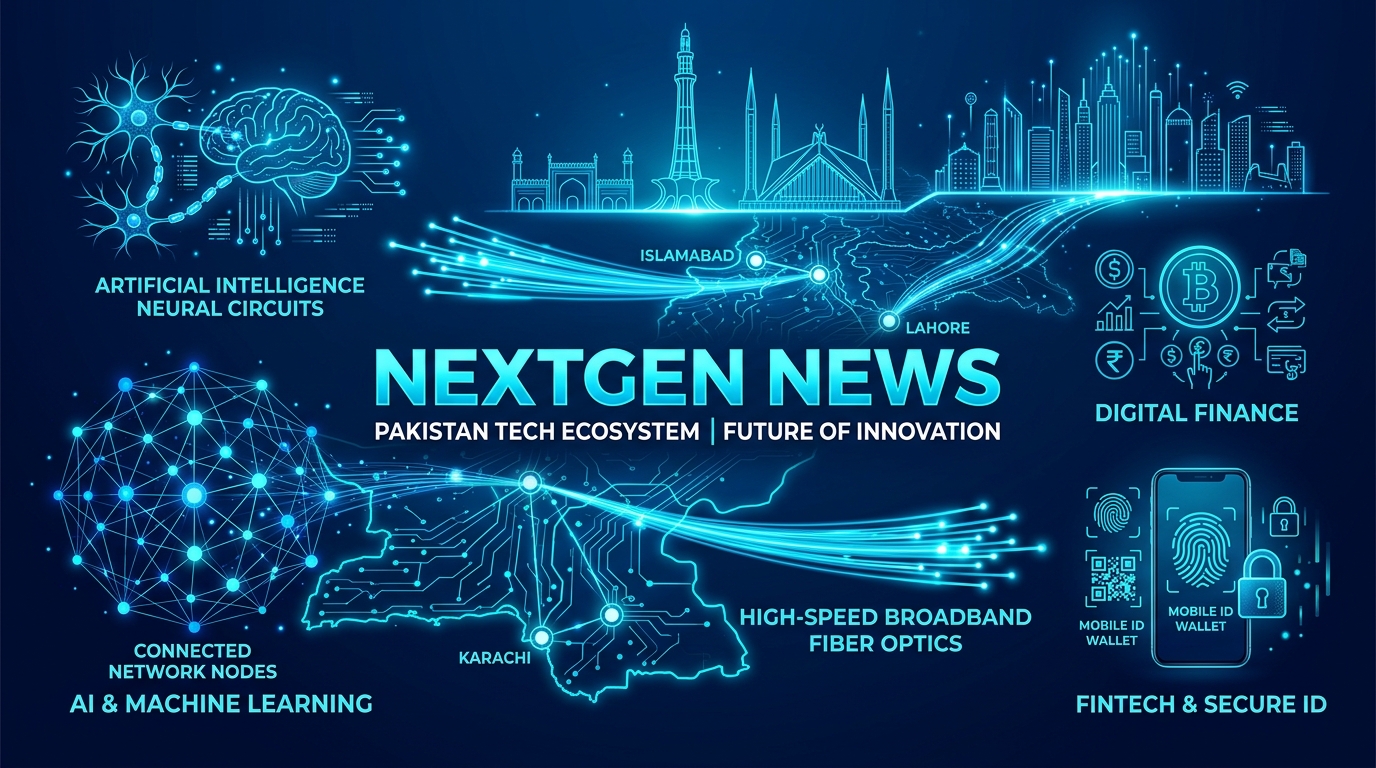
Pakistan’s technology sector is undergoing a monumental transformation in late 2026. Transitioning from a nascent digital economy to a serious global contender, the nation is aggressively adopting artificial intelligence, modernizing its e-governance infrastructure, and pushing for massive foreign investment. From a historic showing at the LEAP tech conference to structural domestic reforms, the landscape is shifting fast. Here is a deep dive into the latest tech news shaping Pakistan’s future.
1. “Think Tech, Think Pakistan” at LEAP 2026
The global tech community’s eyes have been on Riyadh for LEAP 2026 (August 31–September 3), and Pakistan has delivered an unprecedented showing. Led by the Pakistan Software Export Board (PSEB) and the Ministry of IT & Telecommunication (MoITT), the delegation includes nearly 1,000 members, featuring 25 highly innovative startups and 50 established technology companies.
Under the banner “Think Tech, Think Pakistan,” the country’s objective is clear: to shed its old reputation as solely a source of low-cost outsourced talent and establish itself as a premier provider of high-value, sophisticated solutions. Pakistani firms at LEAP are showcasing cutting-edge advancements in enterprise AI, smart-city technology, and fintech, aiming to forge lucrative partnerships within Saudi Arabia’s booming digital economy and attract substantial foreign direct investment (FDI).
2. E-Governance and the “National Digital Stack”
To sustain this external momentum, internal reform is crucial. The government is rapidly rolling out a “National Digital Stack” to modernize public service delivery.
The National Data Governance Policy 2026
Recently enacted, this landmark policy empowers the newly formed Pakistan Digital Authority (PDA) to standardize how data is handled, stored, and shared across all federal bodies. By enforcing citizens’ “right to know” and “right to correct,” the policy aims to eliminate bureaucratic friction and foster a transparent digital government ecosystem.
Enhanced Information Security and Payments
As digitalization accelerates, so do cyber threats. The approval of the Pakistan Information Security Framework 2026 sets mandatory security protocols for all public-sector systems. Simultaneously, the State Bank of Pakistan is expanding the Raast instant payment system, with an ambitious target to shift all government disbursements and receipts online by the end of 2026.
3. The Resurgence of the Startup Ecosystem
Following the macroeconomic headwinds of 2023–2024, Pakistan’s startup ecosystem is experiencing a disciplined, robust recovery. The “growth-at-any-cost” mindset has been replaced by a focus on unit economics, profitability, and sustainable scaling.
Venture Capital and Government Backing
Venture funding is bouncing back as international investors recognize the untapped potential of a 240-million-strong consumer market. To mitigate perceived risks, the MoITT is finalizing the operational details of a $25 million to $50 million startup fund designed to provide a first-loss guarantee for international investors.
Furthermore, the Finance Bill 2026 delivered long-awaited relief to the ecosystem, introducing pass-through taxation for venture capital funds and abolishing restrictive withholding tax barriers, simplifying cash flows for emerging tech companies.
4. Artificial Intelligence at the Forefront
AI is no longer a buzzword; it is a central pillar of Pakistan’s economic strategy. The government remains committed to its audacious target of $1 billion in AI-related investments by 2030.
At the grassroots level, National Incubation Centers (NICs) are prioritizing AI-native startups. Local innovators are integrating large language models and machine learning into critical sectors, ranging from predictive healthcare diagnostics to AI-driven tax automation tools like “TaxGPT.”
5. Telecom Evolution and the 5G Horizon
The telecom sector continues to evolve to support this digital revolution. Digital-first operators like Onic are pushing boundaries by integrating advanced generative AI features directly into their consumer applications.
Looking ahead, the industry is bracing for the highly anticipated 5G spectrum auctions. The government views 5G not just as an upgrade in mobile speeds, but as the foundational infrastructure required to support the IoT, smart cities, and AI deployments essential for Pakistan’s continued technological ascent.
To support your own digital transformation and host your next big project on reliable infrastructure, check out our VPS Server Hosting in Pakistan at Nextgen Hosting.
Need Enterprise-Grade Performance?
If your workload demands maximum processing power and zero resource-sharing, explore our bare-metal Dedicated Servers and Dedicated Servers in Pakistan. We offer ultra-low latency, unmetered bandwidth, and enterprise-grade hardware to scale your operations seamlessly.
