
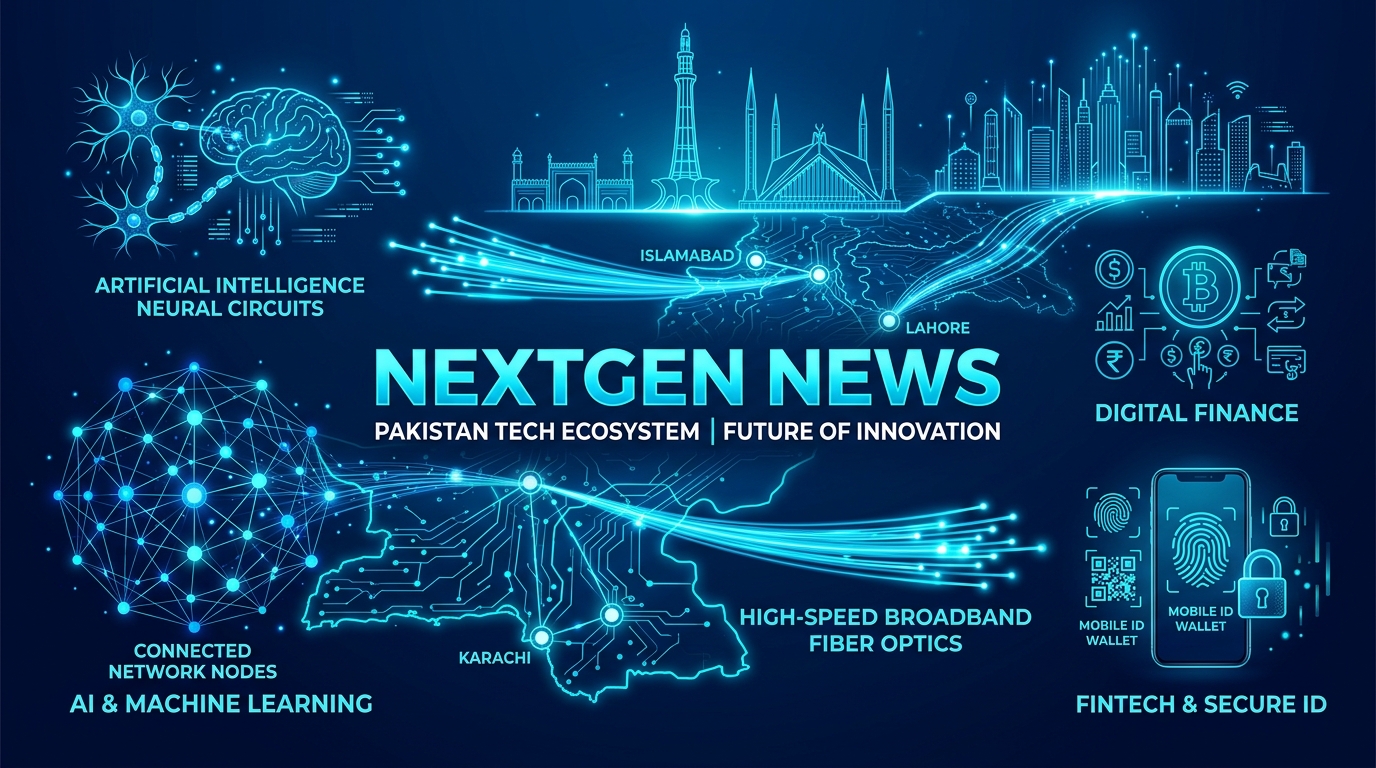
The landscape of scientific research and technological innovation in Pakistan has taken a monumental leap forward. In a landmark move, the Ministry of Information Technology and Telecommunication (MoITT), in collaboration with leading academic institutions, has officially launched the National Quantum Computing Research Initiative (NQCRI). This ambitious program is designed to position Pakistan within the global quantum race, aiming to develop indigenous capabilities in quantum algorithms, secure communications, and advanced simulations over the next decade.
The Strategic Vision Behind NQCRI
Quantum computing represents a fundamental shift from classical binary computing. By leveraging the principles of quantum mechanics—superposition and entanglement—quantum computers can solve complex problems in minutes that would take traditional supercomputers millennia.
The NQCRI focuses on three core pillars:
- Quantum Cryptography and Cybersecurity: Developing post-quantum cryptographic protocols to secure national data grids against future threats.
- AI and Complex Simulations: Accelerating research in drug discovery, material sciences, and financial modeling through quantum-enhanced machine learning.
- Infrastructure and Talent Development: Establishing state-of-the-art quantum simulation labs and offering specialized training programs for researchers and engineers.
Infrastructure Demands: Bridging Classical and Quantum
While true fault-tolerant quantum computers are still on the horizon, the immediate step involves running highly complex quantum simulators on classical hardware. These simulations demand immense computational power, extremely low latency, and robust data security.
To support these intensive workloads, research institutions and enterprises cannot rely on standard shared hosting. Hosting massive Quantum AI simulations requires enterprise-grade, bare-metal infrastructure. For local institutions driving this initiative, deploying Dedicated Servers ensures the necessary dedicated resources (CPU, RAM, and NVMe storage) without the “noisy neighbor” effect common in virtualized environments.
Furthermore, maintaining data sovereignty and minimizing latency for local researchers is critical. Utilizing Dedicated Servers in Pakistan provides the high-performance computing backbone required right at home. This localized approach not only accelerates data processing speeds but also complies with stringent national data security frameworks.
Economic and Industrial Impact
The NQCRI is not purely an academic endeavor; it has significant commercial implications.
- Financial Sector: Banks can utilize quantum algorithms for real-time risk analysis and fraud detection.
- Logistics: Optimization of complex supply chain networks can lead to massive cost reductions.
- Healthcare: Accelerated molecular modeling can revolutionize local pharmaceutical development.
Looking Ahead
The launch of the National Quantum Computing Research Initiative is a clear signal that Pakistan is moving beyond being just an IT services outsourcing hub. By investing in deep tech and foundational research, the nation is laying the groundwork for a future-proof digital economy.
As the initiative progresses, the synergy between advanced quantum research and robust local infrastructure will be the defining factor of its success. Whether it’s through massive parallel processing or secure quantum key distribution networks, the future of computing in Pakistan has never looked brighter.
