
In a transformative milestone for Pakistan’s digital connectivity and internet infrastructure, the Pakistan Telecommunication Authority (PTA) has granted official landing license and commercial operational authorization for the 2Africa Pearls submarine cable system at its state-of-the-art cable landing station in Karachi.
The 2Africa consortium—spearheaded by Meta alongside international telecom giants China Mobile International, MTN GlobalConnect, Orange, stc, Telecom Egypt, Vodafone, and local telecom partners—represents the world’s longest undersea optical fiber deployment, spanning over 45,000 kilometers across 33 nations. The activation of the Pearls branch directly integrates Karachi into the ultra-high-speed transcontinental network, linking South Asia to the Persian Gulf, East Africa, and Western Europe.
With an initial design capacity exceeding 180 Terabits per second (Tbps) across high-count spatial division multiplexing (SDM) fiber pairs, the new subsea gateway dramatically expands Pakistan’s international bandwidth pool, eliminates reliance on aging submarine routes, and slashes round-trip latency for regional cloud workloads, banking gateways, and mission-critical enterprise systems.
For enterprises and digital organizations across Pakistan seeking unthrottled bandwidth, zero-jitter international routing, and hardware isolation, low-latency infrastructure can be deployed immediately on Dedicated Servers and locally hosted Dedicated Servers in Pakistan.
1. Ending the Submarine Cable Bottleneck in Pakistan
Historically, Pakistan’s national internet backbone has been vulnerable to undersea cable disruptions. Damage to cables such as SMW4 (South East Asia-Middle East-Western Europe 4) or IMEWE (India-Middle East-Western Europe) in the Red Sea or Arabian Sea frequently degraded broadband speeds for millions of consumers and corporate enterprises in Karachi, Lahore, and Islamabad.
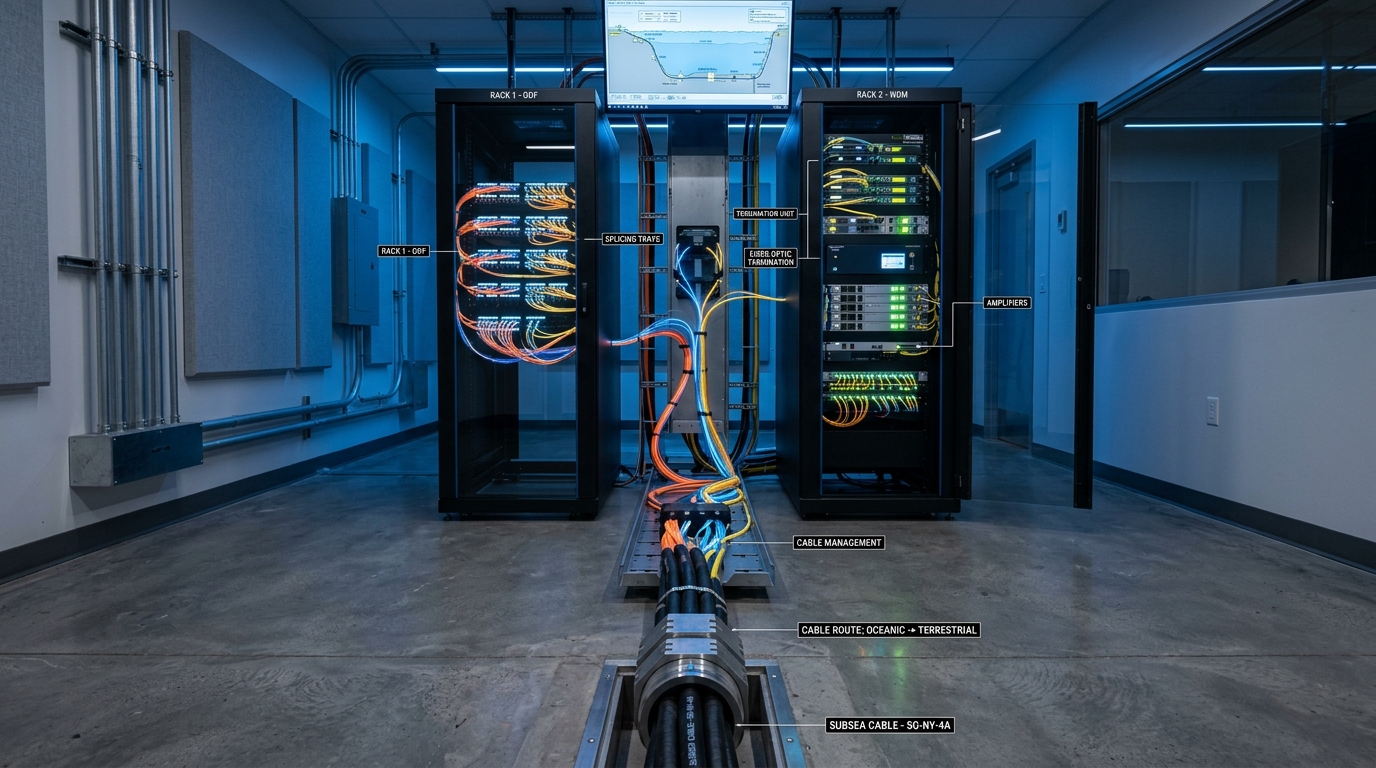
The commercial landing of 2Africa Pearls transforms this landscape by delivering:
- Massive Capacity Influx: 180 Tbps design capacity provides more than quadruple the total throughput of earlier legacy subsea cables combined.
- True Geodiversity: While older cables followed congested maritime paths prone to anchor drags, 2Africa Pearls utilizes an advanced deep-sea route with armored burial down to 3 meters below the seabed.
- Sub-45ms Latency to GCC & Europe: Direct subsea fiber paths to hubs in Oman, UAE, Saudi Arabia, and Marseille bypass intermediary terrestrial hops, reducing ping times for fintech transactions, game servers, and real-time streaming platforms.
2. Technical Architecture: Spatial Division Multiplexing (SDM)
Unlike older submarine systems that relied on standard single-mode fibers boosted by high-power optical amplifiers, 2Africa Pearls utilizes cutting-edge Spatial Division Multiplexing (SDM16) technology:
| Architecture Metric | Legacy Subsea Cables (SMW4 / IMEWE) | 2Africa Pearls Submarine Cable |
|---|---|---|
| Fiber Pair Count | 4 to 8 Fiber Pairs | 16 Fiber Pairs (SDM) |
| Total System Capacity | ~24 to 40 Tbps | 180+ Tbps |
| Optics Technology | Fixed WDM / Coherent 100G | 800G/1.2T Coherent DWDM |
| Subsea Burial Depth | 1.0 to 1.5 meters | Up to 3.0 meters (Heavy Armored) |
| Direct Hubs Linked | Limited transit ports | 33 countries across 3 continents |
By deploying pump-laser sharing across 16 fiber pairs, the system achieves maximum spectral efficiency and power optimization across extreme oceanic distances.
3. Economic Impact: Empowering Pakistan’s IT Export Economy
With Pakistan’s software export sector growing past $3.5 billion annually, stable, high-capacity international transit is a vital economic catalyst.
The commercial activation of the Karachi landing station provides direct advantages to the local tech ecosystem:
- BPO & Call Center Stability: Guarantees uninterrupted VoIP and Remote Desktop sessions for customer service operations servicing North American and European clients.
- Freelance & Remote Work Reliability: Ensures uninterrupted connectivity for over 2.5 million Pakistani freelancers utilizing platforms like Upwork, Fiverr, and GitHub.
- Hyperscale Cloud & CDN PoPs: Provides the requisite transport scale for global cloud vendors (AWS, Cloudflare, Akamai, Google Cloud) to deploy native edge Points of Presence (PoPs) directly inside Karachi and Lahore datacenters.
4. PTA Statement & Future Telecommunications Outlook
Addressing the authorization ceremony in Islamabad, a senior representative of the Pakistan Telecommunication Authority emphasized:
“The landing of the 2Africa Pearls cable marks a historic advancement in Pakistan’s telecommunications infrastructure. By securing ultra-high-speed subsea connectivity, we are insulating our national economy against maritime cable faults, supporting the 5G rollout, and positioning Pakistan as a strategic regional digital transit corridor between South Asia and the Middle East.”
The PTA also announced that terrestrial backhaul fiber networks connecting the Karachi landing station to the Pakistan Internet Exchange (PKIX) mesh in Lahore and Islamabad have been upgraded to 400Gbps interfaces to ensure subsea bandwidth flows seamlessly across the nation without domestic throttling.
5. Strategic Infrastructure for High-Traffic Applications
As international bandwidth expands, hosting platforms, SaaS providers, and financial institutions require robust compute nodes capable of saturating multi-gigabit uplinks.
Explore our related infrastructure analyses:
- PTA Activates 100G PKIX Internet Exchange Mesh in Lahore & Karachi
- MOITT & Ignite Launch National AI GPU Computing Cluster in Lahore
- Web Hosting in Lahore: Tier-3 Datacenter Peering & Low Ping
To take full advantage of Pakistan’s newly expanded international connectivity with dedicated uplinks, unmetered bandwidth, and Tier-3 datacenter hosting, deploy your workloads on Dedicated Servers in Pakistan.
Supercharge Your Digital Services with Nextgen Infrastructure
Harness direct international subsea routing with pure NVMe dedicated servers and high-speed cloud VPS hosted in Tier-3 Pakistani datacenters.
