
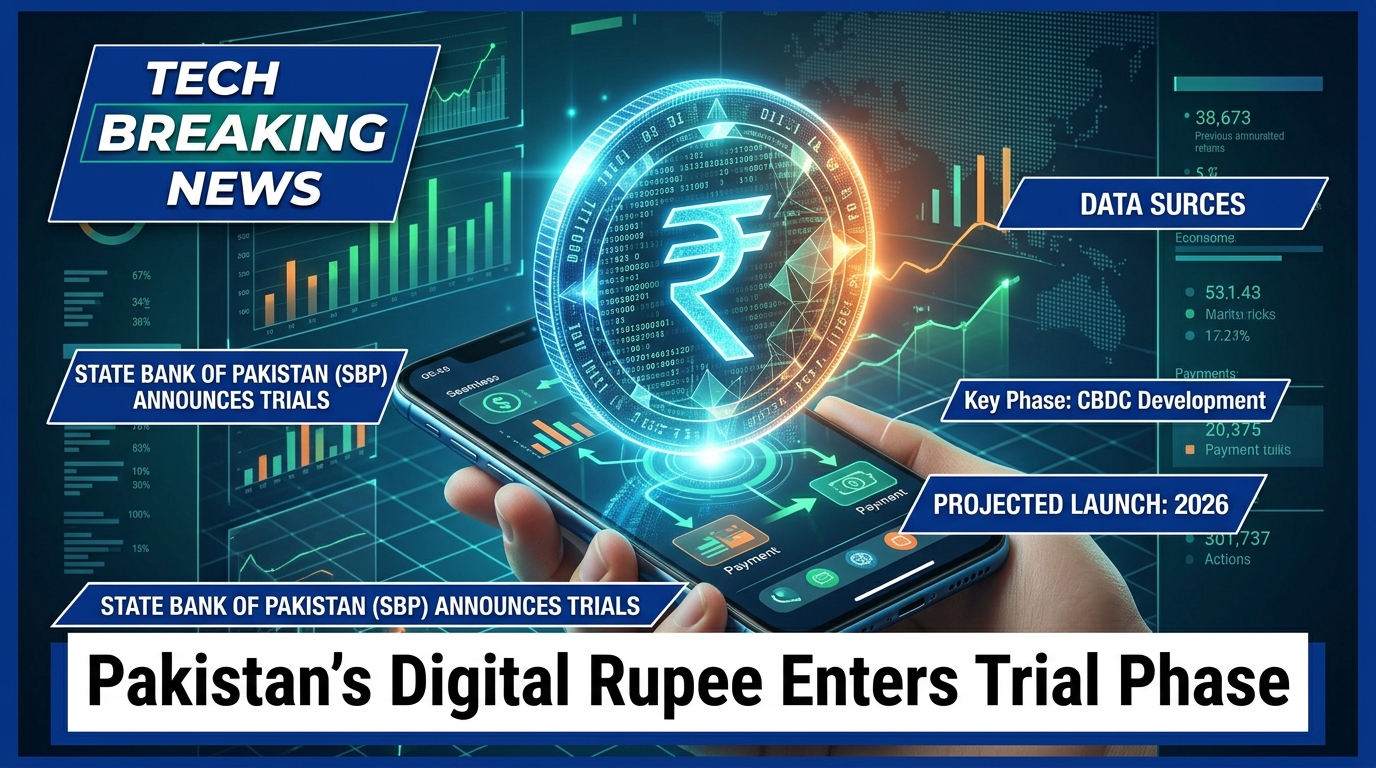
The landscape of Pakistani finance is undergoing its most profound transformation since the digitization of banking. As of August 2026, the State Bank of Pakistan (SBP) has officially commenced the pilot trial phase of its highly anticipated Central Bank Digital Currency (CBDC), commonly referred to as the ‘Digital Rupee’.
Working in tandem with global blockchain technology firm Soramitsu, the central bank aims to fundamentally modernize how value is stored and transferred within the national economy.
The Push for a Cashless Economy
The launch of the CBDC trials is not an isolated event; it is the culmination of a multi-year strategy to digitize the Pakistani economy. Building upon the monumental success of the Raast instant payment system, the SBP envisions the Digital Rupee as the next logical step.
Unlike traditional digital banking—which relies on commercial banks acting as intermediaries—a CBDC is a direct digital liability of the central bank itself. This means transactions will settle instantly, with zero counterparty risk, vastly improving financial inclusion for the unbanked populations in rural areas.
The Virtual Assets Act 2026
Simultaneously, the regulatory environment surrounding digital finance has matured overnight. The recent enactment of the Virtual Assets Act 2026 and the establishment of the Pakistan Virtual Asset Regulatory Authority (PVARA) have brought clarity to a previously gray market.
In a massive reversal of its historical stance, the SBP recently issued circulars allowing commercial banks to provide services to PVARA-licensed digital currency businesses. This historic policy shift means that legitimate crypto exchanges, digital asset custodians, and Web3 startups can now operate transparently within the formal banking sector.
The Need for Banking-Grade Infrastructure
As the financial ecosystem transitions to a purely digital, blockchain-adjacent model, the demand for ultra-secure, localized IT infrastructure has skyrocketed. Fintech startups building digital wallets, blockchain analytics tools, or integrating with the upcoming CBDC APIs cannot afford to cut corners on their cloud architecture.
Financial applications demand absolute data integrity, zero downtime, and strict compliance with national data localization laws.
Secure Local Hosting with Nextgen
For emerging fintech firms and licensed virtual asset providers, infrastructure is everything.
Nextgen Hosting’s Dedicated Servers offer the raw computational power required to process thousands of encrypted transactions per second. Furthermore, deploying fintech applications on Nextgen’s isolated KVM VPS platforms ensures that sensitive financial data is protected by enterprise-grade firewalls and kept physically within Pakistan’s borders. In the high-stakes world of digital finance, where a microsecond delay can cost thousands of rupees, relying on Nextgen’s localized, Tier-III data center infrastructure provides the ultimate competitive advantage.
Conclusion
While the SBP has not yet announced the date for the full public rollout of the Digital Rupee, the message to the market is clear. Between the CBDC trials and the new Virtual Assets Act, Pakistan has officially signaled its readiness to embrace the global digital economy. The race to build the next generation of Pakistani financial software has begun.
Related Technical Architecture Guides
- SaaS Application Hosting in Pakistan: Architecting Resilient Multi-Tenant Infrastructure Under SBP & SECP Regulations – Enterprise implementation details and deployment guide.
- 8 Businesses You Can Start After Retirement in 2026: High-Margin, Low-Stress Ventures – Enterprise implementation details and deployment guide.
