
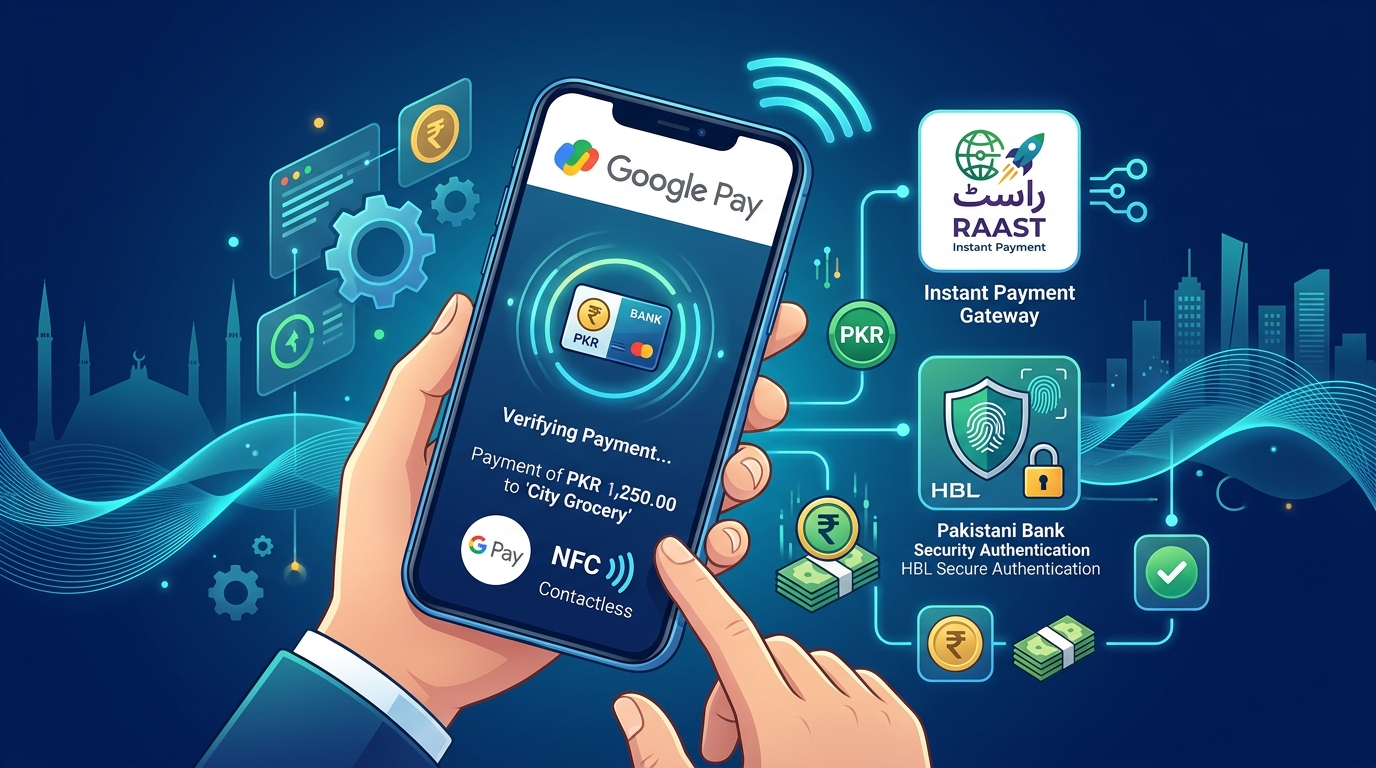
Cart abandonment on Pakistani e-commerce platforms is among the highest in the developing world, with industry estimates hovering between 72% and 80%.
The primary driver is checkout friction:
- Customers on mobile devices hate manually typing 16-digit debit card numbers, expiration dates, and billing addresses on miniature screens.
- Unreliable SMS One-Time Password (OTP) deliveries from local telecom operators (Jazz, Zong, Telenor, Ufone) cause transaction timeouts.
- Traditional Cash on Delivery (COD) carries substantial return-to-origin (RTO) courier costs and high cancellation rates.
The global solution that modernizes checkout conversion is Digital Wallet Tokenization, spearheaded by Google Pay and Apple Pay. With biometric authentication (Face ID, Touch ID, or fingerprint verification), shoppers authorize transactions in under 3 seconds with zero manual card entry!
While neither Google Pay nor Apple Pay acts as an acquiring bank in Pakistan, e-commerce stores can legally accept both through W3C Payment Request APIs paired with modern international and licensed Pakistani payment gateways (Stripe, PayFast, Safepay, Checkout.com).
This guide provides an end-to-end engineering blueprint for integrating, tokenizing, securing, and hosting Google Pay and Apple Pay checkouts in Pakistan.
1. Cryptographic Mechanics: Tokenization vs. Raw Card Storage
Why do digital wallets eliminate PCI-DSS liability for Pakistani online stores?
Traditional Checkout (High PCI-DSS Scope & Liability):
[ Customer ] ──► Types Raw 16-Digit Card ──► [ Your Web Server (VULNERABLE!) ] ──► [ Payment Gateway ]
* If your server is breached, raw card numbers are compromised. Strict PCI-DSS Level 1 compliance required!

Google Pay & Apple Pay Tokenized Flow (Zero-Liability Tokenization):
[ Customer ] ──► Biometric Auth (Face ID) ──► [ Apple / Google Secure Element ]
                                                        │
                                                        ▼
                        [ Issues Dynamic One-Time Cryptogram (DPAN) ]
                                                        │
                                                        ▼
[ Customer Browser ] ─────────────────────────► [ Your Web Server (Host) ]
                                                        │
* Receives ONLY encrypted payment payload.              │
* Never touches or sees the real 16-digit card!         ▼
                                              [ Payment Gateway Processor ]
                                                        │
                                                        ▼
                                       [ Decrypts Token & Authorizes Bank ]
The customer’s real primary account number (PAN) never leaves their mobile device’s hardware Secure Element. Your server handles strictly a dynamic single-use token (cryptogram), radically reducing your PCI-DSS compliance burden.
2. Implementing the W3C Payment Request API in JavaScript
Modern browsers (Chrome on Android, Safari on iOS) provide native support for digital wallet checkouts via the standardized PaymentRequest API:
// Check if digital wallet payment is supported
if (window.PaymentRequest) {
    const supportedInstruments = [
        {
            supportedMethods: 'https://google.com/pay',
            data: {
                environment: 'PRODUCTION',
                apiVersion: 2,
                apiVersionMinor: 0,
                merchantInfo: {
                    merchantId: 'BCR2DN6T...',
                    merchantName: 'NextGen Retail Pakistan'
                },
                allowedPaymentMethods: [{
                    type: 'CARD',
                    parameters: {
                        allowedAuthMethods: ['PAN_ONLY', 'CRYPTOGRAM_3DS'],
                        allowedCardNetworks: ['MASTERCARD', 'VISA']
                    },
                    tokenizationSpecification: {
                        type: 'PAYMENT_GATEWAY',
                        parameters: {
                            'gateway': 'safepay',
                            'gatewayMerchantId': 'sec_live_pk_12345'
                        }
                    }
                }]
            }
        }
    ];

    const paymentDetails = {
        total: {
            label: 'Total Order Amount',
            amount: { currency: 'PKR', value: '4500.00' }
        }
    };

    const request = new PaymentRequest(supportedInstruments, paymentDetails);

    // Trigger biometric payment sheet
    async function executeCheckout() {
        try {
            const paymentResponse = await request.show();
            // Send encrypted token to backend server
            const result = await fetch('/api/v1/charge-wallet', {
                method: 'POST',
                headers: { 'Content-Type': 'application/json' },
                body: JSON.stringify({ token: paymentResponse.details })
            });

            if (result.ok) {
                await paymentResponse.complete('success');
                window.location.href = '/checkout/order-received';
            } else {
                await paymentResponse.complete('fail');
            }
        } catch (err) {
            console.error('Payment cancelled or aborted:', err);
        }
    }
}
3. Server-Side Prerequisites & Domain Verification
To enable Apple Pay and Google Pay in production, browsers enforce non-negotiable server security requirements:
1. Mandatory TLS 1.3 & HTTP Strict Transport Security (HSTS)
Apple Pay and Google Pay APIs will fail to execute if your website runs over insecure HTTP or uses obsolete TLS 1.0/1.1 protocols.
In NGINX, enforce modern TLS standards:
# /etc/nginx/sites-available/store.yourdomain.pk
ssl_protocols TLSv1.2 TLSv1.3;
ssl_prefer_server_ciphers off;
add_header Strict-Transport-Security "max-age=63072000; includeSubDomains; preload" always;
2. Apple Pay Merchant Domain Association File
Apple requires proof of domain ownership before enabling Apple Pay on Safari:
- Download
apple-developer-merchantid-domain-associationfrom your developer portal. - Host it at:
https://yourdomain.pk/.well-known/apple-developer-merchantid-domain-association - Ensure NGINX serves the file with proper MIME types without redirects:
location /.well-known/apple-developer-merchantid-domain-association {
    default_type text/plain;
    allow all;
}
For e-commerce stores in Pakistan experiencing massive sales volume and requiring PCI-DSS Level 1 compliant physical infrastructure, deploying on Dedicated Servers in Pakistan provides physical isolation, zero multi-tenant security bleed, and sub-10ms domestic ping times over the Pakistan Internet Exchange (PKIX).
4. Gateway Integration Landscape in Pakistan
Because Google Pay and Apple Pay rely on tokenized card networks (Visa/Mastercard), how can Pakistani merchants settle funds locally in PKR?
┌────────────────────────────────────────────────────────┐
│             Settlement Architecture Options            │
├────────────────────────────────────────────────────────┤
│ Option A: Local Regulated Gateways (Safepay / PayFast) │
│ - Supports Pakistani cardholders using Google/Apple Pay│
│ - Instant settlement in PKR directly to local bank     │
│ - Seamless Raast and 1Link integration                 │
├────────────────────────────────────────────────────────┤
│ Option B: Cross-Border Exporters (Stripe Atlas / UAE)  │
│ - Ideal for software exporters & fashion brands selling│
│   to overseas diaspora (US, UK, UAE, Saudi Arabia)     │
│ - Settles in USD / AED, remitted to Pakistani FE-25    │
│   foreign currency accounts compliant with SBP rules   │
└────────────────────────────────────────────────────────┘
5. Architectural Comparison: Checkout Experience Metrics
| Checkout Flow | Mobile Form Completion Time | Cart Abandonment Rate | Payment Gateway Failure Rate |
|---|---|---|---|
| Manual Card Entry (Traditional) | 90 – 180 Seconds | 74% – 82% (High) | 18% (OTP drops / typos) |
| Cash on Delivery (COD) | 45 Seconds | Moderate | 25% – 35% Return on Delivery |
| Google Pay / Apple Pay | < 4 Seconds (Biometric) | Sub-22% (Optimal) | < 1.5% (Tokenized 3D Secure) |
For fast-growing e-commerce brands requiring agile virtualized hosting with dedicated NVMe storage and Redis caching, our pure NVMe Cloud VPS servers provide predictable compute performance and private virtual networks across Pakistan.
For multinational e-commerce corporations managing cross-border transaction processing across Europe, North America, and Asia, combining local nodes with our global Dedicated Servers provides unthrottled 10Gbps uplinks and enterprise hardware customization.
Related E-Commerce & Web Security Guides
Advance your online retail and transaction security knowledge:
- High-Concurrency E-Commerce Hosting in Pakistan: Scaling for 11.11 Sales
- PrestaShop Hosting & E-Commerce Performance Optimization
- WAF Firewall Bypass Audit and OWASP Top 10 Hardening
Supercharge Your Online Store on NextGen Pure NVMe VPS
Accelerate mobile checkouts, integrate digital wallets seamlessly, and eliminate server latency with high-performance e-commerce hosting in Pakistan. Pure NVMe storage, local PKIX peering, and 24/7 senior DevOps engineering support.
