
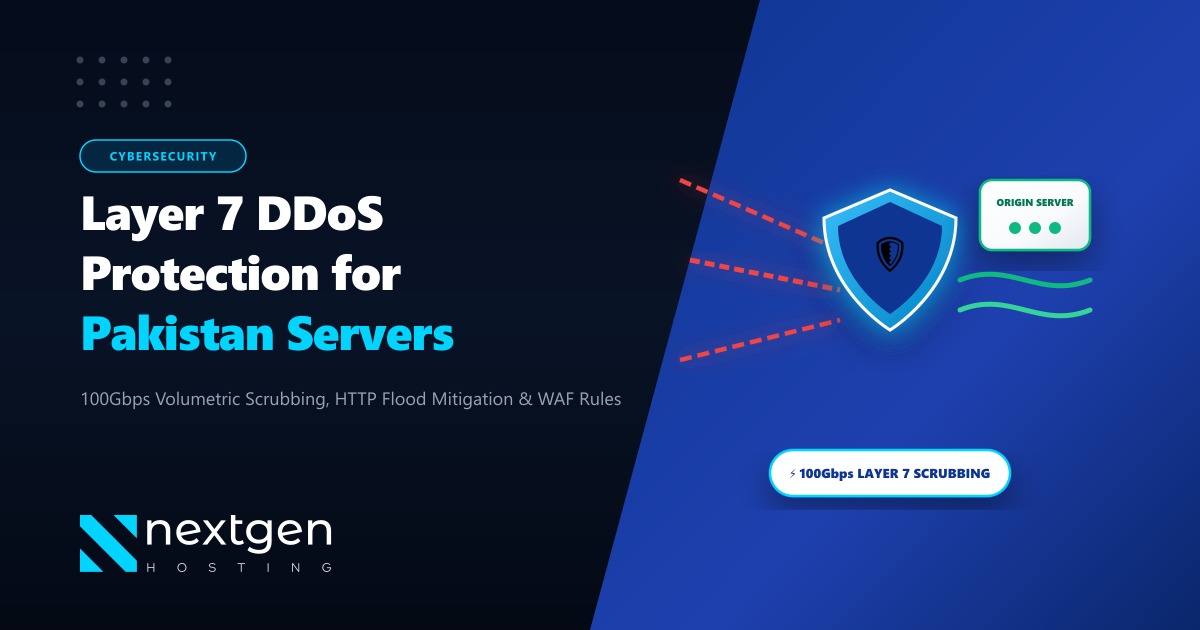
Distributed Denial of Service (DDoS) attacks against Pakistani web applications are no longer rare, isolated events conducted by hobbyist script kiddies. In 2026, targeted cyber extortion, geopolitical hacktivism, and cutthroat competitor attacks routinely flood Pakistani eCommerce stores, fintech APIs, and media portals with 100+ Gbps volumetric blasts and millions of malicious Layer 7 HTTP requests.
When an unmitigated attack strikes, standard hosting servers crash instantly. Network transit providers (such as PTCL, Nayatel, or upstream carriers) execute a BGP Null Route (Blackhole) to protect their core routing infrastructure. To your legitimate Pakistani visitors, your website simply vanishes from the internet.
Surviving modern DDoS threats requires a multi-layered defense strategy capable of absorbing massive Layer 3/4 packet floods while intelligently filtering complex Layer 7 application attacks.
Key Takeaways for Pakistani System Administrators
- Layer 4 vs. Layer 7: Layer 4 attacks (SYN floods, UDP amplification) saturate physical network bandwidth; Layer 7 attacks (HTTP GET/POST floods) mimic legitimate user traffic to exhaust server CPU and MySQL connection pools.
- Anycast BGP Scrubbing: Dispersing incoming traffic across global scrubbing centers absorbs volumetric traffic near the source before it ever touches your local origin server.
- Granular Web Application Firewall (WAF): Challenge-based inspection (JavaScript challenges, rate limiting by URI, and ASN filtering) stops botnets without blocking legitimate domestic Pakistani shoppers.
- Origin Cloaking: Hiding your origin server's real public IP address behind a reverse proxy mesh prevents attackers from bypassing your edge defense.
1. Anatomy of an Attack: Volumetric vs. Application Floods
Modern cybercriminals utilize two distinct attack vectors against Pakistani infrastructure:
[Attack Vectors Targeting Pakistani Webmasters]
1. Layer 3/4 Network Floods (UDP / SYN Floods):
   Attacker Botnet ──► 100Gbps Raw Bandwidth ──► Satures Upstream Fiber ──► ISP Null Route
   (Defense: Anycast Scrubbing Center filters raw packets at network edge)

2. Layer 7 Application Floods (HTTP/2 Rapid Reset / POST Flood):
   Attacker Botnet ──► 50,000 HTTP Requests/sec to /cart or /search ──► CPU at 100% ──► MySQL Locks
   (Defense: Behavioral WAF + Rate Limiting + JS Challenge)
Layer 3/4 Volumetric Floods
Attackers abuse misconfigured NTP, DNS, or Memcached servers across the globe to reflect amplified UDP traffic toward your server. If your server is connected to a standard 1Gbps uplink in Karachi, a 20Gbps flood will choke your pipe, causing 100% packet loss.
Layer 7 Application Attacks
Rather than saturating network bandwidth, attackers send legitimate-looking HTTP requests to resource-heavy endpoints (like your WordPress search query /?s=keyword or WooCommerce cart). Because establishing TLS connections and executing PHP/MySQL queries consumes significant compute, just 2,000 requests per second can bring a 64-core server to its knees.
2. Hardening Nginx and Linux Kernel Against HTTP Floods
On your origin server, applying kernel-level sysctl hardening and Nginx rate-limiting zones prevents SYN backlogs and unauthenticated connection flooding:
# /etc/sysctl.conf - Kernel network stack hardening:
net.ipv4.tcp_syncookies = 1
net.ipv4.tcp_max_syn_backlog = 8192
net.ipv4.tcp_synack_retries = 2
net.ipv4.tcp_fin_timeout = 15
net.ipv4.ip_local_port_range = 1024 65535
net.core.somaxconn = 65535
# /etc/nginx/conf.d/ddos_protection.conf:
# Define rate limiting zones by binary client IP:
limit_req_zone $binary_remote_addr zone=req_limit_per_ip:20m rate=15r/s;
limit_conn_zone $binary_remote_addr zone=conn_limit_per_ip:20m;
server {
location / {
limit_req zone=req_limit_per_ip burst=30 nodelay;
limit_conn conn_limit_per_ip 20;
# Block malicious automated user-agents:
if ($http_user_agent ~* (SemrushBot|AhrefsBot|MJ12bot|curl|wget|python)) {
return 403;
}
try_files $uri $uri/ /index.php?$args;
}
}3. Dedicated Infrastructure vs. Shared Edge Protection
While reverse-proxy CDNs help mitigate basic layer 7 floods, large-scale financial platforms, cryptocurrency exchanges, and enterprise Pakistani systems require isolated computing environments.
If you are hosted on a multi-tenant shared server and a neighboring website becomes the target of a 50Gbps volumetric flood, your site will suffer collateral downtime when the host’s network switches lock up.
For enterprise workloads demanding dedicated network interfaces, isolated physical hardware, and custom BGP routing, deploying on our global Dedicated Servers provides unmetered 1Gbps to 10Gbps ports backed by automated enterprise DDoS mitigation appliances.
If your regulatory framework (such as SBP banking guidelines or national security audits) mandates that all server telemetry, database queries, and user records remain strictly within domestic Pakistani borders, hosting on Dedicated Servers in Pakistan delivers sub-10ms domestic latency with native local datacenter DDoS scrubbing.
4. Origin Server Cloaking Checklist
If an attacker discovers your server’s underlying origin IP address, they can bypass all edge protection and attack your server directly. Follow these mandatory security rules:
- Firewall Drop Rules: Configure
iptablesorufwto drop all inbound traffic on ports 80 and 443 unless the request originates from your verified CDN/WAF proxy subnets. - Review Outbound Mail Headers: Outbound emails sent via PHP
mail()expose your server’s public IP inReceived: fromheaders. Always relay outbound mail through an authenticated third-party SMTP bridge. - Audit DNS History: Attackers use tools like SecurityTrails to inspect historical DNS records. If your root domain previously resolved directly to your origin IP before enabling a WAF, rotate your server IP immediately.
Shield Your Mission-Critical Infrastructure Today
Never let a DDoS attack take your business offline. Nextgen Hosting provides enterprise-grade DDoS filtering, automated scrubbing centers, pure NVMe cloud infrastructure, and 24/7 technical support in Pakistan.
